


Patient-Safety-Learning
PSL Moderators
-
Joined
-
Last visited
Everything posted by Patient-Safety-Learning
-
Content ArticleNon-Executive Directors and Trustees for Freedom to Speak Up play a vital role in supporting Freedom to Speak Up guardians and championing Freedom to Speak Up at board level within their organisations. When starting out as a new Non-Executive or Trustee for Freedom to Speak Up, it is important to understand your role in your organisation and to gather the knowledge that you need to carry it out well. This video developed by the National Guardian’s Office brings together information to help Non-Executives and Trustees understand their remit, promote their role and set up positive working relationships. This film is a helpful tool for new and existing Freedom to Speak Up Non-Executive Directors and Trustees and will also support Freedom to Speak Up guardians in their role.
-
Content Article
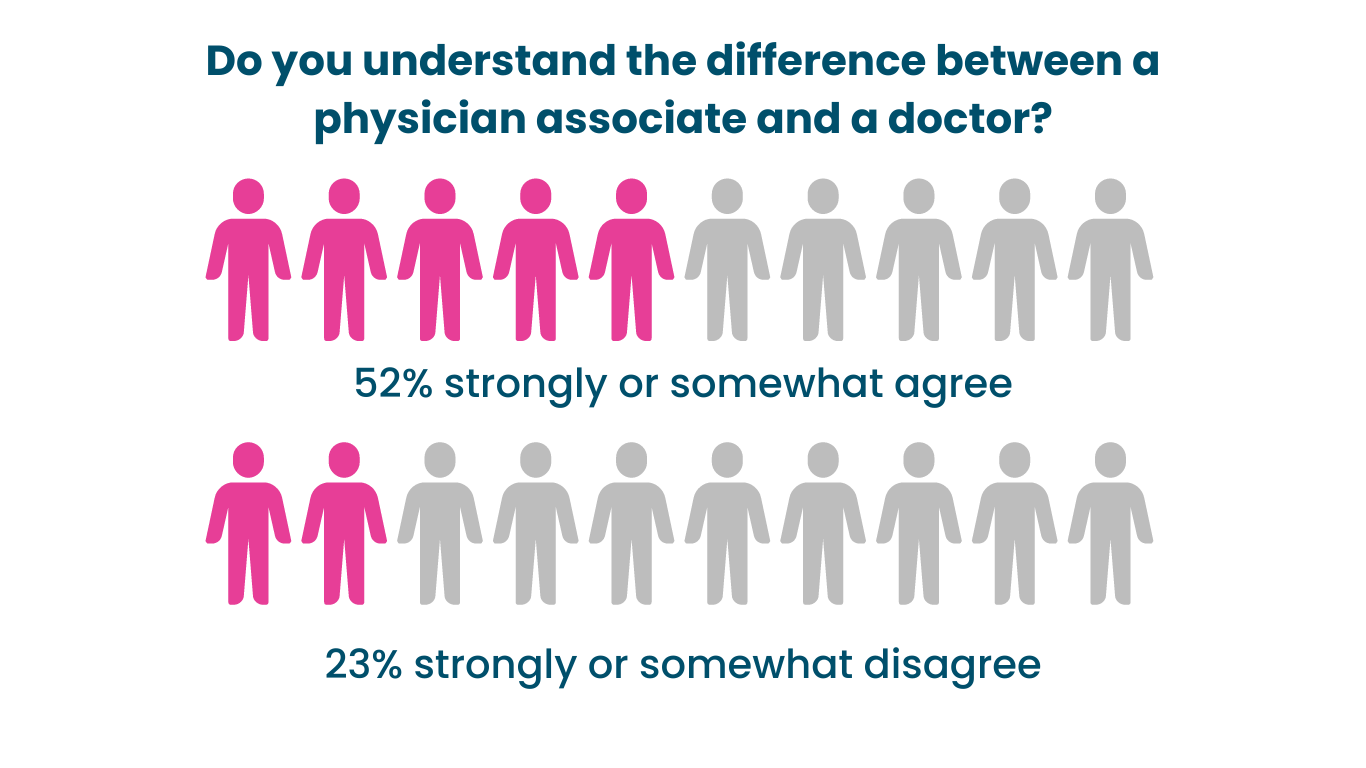 In recent years, the NHS has expanded the use of 'medical associate' roles to help tackle staff shortages and improve access to care. One of these roles is the Physician Associate (PA). With plans to employ 10,000 physician associates by 2037, this blog by Healthwatch looks at how aware patients are of PAs and how NHS staff and medical regulators can improve their understanding and experience. It draws on polling done by Healthwatch which presents a mixed picture of public awareness that varies according to age, with younger people showing more awareness of the difference between doctors and PAs. The blog also highlights Healthwatch's 'Five steps to improve clarity' about PAs, developed alongside the Patients Association and National Voices.
 -
Content ArticleThis US study in the Journal of Patient Safety aimed to understand how patient safety professionals from healthcare facilities and patient safety organisations develop patient safety interventions. It also looked at the resources used to support intervention development. The authors analysed semi-structured interviews conducted with patient safety professionals at nine healthcare facilities and nine patient safety organisations. Findings were organised in the following categories: patient safety solutions and interventions use of external databases evaluation of patient safety solutions. The findings highlight that patient safety professionals often use similar methods and resources to develop and evaluate patient safety interventions. However, many of these efforts are not coordinated across healthcare organisations and there would be benefit from working collectively in a systematic fashion. Healthcare facilities and patient safety organisations face similar challenges and there are several opportunities for optimisation on a national level that may improve patient safety.
-
Event
until
This Patient Partnership Week webinar will look at concerns about the privacy and safety of patient data. Ming Tang, Chief Data and Analytics Officer at NHS England will discuss the potential of data and safeguards. Register for the webinar -
Event
until
This Patient Partnership Week webinar will ask the question, "Why aren't patients treated as equals in their own care?" Prof Havi Carel from the University of Bristol will discuss why some healthcare professionals ignore, dismiss or explain away patients' testimonies about their health. Register for the webinar -
Event
until
This Patient Partnership Week webinar will look at how to make shared decision making standard practice across the whole of healthcare. The webinar will feature Patients Association Trustee Prof Alf Collins, former national director for personalised care. The webinar will explore the benefits to patients and the health system of shared decision making, what we know about the barriers preventing its wider use, and what has to happen to make its practice more widespread across all types of health services. The event will be chaired by The Patients Association's Head of Patient Partnership Sarah Tilsed. Trustee Professor Alf Collins will be on the panel. From 2016-2023, Prof Collins was NHS England’s National Clinical Director for personalised care and shared decision making, care planning, self management support, social prescribing and health literacy sat within his policy portfolio. Prof Collins led on implementation of Universal Personalised Care, one of five key shifts for the NHS in the 2019 Long Term Plan. They will be joined by patient Jess Plant and Dr Paul Grundy, Chief Medical Officer and Consultant Neurosurgeon for University Hospital Southampton NHS Foundation Trust. The Patients Association also hope to have patients and health professionals on the panel to talk about their experiences of shared decision making. Panellists will share practical tips about embedding shared decision making in every day practice. Register for the webinar -
Content Article“Wrong route” medication errors can have catastrophic consequences, including paraparesis, paraplegia or death. These types of errors usually occur as the result of misconnections, where medication is administered using the wrong route, such as administering an epidural medication by an intravenous line, administering an intravenous medication by an epidural line or delivering medication intended for intravenous administration intrathecally (into the fluid surrounding the spinal cord). This article by the pharmaceutical company BD looks at how the universal male-female configuration of Luer connectors, which are widely used across the NHS, contributes to wrong route medication errors. It describes the prevalence of these errors and outlines why NHS England is transitioning to using an alternative system for all intrathecal and epidural procedures and delivery of regional blocks.
-
Content Article
 The Covid-19 pandemic continues to have a big impact on the NHS and society. Among those most heavily affected are up to two million adults and children affected by Long Covid. Over 1.5 million people report their daily activities being limited by Long Covid and a significant proportion of Long Covid patients meet the diagnostic criteria for myalgic encephalomyelitis (ME) sometimes referred to as Chronic Fatigue Syndrome (CFS). Patients with ME have faced decades of inadequate care and insufficient funding for biomedical research, which have shaped the NHS care available to Long Covid patients. This report was written by Karen Hargrave and Emma Gore-Lloyd, founders of ThereForME, a campaign calling for an NHS that works for people with Long Covid and ME. The report outlines the results of a survey of over 300 people living with Long Covid and ME which aimed to evaluate parts of the new Government's mission plan for the NHS against their experiences. The survey focused on the following three Labour commitments that could have the biggest impact, where people with Long Covid and ME highlight current shortcomings: An NHS that is there when people need it Change so that more people get care at home in their community The promise to introduce a revolution in technology Read the full report Read the executive summary Find out more about the ThereForME campaign
 -
Content ArticleAs people age, they are more likely to develop multiple long-term conditions that require complicated medicine regimens. Safely self-managing multiple medicines at home is challenging. This study aimed to identify interventions to improve medicine self-management for older people living at home and the aspects of medicine self-management that they address.
-
Event
until
Several unknowns face the NHS under the new government – all business-critical for industry to understand. Now that the post-election buzz is beginning to abate, we take a moment to look at the new NHS landscape – what will the new priorities be? And what opportunities for industry will arise? Join this interactive webinar featuring speakers from Wilmington Healthcare and HSJ. The agenda will cover new NHS unknowns for industry to make sense of: Finance and efficiency – the watchword for the NHS in this parliament will be efficiency. Is your engagement strategy readied to offer pathway, cost and workforce efficiencies? Primary care and prevention – what will it mean for industry if pathways are located more in primary, community, pharmacy and homecare? Digital and transformation – AI is being touted as a panacea, but is industry getting on board with it? What other transformational techniques will the NHS now try? And what should be built into your value story? Workforce and access – what can industry offer to the NHS on the workforce front as it battles waiting lists at an all-time high, missing patients, late diagnoses and more? Speakers Oli Hudson, Content Director, Wilmington Healthcare Jyoti Singh, Principal Consultant, Wilmington Healthcare Jonathan Carney, Director of Innovation and Strategy, Wilmington Healthcare Dave West, Deputy Editor, HSJ Register for the webinar -
Content ArticleThis cohort study in JAMA Network Open aimed find out whether medical insurance type is associated with time to withdrawal of life-sustaining therapy in adult trauma patients in the US. The findings suggest that being uninsured is associated with a shift in decision-making toward earlier withdrawal of life-sustaining therapy, which could indicate that socioeconomic status informs end-of-life care for patients with critical injuries.
-
Content ArticlePatient-Safety-Learning posted an article in Human factors (improving human performance in care delivery)Project Aristotle was a project undertaken by Google to understand what makes teams successful. The project aimed to identify patterns and behaviours within teams that led to high performance. Starting in 2012, Google spent two years studying 250 attributes of their 180 teams. Initially, they thought that the recipe for a successful team would be a combination of high performers, an experienced manager and unlimited free resources. However, they would later find out they were wrong. This blog by Bea Poyton describes how when the Project Aristotle team came across the idea of psychological safety, it filled the gaps in their understanding of what makes a successful team. They discovered that members of a team most needed to feel they could speak up and share ideas, challenges and concerns without fear of embarrassment or humiliation. These findings challenged conventional beliefs about team composition and management styles.
-
Content ArticlePatient-Safety-Learning posted an article in Human factors (improving human performance in care delivery)In 2024, the UK’s Chartered Institute of Ergonomics and Human Factors (CIEHF) celebrates its 75th anniversary. To mark the occasion, this article presents the perspectives of 18 Ergonomics and Human Factors (EHF) professionals who were asked to respond to five questions regarding the impact of EHF, contemporary challenges and future directions. The co-authors were in agreement that EHF’s impact has been limited to date and that critical issues need to be resolved, such as: increasing the number of suitably qualified practitioners resolving the research-practice gap increasing awareness of EHF and its benefits. The professionals who took part highlighted the following future directions: advanced emerging technologies such as artificial intelligence the development of new EHF methods enhancing the quality and reach of education and training. The majority felt there will be a need for EHF in 75 years, but many noted that methods will need to adapt to meet new needs.
-
Content ArticleRaising concerns is essential to quickly detect and respond to patient deterioration. However, factors such as hierarchy, leadership and organisational culture can impact negatively on people's willingness to raise concerns. This qualitative study in the Journal of Patient Safety investigated how these factors influence healthcare workers, patients and caregivers in raising concerns about patient deterioration. The results showed that positive leadership that challenges traditional professional hierarchies by embracing multidisciplinary teamwork, valuing the input of all stakeholders and championing person-centred practice fosters a positive working culture. This culture has the potential to empower clinical staff, patients, caregivers and family members to confidently raise concerns. Staff development, clinical supervision and access to feedback—all underpinned by psychological safety—were viewed as facilitating the escalation of concerns and have the potential to improve patient safety.
-
Content Article
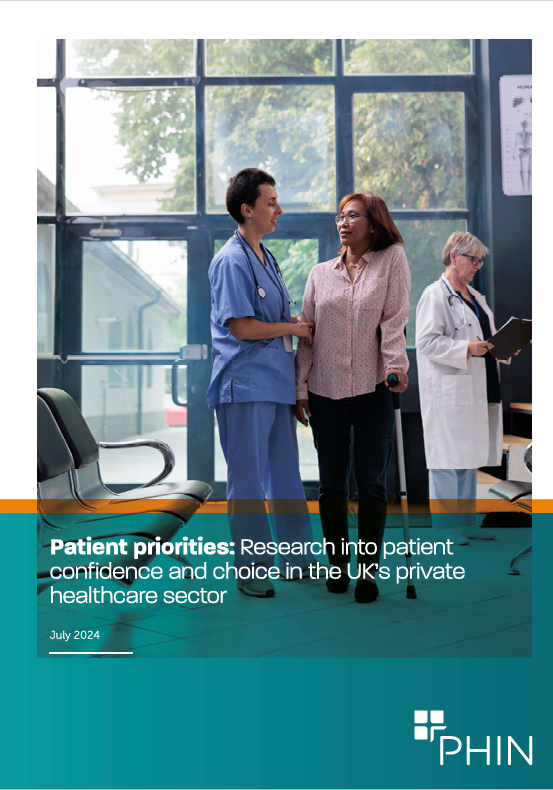 This research by the Private Healthcare Information Network (PHIN) aimed to find out about patients’ priorities when making decisions about private healthcare. PHIN engaged directly with patients who have used, or would consider using, private treatment through an online survey and in-depth qualitative focus groups.
 -
Content ArticleIncidental imaging findings (IIFs) are things that show up on a diagnostic image that are not related to the reason a healthcare professional ordered the test. Inadequate follow-up of IIFs can result in poor patient outcomes, patient dissatisfaction and provider malpractice. In an effort to improve awareness of IIFs, this study aimed to investigate communication of IIFs on inpatient discharge summaries after implementation of a new electronic health record (EHR) notification system. The results showed that IIFs were included in 51% of discharge summaries. The authors identified that lack of inclusion of IIFs on discharge summaries could be related to transitions of care within hospitalisation, provider alert fatigue and many diagnostic testing results to distil. The findings demonstrate the need to improve communication of IIFs and the need for care coordinators to follow up on IIFs. This year’s World Patient Safety Day on 17 September 2024 (WPSD 2024) is focused on the theme “Improving diagnosis for patient safety”. Find out more.
-
EventThe Health Equity Network (HEN) 2024 conference will take place on Tuesday 8 October in Birmingham. The agenda will feature an excellent array of speakers and a discussion panel. HEN also plans to announce the result of applications to the Health Equity Fund. Registration details will be published soon.
-
Content Article
 The Health Services Safety Investigation Board's (HSSIB's) first annual report and accounts covers the six months from the organisations launch to 31 March 2024. It sets out HSSIB's priorities as a new organisation, highlighting achievements and progress so far. It also provides a useful overview of HSSIB's governance, leadership, staff arrangements and pay arrangements. Highlights include HSSIB's first investigation report which looked at safety management systems, its commitment to working collaboratively with other patient safety organisations and the importance of family and patient engagement in its safety investigations.
 -
Content ArticleThis is the National Audit Office's (NAO's) ninth report on the financial management of the NHS in England. It's previous report published in February 2020 outlined that NHS England (NHSE) needed to carry out financial restructuring to put all NHS bodies were on a realistic path to breaking even. This report comes after a major change to the ways in which NHS services are funded—the Health and Care Act 2022 introduced Integrated Care Systems (ICSs) on a statutory footing. The 42 ICSs bring together NHS bodies, local government and other organisations. The report outlines: the NHS’s current financial position and operating context. whether NHSE’s financial management processes allow accurate and timely decision-making and support for NHS bodies that are struggling. the relationship between financial management and NHS performance, productivity and efficiency. the challenges to the NHS’s financial sustainability in the longer term.
-
Content ArticleIf you’ve ever had a healthcare professional dismiss your symptoms—say you were “just stressed" or blame your concerns on psychological factors—you’re not alone. In this blog, Karen Lutfey Spencer looks at the phenomenon known as medical gaslighting and why it happens. She also provides advice on how to recognise medical gaslighting and how to advocate for yourself as a patient.
-
Content ArticleIn this article, Nicholas T H Farr, research fellow at the Department of Materials Science and Engineering at the University of Sheffield, looks at the need for improved preclinical testing methods to ensure the safety of new medical devices. He highlights cases where lack of testing has led to significant harm to patients and argues that to reduce the risk to patients, the research community needs rigorous and comprehensive testing methods that can more accurately predict how the human body will respond to implantable materials and devices. Nicholas has previously written for the hub, in this blog about the importance of investing in the development of testing methods to ensure medical devices are safe to use.
-
Content ArticleThe management of acute deterioration following surgery remains highly variable. Patients and families can play an important role in identifying early signs of deterioration it can be difficult for them to effectively contribute to escalation of care. This article looks at a process evaluation of the RESPOND quality improvement programme—Rescue for Emergency Surgery Patients Observed to uNdergo acute Deterioration. It identifies enablers and barriers to the implementation of patient-led escalation systems found during the programme.
-
Content ArticlePatient-Safety-Learning posted an article in Human factors (improving human performance in care delivery)Teamwork in the operating room is very important for high-quality patient care. It has been shown that increased team member familiarity predicts improved teamwork and is associated with shared mental models and mutual trust, which are in turn important factors for team effectiveness. The aim of this study in Surgery was to investigate the relationship between team member familiarity and perceived team effectiveness in operating room teams. The authors found that greater team member familiarity predicts greater team effectiveness, and this relationship is mediated by shared mental models. They concluded that training should be aimed at these aspects of team functioning to optimise team performance in the operating room.
-
Content ArticleAdverse childhood experiences (ACEs) are associated with poorer health outcomes. However, the association between ACEs and healthcare engagement remains relatively underexplored, particularly within the UK. This report presents the findings of an online survey of adults living in Wales and England which looked at the association between ACEs and healthcare engagement, including comfort in the use of healthcare services. The report highlights the following key findings: High ACE exposure is associated with greater medication use. Individuals with four or more ACEs were more likely to report having been prescribed antibiotics in the last 12 months and to be currently using prescription medicine. Having two or more ACEs was associated with current use of prescription medicine for mental ill-health, with odds of reporting such a prescription being doubled in those with four or more ACEs. There is a relationship between ACEs and medication adherence, with individuals with two or more ACEs being more likely to report poor medication adherence. ACE exposure was linked to having not received all routine childhood vaccinations. Individuals with multiple ACEs were substantially more likely to perceive that professionals do not care about their health or understand their problems. People exposed to multiple ACEs were more likely to report a poor childhood experience with health services.
-
Content ArticleThe impact of incident investigations in improving patient safety may be linked to the quality of risk controls recommended in investigation reports. This study in the Journal of Patient Safety aimed to identify the range and apparent strength of risk controls generated from investigations into serious incidents, map them against contributory factors identified in investigation reports, and characterise the nature of the risk controls proposed. The authors did a content analysis of 126 action plans of serious incident investigation reports from a multisite and multi-speciality UK hospital over a three-year period to identify the risk controls proposed. They found that: a substantial proportion (15%) of factors identified in investigation reports as contributing to serious incidents were not addressed by identifiable risk controls. most of the proposed risk controls in action plans were assessed as weak, typically focusing on individualised interventions, even when the problems were organisational or systemic in character. They identified six broad approaches to risk controls: improving individual or team performance defining, standardising or reinforcing expected practice improving the working environment improving communication process improvements disciplinary actions. The authors concluded that advancing the quality of risk controls after serious incident investigations requires involvement of hum


