


Mark Hughes
Members
-
Joined
-
Last visited
Everything posted by Mark Hughes
-
EventTo mark World Patient Safety Day 2026, the World Patients Alliance are hosting a global webinar bringing together patients, patient advocates, health workers, policymakers, health leaders, civil society organizations, and other stakeholders. The webinar will raise awareness of safety challenges in noncommunicable diseases (NCD) care and promote coordinated, continuous, and patient centred approaches to preventing avoidable harm. Objectives The webinar will seek to: Describe the types of patient safety risks experienced by people living with NCDs across the health care continuum, including prevention, diagnosis, treatment, selfcare, rehabilitation, and palliative care. Highlight the experiences and perspectives of patients, families, caregivers, and patient organizations regarding safety concerns in NCD care. Challenges faced by patients may include diagnostic delays, medication related harm, fragmented care, communication gaps, inadequate follow up, and barriers to timely access. Promote meaningful patient engagement in identifying safety risks, designing interventions, evaluating the quality and safety of NCD services, and helping integrate patient safety principles into national and organizational NCD policies, strategies, programmes, and clinical practices. Identify practical actions that health workers, health systems, policy makers, patients, and communities can take to improve safety throughout the NCD care pathway. Register here.
-
Content Article
 The 10 Year Health Plan for England sets an ambition to “make the NHS the most AI-enabled care system in the world”. In line with this aim, there has been a significant increase in use of ambient voice technology (AVT) products, sometimes referred to as AI scribes, by healthcare providers. Responding to these developments, the Health Services Safety Investigations Body (HSSIB) has recently launched a new investigation exploring the use of AVT in hospitals. In this blog, Patient Safety Learning considers: Benefits and risks associated with the use of AVT products in healthcare. The evolving regulatory environment around this technology in the NHS Key issues for a new patient safety investigation to consider.
 -
Content Article
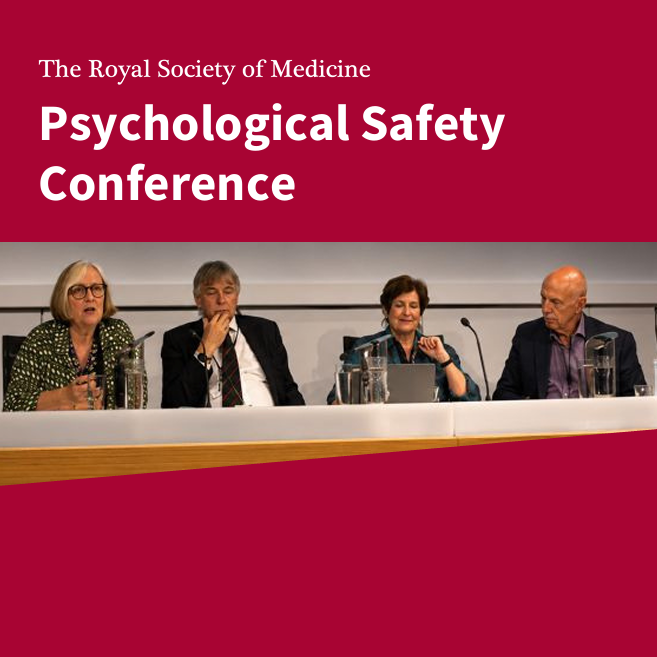 Psychological safety is a core condition for learning, staff wellbeing, innovation and patient safety. This report provides an overview of a conference hosted by the Royal Society of Medicine’s Patient Safety Section on Tuesday 9 June 2026, which featured keynote presentations, panel discussions and personal testimony on psychological safety. Held against the backdrop of the 10 Year Health Plan for England and the NHS Patient Safety Strategy, the conference explored one central question: not whether NHS staff raise concerns, but whether organisations reliably hear, investigate and act on them when they do. Sessions ranged from the academic foundations of psychological safety through to lived experience of whistleblowing, prison healthcare and organisational redesign, closing with a session on personal commitments delegates could take back into their own workplaces.
 -
EventEvery advance in dementia diagnosis and treatment begins with research. Currently there are 158 drugs in 192 trials in the pipeline, however, to make these new treatments possible, we need thousands of people living with dementia, ranging from early, mid and late stages of the condition, to take part in clinical trials globally. In light of this critical pivot point in Alzheimer's disease and dementia treatments and diagnostics, Alzheimer’s Disease International’s (ADI's) forthcoming 2026 World Alzheimer Report is focusing on clinical trials, the driving force and sole pathway for these emerging breakthroughs to reach people living with dementia, as well as inform future breakthroughs. Join ADI for their upcoming World Alzheimer Report launch webinar, where leading experts and report contributors will explore the nuances dementia clinical trials, what participation means for a person living with dementia and what these trials could mean for the future of diagnosis, treatment and care. As research continues to evolve, involving people during the early stages of dementia is increasingly important. An early diagnosis can help people access emerging treatment options, take part in clinical research where appropriate, and receive the information and support they need sooner. Whether you're a healthcare professional, researcher, advocate, policymaker or someone living with dementia or a carer, we invite you to be part of this important conversation. Register today and join us as we explore the future of dementia diagnosis and treatment. Panellists include: Paul Gallagher Julie Moore Dr Emer MacSweeney Prof Zul Merarli ADI are pleased to offer AI translation for this webinar in over 60 languages including: Arabic, Dutch, French, German, Greek, Hindi, Indonesian (Bahasa), Italian, Japanese, Korean, Malay, Polish, Portuguese, Spanish, Swahili, Swedish, Tamil, Thai, Turkish, Ukrainian, Urdu, and Vietnamese. The webinar will be available for viewing on ADI's YouTube channel after the event. Register here.
-
Event
until
The Agency for Healthcare Research and Quality (AHRQ) is hosting a webinar exploring how Patient Safety Organizations (PSOs) can support healthcare providers in their High Reliability journey, featuring a presentation from an AHRQ-listed PSO. Representatives from Ascension Healthcare PSO will share how their organization has operationalized a High Reliability framework to drive meaningful improvements in patient safety. The meeting will include time for questions and open discussion with attendees. Agenda Welcome and Logistics Introduction | Andrea Timashenka, JD, PSO Division Director, CQuIPS, AHRQ Advancing Patient Safety: A High Reliability Roadmap Inspired by the National Action Plan | Britney Pierre, RN, MAS, BSN and Jahnavi Valleru, MS, MHA, CPPS, Ascension Healthcare PSO Questions and Discussion Register here. -
Event
until
As healthcare pathways become increasingly complex, ensuring that diagnostic services work seamlessly across specialties, organisations and systems is critical to improving patient safety. This webinar, hosted by The Royal College of Pathologists, will explore how a joined-up approach to healthcare can reduce diagnostic errors by focusing on system design, communication, accountability and integration across the patient journey. Bringing together experts from across several pathology specialties, the session will examine the role of both digital and non-digital solutions in creating safer diagnostic pathways. Attendees will gain insights into common challenges, opportunities for cross-disciplinary learning and practical approaches to improving collaboration, reducing risk and delivering safer, more coordinated care for patients. Register here. -
Event
until
This webinar, hosted by The Royal College of Pathologists, explores the key challenges and opportunities in improving maternal and paediatric health in the UK and internationally. Bringing together experts from pathology, laboratory medicine and clinical practice, the session will examine the role of early diagnosis, screening, prevention and multidisciplinary collaboration in improving outcomes for mothers and children. Attendees will gain insights into addressing health inequalities, strengthening healthcare services and advancing patient safety through effective diagnostic and care pathways. Register here. -
Event
until
This webinar, hosted by The Royal College of Pathologists, will explore how Point of Care Testing (POCT) can enhance patient safety, improve access to care and support better clinical decision-making. Through expert-led presentations and real-world case studies, attendees will examine the benefits and risks of POCT, emerging technologies and best-practice approaches to governance, quality assurance and service delivery. This interactive session will provide practical insights for healthcare professionals, laboratory staff, biomedical scientists and pathologists seeking to strengthen the safety, quality and effectiveness of POCT services. Register here. -
Content Article
 On the 18 August 2026 the Health Services Safety Investigations Body (HSSIB) published a new report looking at patient safety risks related to advice and guidance (A&G) services in the NHS in England. In this article, Patient Safety Learning sets out its reflections on the report’s findings.
 -
EventJoin Edge Hill University for this exciting knowledge exchange conference which brings together UK medical educators and healthcare partners to explore the support of final-year medical students and foundation doctors as they navigate challenging patient encounters which have the potential to generate complaints. Being unprepared to deal with patient complaints can contribute to moral injury and vicarious trauma. The importance of supporting our future NHS workforce during this critical transition has been recognised through generous funding from the Della Fish Foundation, culminating in this free conference. Colleagues from Edge Hill University Medical School and the Parliamentary and Health Service Ombudsman have collaborated to support student electives, internships, and final-year learning focused on patient safety science, moral injury, and complex clinical communication. The conference will showcase a range of resources developed through this partnership, alongside materials produced as part of the Della Fish Foundation Grant. These include filmed panel discussions and a four-part role-play series following a patient journey from general practice into secondary care, culminating in mediation through local resolution. More Than Minutes will be capturing the entire conference, creating a digital resource to be share with all delegates immediately after the conference. Afternoon workshops will provide valuable opportunities for participants to engage with and contribute to future collaborative initiatives. Our ambition is to cultivate a dynamic network of colleagues committed to ongoing partnership—working together to co-create innovative educational resources and develop new funding opportunities, while bringing together expertise from across the sector. Find out more about this event and how you can register here.
-
Event
until
Join NHS Resolution on Wednesday 9th September at 12.30pm for an insightful London networking meeting exploring lessons from real-life patient safety and clinical negligence claims. Through case stories and expert discussion, this session will examine the complex relationship between mental health provision, corridor care, patient safety, and organisational risk within Emergency Departments. Emergency Departments continue to face significant pressures that can impact patient care, clinical decision-making, and patient outcomes. This forum brings together learning from serious incidents and clinical negligence claims to help healthcare professionals better understand the risks associated with delayed care, mental health crises, and corridor care. Attendees will gain valuable insights into how patient safety, escalation processes, and system-wide challenges intersect, and how these lessons can be applied to reduce avoidable harm and organisational risk. Key Learning Outcomes Learn from real-life patient case stories and clinical negligence claims. Explore the challenges facing Emergency Departments, including corridor care. Understand the impact of mental health provision on patient safety and outcomes. Consider how escalation processes can support safer care. Gain practical insights to help reduce risk and avoidable harm. Programme Outline NHSR learning from clinical negligence claims into suicides, a revised report - Safety and Learning team Challenges within emergency services, mental health provision and complications of corridor care - Consultant in Emergency Medicine and Major Trauma, Salford Royal Hospital, Northern Care Alliance NHS Foundation Trust Legal updates and learning from case stories - Partners at Bevan Brittan, Capsticks and Clyde and Co Who Should Attend? Patient Safety Specialists Risk Managers Emergency Department Clinical Leads Mental Health Professionals Clinical Governance Teams Medical and Nursing Leaders Healthcare Managers and Quality Improvement Leads Find more out more details about this event and register here. -
Event
until
Join NHS Resolution for an informative webinar on learning from practice, policy, and patient safety in women’s healthcare in the NHS. The event aims to spotlight some challenges and disparities found across women’s health using NHS Resolution’s unique lens of claims data, and to discuss how listening to patients, addressing clinical challenges, and improving primary care are fundamentally transforming women’s health services across the NHS. What will you gain from attending? Listen and learn: Discover how the NHS is tackling the "health gap" and ensuring women's voices are heard in clinical settings. Best practice: Learn how NHS Resolution, PCWHS and NHS England are working to deliver sustainable, accessible women's health services. Learning from insights: Actionable takeaways from NHS claims data to prevent future clinical delays and reduce harm. Who is this event for? This webinar is designed for healthcare professionals working in primary care, focusing on patient safety, risk management, and clinical governance: General practitioners (GPs) Primary care clinical staff: registered nurses, allied health professionals and hub leads Safety and learning leads within NHS trusts Integrated care board policy staff, patient safety and governance managers Women’s healthcare policy implementers Find more out more details about this event and register here. -
News article
 American cancer patients are facing longer surgery wait times today than over the past few decades - with dangerous consequences. Wait times have increased from weeks to over a month for six types of common cancer, a new study of more than 2.7 million patients found. Those cancers include breast, colon, lung, pancreatic, gastric and esophageal cancer, medical researchers said this week. The patients had stage 1 to 3 cancers - the only stages considered eligible for surgery at diagnosis. For people with breast cancer, wait times increase from 34 days to 45 days, gastric cancer waits rose from 35 to 49 days and those with colon cancer waited for between 20 to 31 days. Read full article. Source: The Independent, 13 August 2026
 -
Content ArticleDigital infrastructure and artificial intelligence (AI) are reshaping the capabilities, expectations, and responsibilities of patients and clinicians. AI offers an opportunity to transform health care writ large by enabling care that is inherently safe, highly personalised to each individual, and continuously monitored and adapted to change. AI also offers novel capabilities to address historic barriers to patient safety. This article introduces the draft essential system conditions for safe care, describing approaches to the highest-leverage priority actions, and posits a roadmap toward AI-enabled care that is not only of unprecedented safety, but also establishes the foundation for care of unprecedented effectiveness. This commentary was developed under the auspices of the National Academy of Medicine’s Steering Group on Patient Safety in the Era of AI.
-
Content ArticleThis study aimed to assess the quality of a sample of Australian patient safety incident investigation reports, looking at 300 reports from 56 Australian health services. It found that a detailed and complete description of events was present in just over half of the reports (57%). There was also variable application of systems approaches to incident causation in the reports. Generally, there was evidence that the people affected were engaged with, and the avoidance of blame and counterfactual reasoning was well executed, as was overall writing quality. The authors highlight several areas in need of improvement, including identifying contributing factors beyond the staff and local hospital, the use of appropriate scientific literature and using observational insights to enhance understanding of work-as-done, their sample only 4% used observation techniques to examine healthcare processes.
-
News article
 The number of children waiting for spinal surgery reduced to 199 patients last month, according to figures from Children’s Health Ireland (CHI). At the end of July last year, 231 children were waiting for spinal surgery. The average wait time for an outpatient department (OPD) appointment is 3.9 months, down from 7.4 months at the same time in 2025. Some 104 patients are on the active spinal surgery waiting list, meaning they are completing preoperative assessments and will be scheduled for an admission date in the future. Seven patients have been waiting between 12 and 15 months for their procedure, two have been waiting for 18 to 24 months, and one child has been waiting between 24 and 36 months. Since January, 229 procedures have been added to the surgical waiting list, while 279 spinal surgeries have been carried out during the same time frame. Read full article. Source: The Irish Times, 14 August 2026
 -
News article
 The Royal College of Physicians has warned that AI cannot compensate for staffing shortages and training pressures. It has called for urgent reform of the NHS workforce and medical training, following the publication of a report by the General Medical Council today, which found 41% doctors surveyed were struggling to provide the standard of care they would like, largely because of workload, staffing shortages and administrative burden. Despite this 26% of doctors said that they had experienced at least one workplace improvement in the previous year that helped them provide better care, with workforce planning the most commonly cited improvement at 10%, followed by technology and digital tools at 8%. Read full article. Source: Digital Health, 13 August 2026
 -
News article
 Safety concerns have been raised by NHS staff and patients' relatives over plans to close hospital beds for frail and older people in Kent. Maidstone and Tunbridge Wells NHS Trust is currently running a consultation on the closure of 30 beds on Whatman Ward at Maidstone Hospital. The Trust says the move is part of service changes linked to the NHS 10 Year Health Plan which aims to shift care from hospital to community settings. But staff, who wish to remain anonymous, say the ward closure will "compromise patient safety in West Kent." Read full article. Source: ITV News, 13 August 2026
 -
News article
 Trusts have been told to report on 25 maternity asks by next month as part of the service’s response to two damning reviews. NHS England told providers delivery of NHS England’s 10-point plan for maternity, issued shortly after Baroness Valerie Amos’ national investigation and Donna Ockenden’s Nottingham review, should be an “immediate priority”. A letter to trust leaders on Wednesday, from chief nursing officer Duncan Burton and chief medical officer Frankie Swords, sets out a list of “urgent actions” they must take ahead of a national action plan due in December. Read full article (paywalled) Source: Health Service Journal, 13 August 2026
 -
Event
until
ASPiH conference is one of the leading simulation events in Europe, attracting professionals, simulationists, commercial colleagues, and students across a wide range of health and social care fields. This year's conference is taking place from the 25 - 27 November 2026 at the Harrogate Convention Centre. With the pre-conference workshops taking place on Wednesday the 25th, and the main conference and exhibition taking place on the 26th and 27th. The ASPiH conference 2026 explores the theme Simulation: The Next Era - examining how simulation is evolving as a driver of education, system learning and healthcare transformation. As complexity increases across health and social care, simulation must move beyond isolated training events to become a strategic tool for innovation, co-production, workforce development and system-level change. This theme invites delegates to explore how simulation can be intentionally designed, delivered and evaluated to generate meaningful impact at micro, meso and macro levels. By bringing together diverse perspectives across professions, sectors and disciplines, ASPiH 2026 will showcase emerging practice, rigorous scholarship and bold ideas shaping the future of simulation in the UK and internationally. Attending ASPiH 2026 offers access to internationally recognised speakers, cutting-edge sessions, hands-on workshops, valuable networking opportunities and the UK’s largest dedicated simulation exhibition. Find out more about this year's event and how secure your place here. -
Content ArticleThis free e-book, produced by the International Ergonomics and Human Factors Association, was created to help you understand more about ergonomics and how it can help you at work. It includes stories of workers who have seen how ergonomics can improve their workplace and their jobs. It also features tips to help you bring more ergonomics into your own workplace, and links to places where you can learn more.
-
Content ArticleHealthcare organisations increasingly investigate patient safety incidents using systems thinking. However, even investigations that claim to adopt a systems approach frequently revert to linear, event-focused reasoning - looking for on specific issues that went wrong in one particular incident, and assuming that fixing those issues will stop it happening again. A foundational question remains unresolved: when an incident review identifies a “deviation,” does this represent exceptional behaviour or the system's typical mode of operation that generally succeeds under varying conditions but occasionally fails? Without this distinction, explanations for incidents tend to focus on individual non-compliance rather than understanding the everyday adaptations that enable care delivery in a complex adaptive system. Consequently, incident reviews that promote system learning often continue to recommend retraining, reminders, and reinforced compliance. In this article, the authors propose a different approach based on Safety-II, which focuses on understanding how care is successfully delivered most of the time. They suggest looking at incidents through three perspectives: Work as imagined – how people think work should happen according to policies and procedures. Work as done – how work actually happens in day-to-day practice. Work as experienced – how patients and families experience care over time, including things that healthcare staff may not see bec
-
Event
until
Hosted by the International Ergonomics and Human Factors Association, this lightning talk brings together four international experts to share short, focused perspectives on AI’s impact on human work, from AI-enabled clinical decision support in emergency care to the usability and safety of digital health technologies to patient safety governance to auditing bias in large language models across workplace and HR settings. Attendees will gain a cross-disciplinary snapshot of how HFE expertise is shaping the responsible design and implementation of AI, followed by live Q&A with the panel. Panelists Hanna J. Barton, PhD (they/them) is a Scientist in the BerbeeWalsh Department of Emergency Medicine at the University of Wisconsin–Madison and founding Research Director of the Emergency Care Systems Laboratory. As a human factors and health systems engineer embedded directly in clinical operations, they work collaboratively with clinicians and patients to design systems that reliably deliver safe, equitable, and humane care. Their current research focuses on how AI is transforming emergency care, including practical frameworks for implementing AI-enabled clinical decision support in the emergency department and work examining how patients perceive and experience AI-supported care. Professor Melissa Baysari PhD CHFEP FAIDH leads the Digital Health Human Factors Group in the Sydney Nursing School at the University of Sydney. Melissa’s work seeks to understand and improve the interactions between healthcare providers, health technologies and organisations, and she is particularly interested in evaluating and ensuring the usability and safety of health technologies, and minimising unintended consequences following implementation. She has published widely in the areas of patient safety, electronic medical record systems and decision support, and her research has resulted in a number of significant changes being made to clinical information systems, as well as to hospital policy and work practices. She is the co-chair of the IEA’s Technical Committee on AI. Tommaso Bellandi, PhD, Eur.Erg. is Director of Patient Safety at the Tuscany NorthWest Trust, Italy, where he leads work on patient safety, clinical risk management, and the integration of human factors and ergonomics into healthcare governance and service improvement. He has developed substantial international experience through contributions to World Health Organization policies on patient safety as a universal right, with particular expertise in incident reporting and learning systems, patient engagement, and the translation of ergonomics into safer healthcare practice across complex care settings. William Guey is a PhD candidate at Tsinghua University’s Institute of Human Factors Engineering and Intelligent System Interaction, where his research centers on AI ethics and LLM bias measurement. His recent work develops multilingual frameworks for auditing demographic and geopolitical bias in large language models across workplace, HR, and public-service settings. He is the co-chair of the IEA’s Technical Committee on AI. Moderator Karen Jacobs, OT, EdD, OTR, CPE, FAOTA is an occupational therapist with a career spanning over four decades. She is the Program Director of the post-professional doctorate in occupational therapy program and a Clinical Professor of occupational therapy at Boston University Sargent College of Health and Rehabilitation Sciences. As a Fellow of the American Occupational Therapy Association (FAOTA), the Human Factors and Ergonomics Society (HFES), and the International Ergonomics Association (IEA), Dr. Jacobs has been recognized for her contributions as a scholar, professor, advocate, and mentor, inspiring countless students and practitioners. She has authored numerous publications, including books, chapters, and articles, and, in 1990, was the founding editor-in-chief of the journal WORK: A Journal of Prevention, Assessment & Rehabilitation. She is the chair of the IEA’s Technical Committee on AI. Find more details and register here. -
News article
 Patient experience and patient safety are widely recognised as two fundamental dimensions of healthcare quality. But how closely are they connected. In a new systematic review, we examined evidence from 30 studies published between 2000 and 2023 to better understand the relationship between patient experience and patient safety. Key takeaways from this review include: Patient experience and patient safety are closely related components of healthcare quality. Evidence suggests positive links between experience and safety, although findings are not consistent across all studies. More research is needed to understand how specific aspects of patient experience influence safety outcomes. Evidence gaps remain in primary care, mental health and some important Picker Principles, including family and carer involvement and access to advice. Quality improvement efforts should address patient experience and safety together rather than as separate priorities. Read full article. Source: Picker, 6 August 2026
 -
News article
 A hospital trust’s leadership has been rated “requires improvement” by the Care Quality Commission and accused of “excessive scrutiny” of staff. Surrey and Sussex Healthcare Trust’s well-led rating has been downgraded from “outstanding”, which was issued in May 2021, along with an “outstanding” overall trust rating. These were both displayed on the CQC’s page for the trust, despite its main hospital (East Surrey Healthcare) being downgraded to “requires improvement” overall last year. Medical care was rated “requires improvement” last year (also down from “outstanding”), and maternity was judged as “requires improvement” in 2023. Read full article (paywalled). Source: Health Service Journal, 29 July 2026

