


Patient-Safety-Learning
PSL Moderators
-
Joined
-
Last visited
Everything posted by Patient-Safety-Learning
-
Content ArticleThis leaflet produced by Bridgwater Community Healthcare NHS Foundation Trust explains what to expect from the Patient Safety Incident Investigation (PSII) process. it aims to help patients better understand what will happen, why the incident is being investigated and how the trust will tell them about the investigation outcome. The leaflet answers the following questions: What is a patient safety incident? How will I know if a patient safety incident has happened to me? What should I do if I think something has gone wrong? Who investigates a patient safety incident? What does the family liaison officer do? Do I need to be involved? What happens at the meeting with the family liaison officer? How long does it take to do the investigation? What happens at the end of the investigation? How can I help?
-
Content ArticleThis deep-dive report on inequalities in cholesterol management by sex for patients with CVD was produced by the National Audit of Cardiovascular Disease Prevention in Primary Care (CVDPrevent). Based on data up to December 2023, it highlights two inequalities: Females with CVD were less likely than males to have a recent prescription for a lipid lowering therapy (LLT) Females with CVD were less likely to achieve threshold cholesterol levels compared to males. These inequalities were present in all age groups, in all geographic regions of England, and were consistent over time.
-
Content ArticleDuring a blood transfusion and in the 12 hours following the procedure, patients sometimes experience respiratory problems or fluid in the lungs, a condition known as transfusion-associated circulatory overload (TACO). In April 2024, the Medicines and Healthcare products Regulatory Agency (MHRA) released a patient safety alert about an increasing trend of TACO-related deaths and major morbidity. This article in the journal Patient Safety looks at the occurrence of TACO and recommends strategies to mitigate the risk of patients developing the condition.
-
Content ArticleThis study used the Pennsylvania Patient Safety Reporting System (PA-PSRS) database to explore patterns in consent and schedule errors at all hospitals and ambulatory surgical facilities (ASFs) in Pennsylvania over a four-year period. The authors also evaluated error reports for consent and schedule error subtypes: side, procedure, site and patient. Of the 1,166 event reports studied: 56% described a schedule error 34% had a consent error 10% involved both error types. In the sample of reports, the frequency of error subtypes were ranked in the following sequence: side (69%), procedure (24%), site (4%) and patient (3%). The analysis also revealed similarities and differences in the distribution of error types and subtypes across hospitals and ASFs.
-
Content ArticleThis French cohort study looked at the long-term prognosis of myocarditis after Covid-19 mRNA vaccination. It aimed to assess whether clinical outcomes and medical management differ from myocarditis following Covid infection and other origins. Using data from the French National Health Data System, all individuals aged 12 to 49 years hospitalised for myocarditis in France between December 27, 2020 and June 30, 2022 were included in the study. The authors found that people with post-vaccine myocarditis had less severe cardiovascular events than those with myocarditis of other origins at 18 months of follow-up. However, they stress that affected patients, mainly healthy young men, may require medical management up to several months after hospital discharge.
-
Content ArticleThis longitudinal cohort study aimed to assess whether variation in the composition of the nursing team on a hospital inpatient unit is associated with risk of patient death. The authors found that there was a statistically significant increase in the risk of death among patients exposed to days of low nurse staffing or high proportions of temporary staff. When low staffing was averted using temporary staff, the risk was reduced, but remained elevated compared with the baseline. This suggests that the risk of death associated with low nurse staffing is only partly reduced by using temporary staff to remedy shortfalls.
-
Content ArticleThis report by the National Child Mortality Database (NCMD) looks at deaths of children with a learning disability and autistic children aged 4-17 years. Based on data from April 2019 to March 2022, this report contains nine recommendations, including calls to ensure: reasonable adjustments are discussed with and provided for all children with a learning disability, autistic children, and where necessary their families and carers. that there is a recognition that infants and children with a learning disability and autistic children with underlying health conditions may be at higher risk of death from infection a designated Named Lead Healthcare professional is identified to support autistic children and children with a learning disability, with multiple co-morbidities and complex health care needs. there are national clinical standards and guidance relating to transition from paediatric to adult healthcare services. reasonable adjustments are made for families and carers. work is done to reduce autism assessment waiting times. children have timely access to appropriate support with mental health services. improved education about self-harm and suicide prevention. There is also a recommendation concerning payments for full-time carers of a child with a learning disability, or who is autistic, who has died. This report also highlights changes that will be introduced by the NCMD to support a deeper understandin
-
Content ArticleIn 2023, healthcare and public health organisations in the US reported more attacks to the FBI than any other critical and infrastructure sector. This article looks at recent cyber attacks on healthcare systems, examining their impact on patient care and exploring why healthcare is uniquely susceptible to ransomware attacks. The article goes on to outline approaches that healthcare organisations can take to improve their cybersecurity and reduce their vulnerability to attacks.
-
Event
until
The predominant approach to improving safety in healthcare has involved studying adverse outcomes to identify system vulnerabilities and correct them. While this approach is useful, it has limitations. As a result of continuously investigating and analysing errors, patient safety professionals can experience stress and may view their systems and teams as unusually unsafe. This webinar will articulate the value of Success Cause Analysis (SCA) in promoting learning and organisational culture change. They will describe SCA considerations for each component of traditional event analysis, how they established SCA within their organizations, and how you can deploy SCA in your facility. Additionally, participants will learn how to mitigate “third victim syndrome” for safety professionals analysing only errors and how to involve patients and families in patient safety and quality process reviews. Speakers: Dr Komal Bajaj, chief quality officer, NYC Health + Hospitals/Jacobi and North Central Bronx Dr Lara Musser, deputy chief quality officer and practicing emergency medicine physician, NYC Health + Hospitals/Jacobi and North Central Bronx Kathy Lospinuso, RN, BSN, director of risk management at NYC Health + Hospitals/Jacobi Gayle Kolt, MPH, RN, director of risk management and regulatory affairs at NYC Health + Hospitals/Jacobi and North Central Bronx, NCB Campus Vinita Parkash, senior research scientist at the Yale School of Public Health and clinical associate professor of Pathology at Yale School of Medicine, Register for the webinar -
Content ArticleIn this opinion piece for the BMJ, Christina Pagel, Professor of Operational Research at University College London reflects on the publication of the UK Covid-19 Inquiry's module 1 report. The report focuses on the resilience and preparedness of the UK for a pandemic. She highlights the report's finding that the UK had never planned to prevent any pandemic disease from spreading—its plans were centred on dealing with the impact of its spread and coping with a large number of deaths. The article outlines the need to determine which values drive pandemic planning and why engaging the public in national crisis planning is essential.
-
Content Article
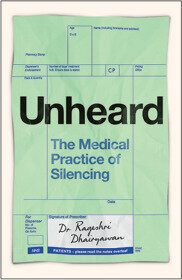 Annabel Sowemimo reviews Rageshri Dhairyawan's book Unheard: The Medical Practice of Silencing, describing it as "an honest book that expertly explores how structures, power, and care within medicine leave so many patients voiceless, as well as doctors dissatisfied with their doctor–patient encounters." The book looks at epistemic injustice, a term used to describe how patients' perspectives are ignored and belittled due to a longstanding view that they are unreliable sources of knowledge about their health. The review covers the different themes covered in Unheard including the impact of medical silencing on marginalised and vulnerable groups, how the concept of objectivity is seen in the medical community and patient advocacy.
 -
Content ArticleMost research to understand post acute sequelae of SARS-CoV-2 infection (PASC), or Long Covid, has focused on adults. Research is needed to characterise paediatric PASC to enable studies of underlying mechanisms that will guide future treatment. This JAMA study developed research indices for characterising paediatric PASC. The authors found that symptom patterns were similar but distinguishable between school-age children and adolescents, highlighting the importance of characterizing PASC separately in different age groups.
-
Content ArticleThe Covid-19 pandemic resulted in more falls with harms (FWH) in hospitalised patients; it has also resulted in an increased number of patients staying in isolation and receiving fewer visitors. This study aimed to look at the relationship between patient falls and visiting restrictions. The results suggest a moderately strong association between hospitalised patient FWH risk and severe visitor restrictions. This association was reduced in phases where even minor allowances for visitation were made by health services.
-
Content ArticleIntegrated care systems (ICSs) have been in place for nearly two years and the rate of progress varies significantly across the country. This report was produced collaboratively by the Local Government and Social Care Ombudsman and the Parliamentary and Health Service Ombudsman (PHSO). It aims to help local ICSs to prioritise their citizens by focusing on how frontline services can work together for local people. Featuring case studies about people accessing services, the report focuses on two key issues that affect joint working between health and social care providers: inadequate communication between service providers secondly service providers not always putting the person at the heart of their care.
-
Content ArticleThis report by Kidney Research UK brings together evidence from people affected by kidney disease, health professionals and researchers. It sets out recommendations for the research community and priorities identified by patients, to move us towards equitable kidney health for all. Read the lay summary
-
Content ArticleThis rapid response by consultant psychiatrist Rachel Gibbons responds to a BMJ article about the murders of Barnaby Webber, Grace O’Malley-Kumar, and Ian Coates by Valdo Calocane, who had schizophrenia. She outlines her concerns about coverage of the case, citing the CQC report and coverage of the case on BBC Radio 4. She highlights the difficult position healthcare professionals now find themselves in and outlines the need to manage public expectations of how mental health services are able to manage risk in the context of a system with resource constraints. Dr Gibbons states that there is a danger in making a "comparison between idealised standards of mental health care and the realities faced by healthcare providers."
-
Content ArticleThis rapid review by the Agency for Healthcare Research and Quality (AHRQ) summarises recent relevant literature on patient safety practices focused on engaging family caregivers with structured communication during care transitions. It assesses the effectiveness of these practices to improve safety during care transitions and provides information for clinicians, health system leaders and policymakers to better inform approaches to engaging family caregivers with structured communication during care transitions.
-
Content ArticleThis multinational study of 4,511,267 pregnancies in JAMA Neurology aimed to assess the associations between maternal epilepsy, antiseizure medication use during pregnancy and risks of severe maternal and perinatal morbidity and mortality. It found that: women with epilepsy were at considerably higher risk of severe maternal and perinatal outcomes and increased risk of death during pregnancy and postpartum. maternal epilepsy and maternal use of antiseizure medication were associated with increased maternal morbidity and perinatal mortality and morbidity. The authors identified an urgent need for enhanced counselling, perinatal support and access to specialised care for safe deliveries in all women with epilepsy.
-
Content ArticlePatients’ lived experience is increasingly seen as a valid form of knowledge in healthcare. However, although it is often said to be a source of valuable information to complement the knowledge of healthcare professionals, it remains difficult for people within the system to understand and use the different forms of knowledge patients acquire through their experience. In addition, patient knowledge is often not seen as essential in co-building care plans or valued as an asset in building care relationships. This narrative review in the journal Social Theory & Health, aimed to: challenge the dominant model of knowledge in medicine and healthcare by making the various forms of patient knowledge more explicit and tangible. provide a better understanding of what experiential knowledge consists of by classifying the various forms of knowledge patient acquire, develop and use throughout their care journey. The authors classify six types of patient knowledge according to their source of learning: embodied, monitoring, navigation, medical, relational and cultural knowledge. They also identify three main sources of learning for patients: the self, the system and the community.
-
Content ArticleThis case study looks at the experience of a mother whose baby boy collapsed and died 31 hours after being born at North Middlesex Hospital University NHS Trust. Due to his mother's history of group B Strep and exposure to meconium during the birth, the baby was put under neonatal review. However, although his mother repeatedly raised concerns about her son's condition, he was not checked over and her concerns dismissed. A review by the Healthcare Safety Investigation Branch (HSIB) into the baby's death found several issues with the care provided to both mother and son. It also raised serious concerns that the mother's ethnicity affected the care she received on the labour ward.
-
Content ArticleStructured medication reviews (SMRs) were introduced to primary care teams in England in October 2020, with priority given to high-risk patients, including people diagnosed with frailty or living in care homes, people with complex polypharmacy, people taking medicines commonly associated with medication errors and anyone using potentially addictive pain management medicines. However, after NHS England removed financial incentives for Primary Care Networks to carry out SMRs in April 2023, pharmacists have been told to deprioritise SMRs. This article looks at work under way to make sure SMRs remain a priority as pharmacists aim to minimise inappropriate polypharmacy. This article is free to access, but you will need to sign up for a Pharmaceutical Journal account to view it.
-
Content ArticleThe Learning for Involvement website is dedicated to learning and development for public involvement in health and social care research— what’s it all about and how to do it well. Set up by the National Institute for Health and Care Research (NIHR), the website aims to provide public involvement information, resources and training together in one place. The content is suitable for people with different levels of experience in public involvement and includes resources on the following topics: Co-production Impact and evaluation Payments Getting started: becoming involved Inclusive opportunities Getting started: involving people
-
Content ArticleNeuromuscular blocking agents (NMBAs) are high-alert medications that require special handling and a robust process that prevents medication error and ultimately protects patients from harm. One patient at a large academic medical centre (AMC) was given vecuronium, a NMBA, instead of midazolam, and died as a result. The medical centre was tasked by the Centers for Medicare & Medicaid Services to make a list of actions to prevent a similar incident happening again. This study in Patient Safety analysed the medical centre's corrective action plan in comparison to the Institute for Safe Medication Practices’ hierarchy of effectiveness of risk-reduction strategies. The authors found that 76% of strategies in the plan were of low leverage, 16% were of medium leverage and 8% were of high leverage. They argue that the action plan should have included more system-based interventions, which include medium- or high-leverage strategies, rather than relying heavily on initiatives dependent on human action. Despite the lack of these systemic tools, CMS granted approval for the plan. The authors suggest that overlooking these systemic tools may amplify patient harm and negatively impact workforce satisfaction and efficiency. In addition, they highlight that the absence of a “just culture” also plays a role in patient harm. Recognising that medication errors in healthcare are usually attributed to human error highlights the importance of fostering a just culture that advocates
-
Content ArticleThis is the Professional Standards Authority's (PSA's) response to the UK Government's consultation on the White Paper: A pro-innovation approach to AI regulation. The PSA response highlights several concerns about the content of the White Paper, including: the potential for a policy gap in relation to professional regulation, particularly in light of the decision to regulate the use of AI rather than the technology itself lack of engagement with professional regulators or accredited registers in the healthcare sector on development of the proposals. the need for further work to understand the regulatory landscape for AI within the sectors of healthcare and social care. that the principles-based approach may place too much reliance on the capacity of multiple regulatory bodies to adapt and work together.
-
Content ArticleLesley Goodburn is Head of Public Involvement and Engagement at NICE and has worked in patient experience and public and patient involvement for the last 15 years. In this blog, Lesley describes the benefits of supporting people with lived experience to work in equal partnership to develop services and improve care. She explains how approaches such as digital storytelling that enable patients and families to share their experiences on their own terms can help organisations learn and improve their services. She also describes how she developed an impact and outcomes framework that aims to build the evidence base around the impact of storytelling.
