


Mark Hughes
Members
-
Joined
-
Last visited
Everything posted by Mark Hughes
-
Content Article
 Published in July 2025, Dr Penny Dash’s Review of patient safety across the health and care landscape made a number of recommendations intended to streamline and consolidate patient safety functions in England. One of these was that the Health Services Safety Investigations Body (HSSIB), currently a independent arm’s length body of the Department of Health and Social Care, should have its functions transferred into the Care Quality Commission (CQC), though continue to operate as a discrete branch within the regulator. In this article Carl Macrae argues that this change risks potentially risks setting back progress in the systematic improvement of quality and safety, removing the health system’s nascent capacity for independent system-wide safety investigation.
 -
Event
until
The Healthcare Improvement Scotland webinar aligns with World Patient Safety Day on Wednesday 17 September. The theme for World Patient Safety Day is “Safe care for every newborn and every child” This event is for staff working in maternity and neonatal services, and those looking to learn more about Quality Management Systems in action. The webinar will look at Scotland’s evolving approach to perinatal safety through a quality management lens. This session offers an opportunity to: hear about our first year of maternity inspections and the development of national standards explore learning from emerging perinatal safety intelligence and improvement design hear from leads shaping the quality management approach contribute to a shared vision for safer, more equitable maternity care across Scotland The aims of our webinar are: Aligning the HIS Perinatal Quality Management System (QMS) with World Patient Safety Day 2025 – Patient Safety from the Start! Promoting an understanding of the HIS Perinatal QMS. Building an environment of collaboration between perinatal stakeholders. Register here. -
Content Article
 This report is a summary of information the Health Services Safety Investigations Body (HSSIB) collected during an exploratory review of maternity and neonatal services in spring 2025. This exploratory review involved meetings with 17 stakeholders and a review of 35 safety concerns submitted to HSSIB and one report published in 2021 by the Healthcare Safety Investigation Branch (HSIB), the precursor organisation to HSSIB.
 -
Content ArticleThis report from the Northern Ireland Public Services Ombudsman relates to the care and treatment the Northern Health and Social Care Trust provided to a patient on 12 April 2023 in relation to the treatment of grade two haemorrhoids. The investigation established two main failures in the complainant’s care and treatment. The first was the failure to provide the complainant with pain relief on discharge. The second was the failure to discuss with the complainant the risk and benefits of the proposed surgery during the outpatient appointment to enable her to make a fully informed decision.
-
Content ArticleNon-traumatic cardiac arrest is a critical condition, and errors and safety incidents during resuscitation reduce patient survival rates. Systematic investigations of patient safety incidents during resuscitation are limited. This systematic review examines the characteristics and nature of patient safety incidents during real and simulated resuscitation. This review identified a range of types of patient safety incidents that occur during non-traumatic cardiac arrest resuscitation which can be categorised thematically to support work to address the potential for latent safety issues effecting resuscitation.
-
Content ArticleThis report from the Northern Ireland Public Services Ombudsman relates to the care and treatment the Belfast Health and Social Care Trust provided to the complainant, a woman of 80 years of age, on 23 August 2023 when she had a CT Coronary Angiogram. The investigation established the Trust failed to provide appropriate aftercare to the complainant after she experienced extravasation during the procedure. It was unclear from the records how long the patient was monitored after this incident, as it was not recorded, but the Ombudsman stated that this was clearly less than the minimum hour required by the guidance. Further, the report states that the Trust did not provide the complainant with reassurance and explanation of what had happened.
-
Content ArticleThis is the video of a online event hosted by The Patients Association that considered what needs to be done to ensure patient partnership is in the foundations of the 10 Year Health Plan for England. The session explored what meaningful patient agency looks like in practice, drawing on real-life insights from the Patients Association helpline and focus groups.
-
Content Article
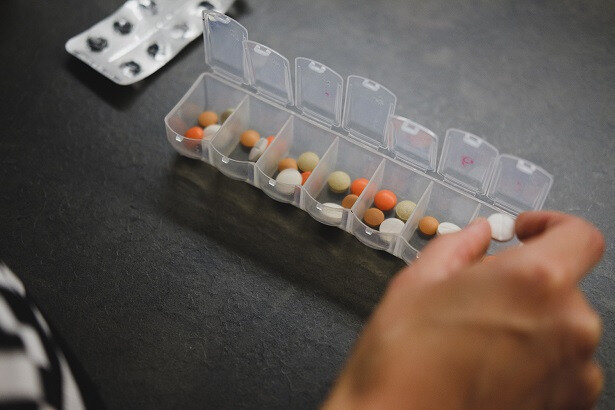 While at any one time the vast majority of medicines are in good supply, medicines shortages continue to present challenges to patient care at a global scale. This paper sets out the actions being taken by the Department of Health and Social Care and NHS England to protect patients from medicines shortages.
 -
Event
until
World Patient Safety Day (WPSD), which takes place annually on 17 September, was launched by the WHO in 2018 to raise public awareness, foster collaboration between stakeholders and mobilise global action to improve patient safety. This year's theme is Safe Care for Every Newborn and Every Child, with the slogan “Patient safety from the start!”, recognising the vulnerability of this age group to risks and harm caused by unsafe care. The WHO calls for urgent action to eliminate avoidable harm in paediatric and newborn care, driving meaningful improvements and reaffirming every child's right to safe and quality care. To help celebrate this year’s WPSD, the Royal College of Surgeons of Edinburgh (RCSEd) are hosting this webinar on the importance of system design in helping to ensure safety for neonates and children. This will feature a panel of paediatric surgery consultants, innovators and human factors experts discussing how we can best design systems and built environments to help ensure safety in paediatric surgical care. The importance of creating a simulated environment to allow people to fail safely and of ensuring appropriate psychological support when they do will be discussed. How to troubleshoot a build as a clinician to identify and ameliorate potential risks will also be covered. Also how we can adopt a multi-factorial system based approach to improving paediatric surgical care will be considered. The principles discussed will be transferable across all surgical specialties. Aims The aim of this webinar is to celebrate World Patient Safety Day and to help participants provide safe surgical care for every newborn and every child. Learning Objectives By the end of this webinar, participants will: Have a better understanding of World Patient Safety Day and the RCSEd’s commitment to patient safety. Appreciate the importance of simulation in learning and innovation, together with the value of being able to fail safely. Recognise the importance of appropriate support for staff when developing new services. Be better able to identify and ameliorate potential patient safety risks in any new infrastructure build. Be more confident in adopting a system wide, human factors approach when designing surgical services for neonates and children. Register here. -
Content ArticleThis consultation seeks views on the following proposed changes affecting 4 professional groups: extending the list of medicines that paramedics can administer in emergency situations using exemptions within medicines legislation extending the list of controlled drugs that physiotherapist independent prescribers are legally able to prescribe enabling operating department practitioners to supply and administer medicines using patient group directions enabling diagnostic radiographer practitioners working at an enhanced, advanced or consultant practitioner level to become independent prescribers of medicines These proposals aim to make it easier for patients to get the medicines they need when they need them, while maintaining patient safety. This consultation closes at 11:59pm on 28 October 2025.
-
Content ArticleWearable smartwatches present a novel approach to continuous patient monitoring in ICU settings. This study evaluated the impact of smartwatch use on alarm response rates and clinical outcomes in a 27-bed intensive care unit (ICU). Nurses in the ICU wore smartwatches in wards and researchers evaluated their response to alarms and the efficiency of their nursing work. Their findings suggest that using wearable smartwatches can significantly improve alarm response rates, reduce alarm response times and the number of alarms, and decrease alarm fatigue and adverse events.
-
Content ArticleLarge language models (LLMs) are being used to reduce the administrative burden in long-term care by automatically generating and summarising case notes. However, LLMs can reproduce bias in their training data. This study evaluates gender bias in summaries of long-term care records generated with two state-of-the-art, open-source LLMs released in 2024: Meta’s Llama 3 and Google Gemma. Its findings reveal notable variation in gender-based discrepancies was observed across summarisation LLMs.
-
Content ArticleThe Maternity and Neonatal Independent Senior Advocate (MNISA) role is being piloted across England following a series of high-profile maternity reviews. The role is designed to support families who have experienced the death or serious injury of their baby, or of a mother during NHS care, to help families navigate processes following the incident, ensure they are listened to, and ultimately influence system change. This report summarises the findings of the National Institute for Health and Care Research Rapid Service Evaluation Team’s assessment of the implementation, impact, and value of the role.
-
Content ArticleThe internet can be a great place to find out more about your health condition and find support. But it is crucial to make sure the information you find is trustworthy. Anyone can post anything online, including false health information. There are no laws stopping this. This page from the Patients Association is designed to help you find trustworthy information online.
-
Content ArticleResearchers in this study sought to understand whether chatbots would repeat incorrect medical details embedded in a user’s question, and whether a brief prompt could help steer them toward safer, more accurate responses. Its results found that AI chatbots are highly vulnerable to repeating and elaborating on false medical information, indicating a need for stronger safeguards before putting these tools into use in health care.
-
Content ArticleThe NHS Constitution states that people have a right to be involved in the NHS. By properly listening to people who use and care about services, the NHS can understand their diverse health needs better and focus on what matters. This helps to improve the quality of services, tackle health inequalities and make better use of public resources. The policy sets out how NHS England aims to meet its commitment to working in partnership with people and communities, including through roles such as patient and public voice partners.
-
EventContinuing with the JCI Patient Safety Pathways Grand Rounds, the next session of the Grand Round on "Pediatric Patient Safety”. This session is being organized to commemorate World Patient Safety Day 2025 aligned with the theme ‘Safe care for every newborn and every child’. This upcoming session will feature a compelling conversation between internationally recognized leaders in the fields of Pediatrics and Patient Safety - Dr. Sara L. Toomey, Senior Vice President, Chief Safety and Quality Officer & Chief Experience Officer, Boston Children’s Hospital, Associate Professor, Harvard Medical School, United States; Dr. Ashok Kumar Deorari, Pro Vice-Chancellor, Swami Rama Himalaya University, Former Professor & Head, Division of Neonatology, Department of Pediatrics, All India Institute of Medical Sciences, New Delhi, India; Dr. Marwa Ezz El Din, Patient Safety and Quality, Certified Patient Experience Professional, International Physician Surveyor, Joint Commission International, Dubai, United Arab Emirates; and Dr. Neelam Dhingra, Vice President and Global Chief Patient Safety Officer, Joint Commission International, Former Head, WHO Patient Safety and Blood Safety (2000-2024), Geneva, Switzerland. JCI invites you to register now to be part of this important initiative and share this information with your networks and social media channels. The registration is complimentary. Register
-
Content Article
 The Maternity Incentive Scheme (MIS) is a financial incentive program designed to enhance maternity safety within NHS Trusts. It rewards Trusts that can demonstrate they have implemented a set of core safety actions, ultimately aiming to improve the quality of care for women, families and newborns. This report from NHS Resolution provides an overview of the national results from year 6 of the MIS.
 -
Content ArticleMiscommunication in the robotic operating room is a significant contributor to patient harm. The researchers in this study observed 75 robotic surgeries and assessed miscommunication associated with flow disruptions.
-
Content ArticleWrong drug events (WDEs) occur when a patient receives a medication different from the one intended, can cause serious patient harm. In this study, researchers analysed patient safety event reports from the Pennsylvania Patient Safety Reporting System and identified the individual specific medications, pairs, and classes most frequently involved in WDEs and summarised the serious events that resulted in patient harm. Their work highlights the importance of giving close attention to medications with similar names, particularly those within the same medication class that share the same stem, such as “phrine” as in epinephrine and norepinephrine.
-
Content ArticleServant leadership is a leadership philosophy in which the primary goal of the leader is to serve others—especially their team, organization, or community. It prioritises the support, development, and well-being of followers, promoting trust and collaboration within healthcare teams. This study explored how healthcare managers’ servant leadership behaviours contribute to nurturing an organisational culture that boosts patient safety performance in public healthcare settings.
-
Content ArticleThis report from the Northern Ireland Public Services Ombudsman relates to the care and treatment the Northern Health and Social Care Trust provided to the complainant’s father at Antrim Area Hospital. The patient presented to the emergency department following a GP referral and after completing investigative tests the Trust discharged him on the same day. The complainant was concerned with the Trust’s decision to discharge her father given his poor health. She believed the Trust should have admitted him for further treatment. The ombudsman upheld their complaint. The investigation found the Trust did not act in accordance with relevant guidelines. It also identified that the decision to discharge the patient from the emergency back to his GP, with no further follow-up arranged, was a failure in his care and treatment.
-
Content ArticleThis report from the Northern Ireland Public Services Ombudsman relates to a patient’s complaint about care and treatment the Western Health & Social Care Trust. The patient sought medical assistance since 2013 for a chronic, undiagnosed condition and raised concerns about the Trust’s failure to identify a root cause of her condition. The investigation identified a failure in care and treatment. It found the Trust did not perform an MRI scan by an appropriate specialist to assist with diagnosis of the cause of the complainants ongoing symptoms between 2013 and September 2022 which were caused by deep endometriosis. It states that the failure identified led to a delay in diagnosis for the patient which meant she experienced prolonged chronic pain without an earlier opportunity for treatment.
-
Content ArticleThis is the recording of a webinar hosted by the Safety for All Campaign exploring the often-overlooked risk of surgical smoke in operating theatres—its harmful effects on both healthcare workers and patients, and the latest developments in mitigation, legislation, and safety technology.
-
Content Article
.png.127e592fbf33f9a549d64d4a1e773ef0.png) This article outlines Patient Safety Learning’s response to the UK Government’s announcement that it plans to bring forward secondary legislation to implement a statutory barring system for NHS leaders. These plans were announced as part of the Government’s formal response to the outcome of its public consultation on how to strengthen the oversight and accountability of NHS managers in England, published on 21 July 2025.
This article outlines Patient Safety Learning’s response to the UK Government’s announcement that it plans to bring forward secondary legislation to implement a statutory barring system for NHS leaders. These plans were announced as part of the Government’s formal response to the outcome of its public consultation on how to strengthen the oversight and accountability of NHS managers in England, published on 21 July 2025.

.png.127e592fbf33f9a549d64d4a1e773ef0.png)
