


Patient Safety Learning
Administrators
-
Joined
-
Last visited
Everything posted by Patient Safety Learning
-
News article
 The number of NHS staff in England is in year-on-year decline for the first time since 2013, as cuts to support and back-office roles combine with a sharp slowdown in clinical recruitment. Figures for England show 1.37 million full-time equivalent staff were employed across trusts and integrated care boards in June, down 4,116, or 0.3%, on the same month a year earlier. It is the third consecutive month in which the workforce has been smaller than 12 months earlier, with the gap widening from 0.1% in April to 0.2% in May and 0.3% in June. Annual growth had slowed steadily since the beginning of 2024. The workforce is now 9,371 FTE below its November 2025 peak. The groups seeing year-on-year falls are clinical support staff, managers, “central functions” – such as HR, finance, IT, and admin – and other infrastructure support. However, growth has significantly slowed among clinical staff groups – their numbers rose 1.9% over the year, down from 4.1% the year before and 5.8% the year before that. Read full story (paywalled) Source: HSJ, 3 September 2026
 -
Content Article
.png.a2695d71b417e01189f394cb5e343624.png) Ensuring patients receive the right care at the right time is one of the most important patient safety challenges facing the NHS, not least in stroke care where every minute matters. Rapid recognition, assessment, timely access to reperfusion therapy and effective specialist rehabilitation can mean the difference between a good recovery and lifelong disability. That challenge is becoming more significant. Stroke remains a leading cause of death and disability, with more than 92,000 people admitted to hospital with stroke across England, Wales and Northern Ireland during the period from April 2024 to March 2025. High-quality care for these patients requires coordination across the entire pathway, from prevention and emergency response through to specialist hospital care, rehabilitation and long-term support. With this year’s World Patient Safety Day focusing on safe care for noncommunicable diseases, this article reflects on the critical role that national clinical audit plays in supporting safer care, with a focus on stroke. The Sentinel Stroke National Audit Programme (SSNAP), led by King’s College London and commissioned by the Healthcare Quality Improvement Partnership (HQIP), demonstrates how evidence-based standards developed from national guidelines can help drive quality improvement across a complex healthcare pathway. This blog is part of a series on noncommunicable diseases, in support of World Patient Safety Day 2026 (WPSD26).
Ensuring patients receive the right care at the right time is one of the most important patient safety challenges facing the NHS, not least in stroke care where every minute matters. Rapid recognition, assessment, timely access to reperfusion therapy and effective specialist rehabilitation can mean the difference between a good recovery and lifelong disability. That challenge is becoming more significant. Stroke remains a leading cause of death and disability, with more than 92,000 people admitted to hospital with stroke across England, Wales and Northern Ireland during the period from April 2024 to March 2025. High-quality care for these patients requires coordination across the entire pathway, from prevention and emergency response through to specialist hospital care, rehabilitation and long-term support. With this year’s World Patient Safety Day focusing on safe care for noncommunicable diseases, this article reflects on the critical role that national clinical audit plays in supporting safer care, with a focus on stroke. The Sentinel Stroke National Audit Programme (SSNAP), led by King’s College London and commissioned by the Healthcare Quality Improvement Partnership (HQIP), demonstrates how evidence-based standards developed from national guidelines can help drive quality improvement across a complex healthcare pathway. This blog is part of a series on noncommunicable diseases, in support of World Patient Safety Day 2026 (WPSD26). -
Content Article
 Quality improvement, by itself, does not represent a holistic approach to managing quality. Quality improvement needs to be used alongside quality planning, quality assurance, and quality control to create a single, consistent management system. NHS England explains the key features and examples of tools in a quality management system, and the roles of team members within each aspect of the quality management system.
 -
EventEvery day, frontline staff identify opportunities to improve patient care, streamline processes and enhance the way services operate. Yet many of these ideas never progress beyond conversations within individual teams. Join this practical on-demand webinar exploring how NHS organisations can create the conditions for continuous improvement, where everyday insight becomes meaningful organisational change. During this practical session you'll explore: Why many improvement programmes lose momentum after an enthusiastic start The hidden cost of lost frontline insights How high performing NHS organisations sustain continuous improvement A practical framework for capturing, reviewing and implementing improvement opportunities How frontline insight becomes organisational intelligence Better ways to measure improvement beyond completed projects 5 questions every Improvement team should ask about their organisation A real NHS case study demonstrating continuous improvement in practice Every day across the NHS, thousands of opportunities to improve patient care are identified by the people closest to delivering it. Many are never captured. Many are never shared. Many are never acted upon. The organisations that consistently improve aren't necessarily those running the most projects. They're the organisations that make it easy for staff to contribute ideas, learn from one another and continuously improve the way they work. This webinar explores how to create those conditions. Sign up: https://meet.zoho.eu/vlhv-lbn-xnu
-
News article
 Ministers and officials are considering whether to keep some NHSE functions and staff separate from the Department of Health and Social Care when the organisation is abolished next year, HSJ has learned. Senior sources said no final decision had been made, and that ministers and officials were still considering options. They are grappling with concerns raised in recent months about the consequences of abolishing NHSE, due to take place under the Health Bill next April. Issues raised, particularly by senior NHSE leaders, in recent months include: the problem of attracting senior NHS leaders to work at the centre and in the regions within the DHSC, because civil service pay is a lot lower; other problems with converging NHS and civil service pay; the need to maintain distance and independence from ministers and government for some of the functions and decision-making; a lack of time to properly restructure and transfer thousands of staff carrying out complex functions by April. Some also believe that the new PM and health secretary, Andy Burnham and Yvette Cooper, are less keen than their predecessors to centralise more functions in the DHSC, but do not want to U-turn on the formal abolition of NHSE. Several well-placed sources said different options were still being considered. Read full story (paywalled) Source: HSJ, 3 September 2026
 -
Content Article
 The NHS will waste money on new technology if it fails to redesign the processes needed to turn IT investment into productivity gains, writes Steve Black in this HSJ article.
 -
News article
 An artificial intelligence receptionist system for general practices, which responds poorly to regional accents and speech impediments, could put patients at risk of digital exclusion, a health watchdog has warned. Healthwatch Rotherham said that many patients had experienced frustrations with “Emma,” a new AI receptionist that is being rolled out across general practices in the area. Its report warned that general practices had a legal duty to make reasonable adjustments for patients and said that such systems risked creating further barriers for the most vulnerable patients. One patient told the organisation, “I could never get it to understand me, I ended up just hanging up and not bothering to try and book an appointment.” Kym Gleeson, manager at Healthwatch Rotherham, said that the problem was an example of how AI systems risked creating further barriers for certain patients. She said that this included digitally excluded, disabled, and neurodivergent patients, and she emphasised that practices considering AI receptionists should “carefully assess what patients gain.” Read full story (paywalled) Source: BMJ, 1 September 2026
 -
Content Article
 Administration of parenteral nutrition without a filter has been associated with a number of adverse incidents including an embolism which resulted in a fatal outcome. Healthcare professionals are advised to use integrated or add-on filters during the administration of parenteral nutrition for patients in all care settings. All parenteral nutrition solutions should be administered via a filter with a pore size no larger than 1.2μm. Where available, it is good practice to administer aqueous/lipid-free parenteral nutrition solutions with a 0.2μm filter.
 -
News article
 A doctor in Guernsey revealed sensitive confidential medical information about one patient by taking a phone call while examining another patient, it has emerged. The breach of confidentiality was outlined in the latest report from Guernsey’s Office of the Data Protection Authority. This case came to light after the healthcare provider that employed the doctor reported the breach to the data protection regulator. The doctor remained in the examination room throughout the conversation, where the identifying details of the patients were revealed. Read full story (paywalled) Source: BMJ, 3 September 2026
 -
News article
 Patients at Cumbria's largest hospital "were not safe" when visiting its accident and emergency department, according to a new report. The Care Quality Commission (CQC) has published its findings based on two visits to the accident & emergency department at Cumberland Infirmary in February and March 2026. Overall, the hospital remains rated as 'requires improvement', though the safety rating for its A&E department was lowered to 'inadequate'. The report concluded that "people were not safe and were at risk of avoidable harm" due to "unsafe systems, insufficient staffing, environmental risks and weak governance arrangements." According to the report, inspectors found that: The department appeared visibly dusty and, in some areas, unclean. Resuscitation bays and temporary escalation spaces were cluttered with equipment which reduced the ability to clean these areas effectively. Staff did not ensure people had individualised care plans in place to support their ongoing needs. Leaders needed to address the significant backlogs of incidents that had not been reviewed or investigated yet. The service did not have a dedicated toilet, baby changing or breastfeeding facilities within the paediatric area. Staff did not always follow good hand hygiene practices or bare below the elbow principles. Read full story Source: ITV News, 4 September 2026
 -
News article
 A new independent expert advisory committee is to review how services will be delivered across hospitals in Northern Ireland. Health minister Robbie Butler said the Reconfiguration Committee will provide him with advice on major or controversial proposals for permanent changes to health and social care services. It follows a major political and public row around the future of Emergency General Surgery at Causeway Hospital which triggered the resignation of Mike Nesbitt. Announcing the move on Thursday, Butler said it will bring together independent clinical and public-interest expertise. "Crucially, it will be able to scrutinise the evidence underpinning proposals rather than simply accepting that evidence at face value. "It will consider patient safety, service quality, clinical effectiveness, and long-term sustainability," the minister said. Professor Deirdre Heenan, an expert in health policy at Ulster University, said the focus should be on implementing previous recommendations rather than carrying out further reviews. Read full story Source: BBC News, 3 September 2026
 -
Content Article
 The UK holds one of the most valuable health data assets on the planet. NHS records can follow a patient's health across decades, and General Practice (GP) records alone capture around 90% of a person's NHS interactions over their lifetime. Few other countries can match that depth and representativeness. It is a resource with the potential to accelerate the discovery of new medicines, improve patient safety, and attract high-value research and investment to the UK. ABPI has published a report setting out how that potential can finally be realised. For the first time, there is a clear plan, government backing, and a shared sense across the sector that this is achievable.
 -
News article
 Leading US medical groups are urging people to get updated flu and Covid-19 vaccinations this fall, banding together on Wednesday to issue shot guidelines – and highlight the science behind them – saying they hope to ease confusion caused by the Trump administration’s changing advice. Flu vaccinations are beginning and the latest coronavirus shots are starting to arrive after the Food and Drug Administration (FDA) approved this year’s updated versions last week. Winter also brings another vaccine-preventable risk called RSV. Advice on who should take the shots and when usually comes from the Centers for Disease Control and Prevention (CDC), with help from its independent advisers. But despite no new scientific evidence, Trump health officials last year began pulling back on some longstanding recommendations for fall virus protection and routine children’s vaccinations. And that advisory panel, which influences state and insurance vaccine policies, is caught in a court battle. The CDC did not respond to questions about any new fall guidance. Doctors’ groups are filling the gap: the American Academy of Pediatrics, American Academy of Family Physicians, American College of Obstetricians and Gynecologists and the Infectious Diseases Society of America each released vaccination guidelines for their patient populations. “There’s been a lot of confusion and chaos regarding vaccine recommendations,” said Dr Sandra Fryhofer, of the American Medical Association. The AMA is putting all the groups’ recommendations plus evidence on shot safety and effectiveness on a website, SpreadTheFacts.org, so “the public has clear, consistent, science-based guidance even while the federal process is in flux”, she said. Read full story Source: The Guardian, 2 September
 -
EventJoin Patient Safety Learning in London on 8 October or Leeds on 2 November for our new bespoke course - Practical Thematic Analysis for Patient Safety. Our facilitators Dr Helen Vosper and Claire Cox will combine deep subject matter expertise with systems thinking and human factors principles to help you turn patient safety data into actionable learning and improvement. The highly practical and evidence informed course will continue once you return to the workplace with support to give you the confidence to put what you've learned into practice. Spaces are limited, register your interest here. Download flyer below for more information about the day:
-
EventJoin Patient Safety Learning in London on 8 October or Leeds on 2 November for our new bespoke course - Practical Thematic Analysis for Patient Safety. Our facilitators Dr Helen Vosper and Claire Cox will combine deep subject matter expertise with systems thinking and human factors principles to help you turn patient safety data into actionable learning and improvement. The highly practical and evidence informed course will continue once you return to the workplace with support to give you the confidence to put what you've learned into practice. Spaces are limited, register your interest here. Download flyer below for more information about the day: ThematicAnalysis.FinalArtwork.27.08.26 (1).pdf
-
Content Article
 Artificial Intelligence (AI) holds tremendous potential to aid healthcare providers in diagnosis, treatment selection, clinical documentation, and other tasks to improve quality, access, and efficiency. However, these technologies introduce risks if deployed without proper 'guardrails' and understanding which may impact considerations in clinical practice as well as regulatory processes of state medical boards. By taking a proactive and standardised governance approach anchored in ethical principles, state medical boards can promote safe and effective integration of AI, in its various forms, while prioritizing patient wellbeing. This report summarises expert opinion and proceedings to develop guidance from the Federation of State Medical Boards (FSMB) Ethics and Professionalism Committee to aid physicians and state medical boards in navigating the responsible and ethical incorporation of AI centred on (1) education, (2) emphasising human accountability, (3) ensuring informed consent and data privacy, (4) proactively addressing responsibility and liability concerns, (5) collaborating with experts and (6) anchoring AI governance in ethical principles.
 -
Content Article
 A new study has found evidence that mesh-related injury may trigger central sensitisation, a biological process linked to widespread, persistent pain including fibromyalgia. Researchers studying 280 women with isolated mesh-associated pain found that more than half (52%) had co-existing conditions including fibromyalgia, chronic back pain and irritable bowel syndrome. The authors suggest that, in some women, nerve injury caused by mesh may contribute to hyperexcitablility of the central nervous system resulting in Central Sensitizationa -a process already associated with conditions like fibromyalgia, endometriosis and interstitial cystitis. The study was conducted by the Manchester Mesh Complications Specialist Service. As patient advocates, Sling the Mesh highlighted one message that stands out: "fibromyalgia is a significant part of the mesh story. While we succeeded in having fibromyalgia included in the NICE mesh complications decision aid, the mesh / fibromyalgia connection is still too often overlooked by doctors. We hope this study will help women to have their voices taken seriously".
 -
News article
 An at-home urine test can detect more than nine in 10 bladder cancer cases, a study has revealed. The non-invasive test which is being trialled by the NHS was tested on 964 patients across seven NHS urology departments. Around 10,900 new bladder cancer cases are diagnosed every year in the UK, according to Cancer Research. Most patients require an invasive procedure called a cystoscopy, which involves inserting a small camera up the urethra and into the bladder to be diagnosed. There are more than 300,000 cystoscopies a year, but this new non-invasive test could mean thousands of people are spared the test. Although it is not a replacement for cystoscopies, it could help doctors identify patients at greater risk who should be prioritised for urgent tests. “What matters most is identifying those most likely to have cancer sooner, while giving clinicians confidence when deciding which patients can safely wait for a cystoscopy,” Lee Silcock, Co-founder and Chief Product Officer at Nonacus and co-author of the study, said. Read full story Source: The Independent, 2 September 2026
 -
News article
 Hundreds of families say they have had to wait months or even years for a dementia diagnosis for a loved one. Such long delays have an impact on their own work, finances and mental health, a survey for the Alzheimer's Society charity reveals. The charity is calling for a national standard that would mean someone with dementia would receive an accurate diagnosis within 18 weeks of being seen and referred by a GP. Michael Fethon says his dad, Jim, waited 18 months from their initial appointment with a GP before being diagnosed. It was a delay that took its toll on Jim - and on Michael, who eventually had to give up his job to care for his dad. Michael says his father struggled to drive, shop and, eventually, even to walk. "It almost spiralled in that 18 months of his condition, gradually getting worse. "If we'd have had a diagnosis sooner, he could have started medication sooner, and whilst the medication doesn't cure dementia, it acts to sort of slow it down and eliminate the severity of it." In the survey, more than a thousand families and carers of people living with dementia revealed that nearly half of them waited for more than six months for an accurate diagnosis after their first visit to a GP. Michelle Dyson CB, of the Alzheimer's Society, says a diagnosis can really help families access support and plan for the future. "Too many families spend months, and sometimes years, waiting for answers while their dementia progresses. "It is like trying to plan a journey without knowing where you are going or when you will arrive. "You would never accept someone being diagnosed with cancer and then left to work out the next steps on their own." Read full story Source: BBC News, 2 September 2026
 -
News article
 The prime minister has admitted “structural difficulties” similar to those faced by a rural maternity unit recently forced to close over staff shortages are widespread across the NHS. During his first Prime Minister’s Questions, Andy Burnham said he agreed with Liberal Democrat leader Ed Davey that it was “not acceptable” for patients of North Devon District Hospital in Barnstaple, where births have been suspended for three weeks, to travel for up to two hours while in labour. Mr Burnham pledged his government would be investigating “structural issues affecting maternity services across the UK”, with new health secretary Yvette Cooper “looking at all the issues” following recent damning maternity reviews. He said: “I also say to [Mr Davey] with honesty that there are structural issues affecting maternity services across the UK. “This is not the only hospital where there have been difficulties. As a former secretary of state for health, I am aware that there have been long-standing shortages of midwives across the country. “It is right that we look at all those issues. I can give him a guarantee that…the health secretary is looking at those issues following the recent maternity reviews.” Read full story (paywalled) Source: HSJ, 2 September 2026
 -
Content Article
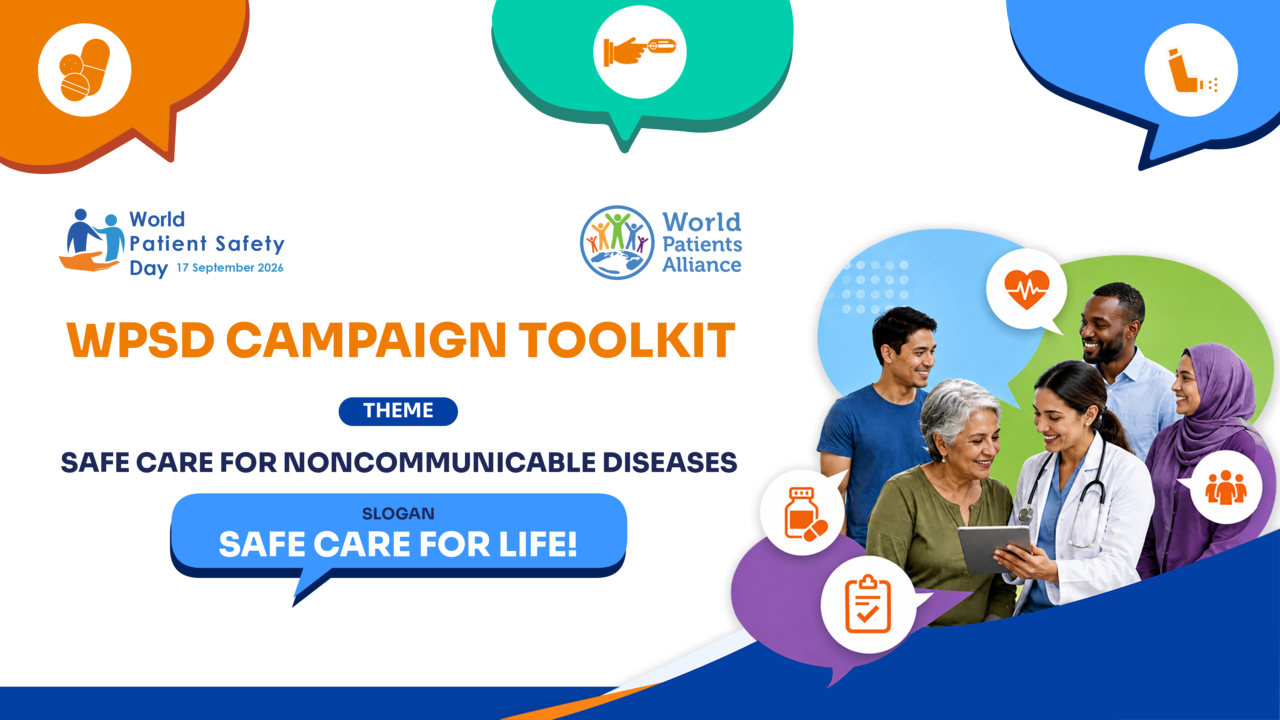 The World Patients Alliance has developed this toolkit to help WPA members, patient organisations and partners take part in the World Patient Safety Day 2026 campaign. The campaign focuses on the WPSD 2026 theme “Safe care for noncommunicable diseases” and the slogan “Safe care for life!” The toolkit includes a ten-day social media campaign calendar with matching visuals, five awareness posters and a customisable event banner. These resources can be used to raise awareness, share campaign messages and support activities leading up to World Patient Safety Day on 17 September 2026.
 -
News article
 The list of what artificial intelligence promises to fix in healthcare is long: administrative burden, diagnostic accuracy, care coordination, staffing shortages. But the things it could break, according to executives at major health systems, deserves equal attention. When asked to name the most dangerous trend in healthcare today, leaders from systems including Baystate Health, Banner Health and Cincinnati Children’s Hospital pointed to AI — not as a technology to reject, but as a force whose adoption is outpacing the governance, human investment and cultural change required to make it work safely. Their concerns gather around three themes: the erosion of human judgment and connection, inadequate accountability frameworks and the workforce consequences of deploying AI without deliberate reskilling. “Artificial intelligence is the most dangerous trend in healthcare today,” Peter Banko, president and CEO of Springfield, Mass.-based Baystate Health. “Better said, the promise of AI is the most dangerous trend. Vendors are peddling potential partnerships using AI to transform literally every part of our clinical enterprise and business. AI can be a most profound catalyst (in the order of magnitude of the Industrial Revolution) that can help us solve massive systemic challenges. Before taking that dangerous lunge, we need to understand and put frameworks into place around the governance, ethical, and emotional impact of AI on our industry.” That concern — adoption running ahead of accountability — is shaping how Steve Davis, CEO of Cincinnati Children’s Hospital, thinks about the workforce implications of AI-enabled care. “The most dangerous trend in healthcare today may be the assumption that AI adoption alone will improve performance, without equal investment in the human judgment, analytical skill, and training required to use it safely and effectively,” Mr. Davis said. “AI can strengthen decision-making, but only if organizations pair adoption with deliberate development of the critical thinking and analytical skills needed to use these tools safely and effectively.” Read full story Source: Becker's Health IT, 26 August 2026
 -
News article
 There has been a sharp rise in children and young people - some as young as six - attending A&E units in England in a mental health crisis, NHS doctors are warning. The number of six to 17-year-olds turning up in significant distress for things like self-harm and eating disorders, or in emotional crisis, rose by 36% between 2019 and 2025, according to the Royal College of Paediatrics and Child Health analysis. Some faced waits of more than 12 hours once there. The college said A&Es were not the best place for them, but a lack of support in the community meant they often had nowhere else to turn. The government said it was looking to improve services and would be setting out plans soon. The analysis – based on figures provided under the Freedom of Information Act by NHS England – found there were 75,491 attendances at A&E by children and young people for a mental health concern in 2025. That is up from 55,525 in 2019 with some of the biggest rises seen in very young children aged six to nine. The increases far outstrip the overall jump in attendances, which has risen by just over 8% over the period. Doctors said the cases included children and young people brought in by families, carers and police – some of those in emotional crisis become aggressive or have challenging behaviour. Read full story Source: BBC News, 2 September 2026
 -
News article
 A majority of healthcare staff have delivered end-of-life treatment to patients in hallway areas or temporary spaces, new research reveals. Inadequate staffing capacity alongside extreme time pressures were also identified as primary obstacles to looking after dying patients. Practitioners further described widespread flaws in care planning, causing uncertainty and occasions where CPR attempts were performed against the express wishes of patients. The joint Marie Curie and Nursing Standard poll of 1,153 nurses and healthcare professionals across the UK found 55% had treated patients in corridors or non-clinical areas. Over seven in 10 respondents reported that managing people in environments unsuitable for palliative care damaged patient dignity while leaving families and relatives deeply distressed. Regarding obstacles to delivering treatment, roughly 72.2% identified staff numbers as a major constraint, whereas 56.2% reported time deficits as a problematic issue. In addition, Marie Curie uncovered widespread flaws in advance care planning, generating uncertainty regarding what patients actually wanted during their final days. Over one-third of nursing staff stated they had seen resuscitation carried out despite considering the procedure completely inappropriate. Read full story Source: The Independent, 2 September 2026
 -
News article
 Infected blood scandal victims are urging the Prime Minister to "resolve injustices" within the compensation scheme. Campaigners and victims are demanding swift action to accelerate payments and address growing concerns, including criticism that the compensation body is requiring "unreasonably high standards of evidence". A dossier containing handwritten letters and supporting documents is set to be handed into Downing Street on Wednesday by campaigners ahead of Andy Burnham’s first Prime Minister’s Questions. The move follows the conclusion of the Infected Blood Inquiry earlier this year, which investigated what has been dubbed the worst treatment disaster in NHS history. Between the 1970s and early 1990s, more than 30,000 people in the UK contracted HIV and hepatitis C after being given contaminated blood and blood products. The scandal has led to more than 3,000 deaths, with survivors continuing to live with lifelong health implications. Read full story Source: The Independent, 2 September 2026
.png.a2695d71b417e01189f394cb5e343624.png)
