


Patient Safety Learning
Administrators
-
Joined
-
Last visited
Everything posted by Patient Safety Learning
-
Content Article
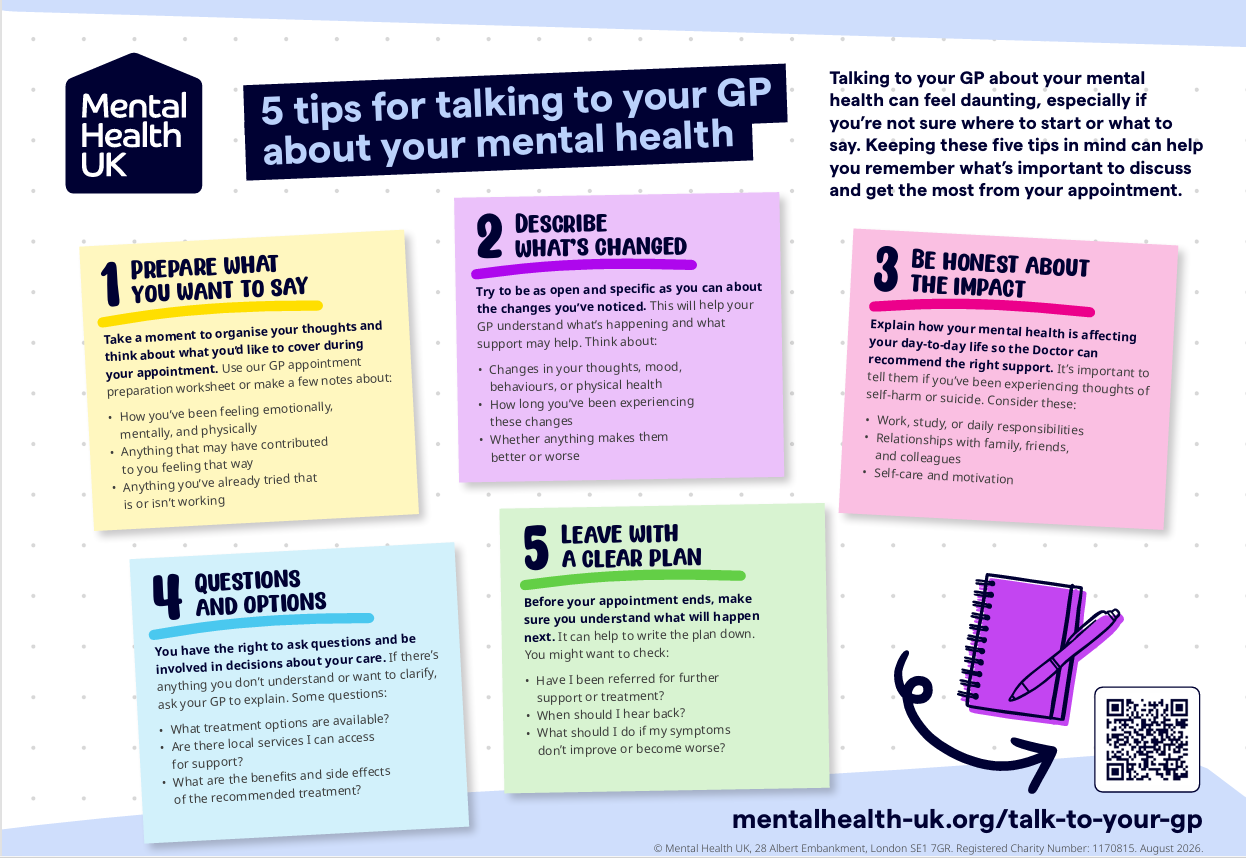 Talking to your GP about your mental health can feel daunting, especially if you’re not sure where to start or what to say. Keeping these five tips in mind can help you remember what’s important to discuss and get the most from your appointment. See further resources from Mental Health UK: free downloadable mental health resources.
 -
Content Article CommentFollowing Julie's blog, we heard from a patient who has had similar experiences. She was happy for her story to be shared below:
-
Content Article
 When someone dies by suicide, or by a self-inflicted death, including in a psychosis, or a mental health homicide (when a person is killed by someone experiencing mental illness), it is initially called an unexplained death by the Police and it is referred to the Coroner in the area the person died. For families the processes that follow can be confusing and distressing. Trying to navigate your way through these processes at a time of profound traumatic grief can feel almost impossible. This brief guide from Making Families Count provides an overview of what might happen and signposts you to further information and sources of support.
 -
News article
 When Poppy Russell died in April 2021 at the Princess Royal Hospital in Telford shortly after birth, her parents were left bereft. What followed made matters harder to bear - her mother was blamed for the death. An inquest would later conclude that Poppy's death was preventable. But instead of walking away from the trust that had failed them, Neil and Katie Russell are now working with it to bring compassionate care back into the NHS. "We could have very easily been consumed by hate and anger and rage at what happened – and those feelings are still there," said Katie. "But if no change comes from what happened to Poppy, then what's the point?" During her pregnancy her mother told midwives that she had tokophobia, a fear of natural birth and wanted a caesarean section. Katie said she was repeatedly told however that she "couldn't just ask for a c-section." When she went into labour, Katie was induced and then "we were left in a room for long periods of time where I had no care," she explained. "Finally, when we got into the labour suite, I wasn't monitored appropriately and they missed signs that Poppy was in distress." In a bitter irony, Poppy had to be delivered by emergency caesarean. By then however, she had developed a hypoxic brain injury and died later the same day. An inquest into her death found that had Poppy been born an hour earlier, she would have survived. The Shrewsbury and Telford NHS Trust (SaTH), which ran the hospital, subsequently blamed Katie for her daughter's death. They said she had refused foetal monitoring; the inquest concluded that was untrue. "The trust left us in an appalling position," said Neil Russell. "Not only were they found to have neglected our care, but in the months and years following, we uncovered that members of staff had tried to cover it up. “Losing your daughter is one thing, but then to find that there was a cavalcade of lies was almost as bad." Following the inquest in 2023 the trust said: "We recognise there were failings in the care we provided and we are truly sorry." Read full story Source: BBC News, 8 October 2026
 -
Content Article
 The government is committed to bringing down waiting times for elective care in England, aiming to achieve 92% of waits within 18 weeks by the end of the current parliament (at the latest in July 2029). In September 2025, The Health Foundation projected that – based on trends over Labour’s first year in power – 92% of waits would last up to 20.3 weeks by July 2029, falling just short of the headline pledge. This analysis shows that, over the 12 months to July 2026, the percentage of waits within 18 weeks improved from 61.3% to 65.4%. The waiting list also fell by 62,000 to 7.33 million, and the share of waits longer than 52 weeks improved from 2.6% to 1.5%.
 -
News article
 NHS chiefs have told ministers that their top health manifesto pledge - to restore the 18-week elective target by 2029 - is “not going to happen”, as a new analysis confirms the service is significantly off track. The intervention by the NHS Alliance, which represents the large majority of trusts and integrated care boards, follows experts questioning whether ministers should abandon the 18-week pledge last month. Health and social care secretary Yvette Cooper has highlighted other priorities, such as maternity and early years, since her arrival in July. The Health Foundation’s analysis published today projects the NHS will fall “a long way short” of the 2029 target if current trends continue, with the 92nd percentile wait nearly twice the 18-week standard by the end of the Parliament (see chart below). Responding to the think tank’s findings, NHS Alliance acute lead Matthew Hopkins said it was time for “an honest conversation” about the target, and to “acknowledge [meeting it] this Parliament is not going to happen”. He said: “Now with a change of prime minister and secretary of state, attention is turning to reform of social care, maternity and early years, and frailty services. We can’t have everything, everywhere all at once. “Let’s be honest about where we can get to with the resources available, so there is a clear understanding of what can and cannot be achieved.” Read full story (paywalled) Source: HSJ, 8 October 2026
 -
News article
 An ambulance trust is “not assured” the 45-minute limit on hospital handovers can be consistently delivered this winter, after repeated requests from hospitals to “pause” it. East Midlands Ambulance Service Trust’s winter plan, presented to its board last month, says support is needed for “a zero tolerance to pausing the process”, given “current requests for pauses”. Under the “release to respond” protocol, crews hand over their patient and leave after 45 minutes at hospital. NHS England’s urgent and emergency care plan for 2025/26 said the maximum, which 17 trusts were missing last summer, should “now be delivered without exception, including in the winter months”. Anna Parry, managing director of the Association of Ambulance Chief Executives, said: “There may be exceptional circumstances in which the protocol needs to be temporarily paused or suspended, for example where there are specific clinical safety concerns, during a declared incident or where there is exceptional system failure. However, these should be strictly governed, escalation-based exceptions, agreed between ambulance and acute trusts, rather than becoming a routine response to operational pressure.” She said any suspension should only be considered after actions to reduce pressure within the hospital had been exhausted. Sarah Noonan, chief operating officer of University Hospitals of Northamptonshire, the group formed by Kettering General and Northampton General, said: “Only when our emergency departments and inpatient services are at full capacity may we need to temporarily hold ambulance crews, while recognising the impact this can have on patients waiting for an ambulance in the community.” Read full story (paywalled) Source: HSJ, 8 October 2026
 -
News article
 A proactive pharmacist home visit service for housebound patients found that 30% had not received a medication review for more than five years, while 64% had not received a medicines review for more than two years. This was despite 66% of the patients involved living with five or more long-term conditions and 70% being at risk of medication-related harm. In some cases, “patients had gone more than 20 years or had never had a documented medication review”, the lead pharmacist for the project told delegates at the Royal College of Pharmacy’s Delivering a Healthier Wales conference, held in Cardiff on 25 September 2026. However, a pharmacist home-visiting project has enabled more than half of its patients to reduce their medication, improving rates of falls and hospital visits. Tracey Witherall, lead pharmacist for Aneurin Bevan Health Board’s Primary and Community Care Academy, shared an update on the Home Visit Project. This has run since summer 2024 and supports 349 housebound patients aged between 23 years and 103 years, with an average age of 80 years. The project was developed as part of efforts to improve access to care for the area’s most vulnerable patients, who are often frail, with high levels of polypharmacy and multimorbidity, Witherall said. “Visiting patients’ houses allows me to identify medication adherence issues and safeguarding issues, alongside other challenges such as loneliness, bereavement, poor mental health, housing problems, and unmet care needs. “All of these factors impact how patients manage and take their medication, and increases the risk of falls, worsens their long-term conditions and can result in avoidable hospital admissions.” Read full story Source: The Pharmaceutical Journal. 5 October 2026
 -
Event
until
This is a free, 1-hour, live online webinar, delivered by Ben Tipney. This session will cover the following: What does Psychological Safety mean? Is it simply 'Being Nice'? Is Psychological Safety a panacea, and can you have too much of it? Hints and Tips for building Psychological Safety in Practice Register -
Content Article
 The Regulators’ Pioneer Fund from the Department for Science, Innovation and Technology awarded funding to the Care Quality Commission to test the use of ambient voice technology (AVT) during regulatory assessments. The aim of the project was to explore how AVT could support CQC assessment activities beyond how service providers use it when delivering care to patients.
 -
Event
until
The Health Services Safety Investigations Body look into serious cases where there is a risk to the safety of NHS patients. Learning Disability England and the Health Services Safety Investigations Body are working together on this. You are invited by the Health Services Safety Investigations Body to come to a meeting about how people with a learning disability in England get help when they are unwell. The meeting will bring together people with a learning disability, carers and staff to share experiences. What we talk about at the meeting will be kept private and confidential. The Health Services Safety Investigations Body will write a report to help improve care in the NHS. That report will not include anybody’s name. Register -
Content Article
 According to a report from the Royal College of General Practitioners, around two-thirds of patients trust their GP for advice on how to live healthily, yet three quarters of GPs say they lack the time to offer preventive care, which may include advice on lifestyle, vaccinations and self-care. It argues that a stronger preventive approach could lead to better patient outcomes, reduced health inequalities, fewer avoidable hospital admissions and a more sustainable NHS. The report focuses on the role general practice can play in prevention, and the support needed to create the capacity for this work.
 -
News article
 The New York governor, Kathy Hochul, declared a state of emergency on Monday in response to a dramatic spike in measles cases in the state. Hochul’s administration said the emergency declaration was in response to a “growing number of measles cases across rural areas of New York and neighbouring states”, including Pennsylvania, which has been grappling with a deadly outbreak that is its largest in more than three decades. The declaration expands the pool of people who can administer vaccines against measles and allows more individuals to order testing. It comes as there have been 108 confirmed cases of measles in New York so far for the year, up from just one reported case in 2023. In Pennsylvania, which neighbours New York, five people have died after contracting the disease, and there have been 198 hospitalisations. The state surpassed 1,000 measles cases on Monday while Ohio has also seen an increase. “After reviewing the latest data on measles cases in New York state, I am declaring a State Disaster Emergency to strengthen our ongoing efforts to confront this disease,” Hochul said. “No one should get seriously ill or die from a vaccine-preventable disease. That is why I have taken steps to increase the number of health professionals who can vaccinate and test. These emergency measures will protect New Yorkers and support our community partners as they work tirelessly to address the spread of this disease.” Read full story Source: The Guardian, 6 October 2026
 -
News article
 Children under 10 should not be given obesity drugs or GLP-1 weight-loss injections such as Mounjaro and Wegovy, new global guidelines, external from the World Health Organization (WHO) say. Most of these medications are only licensed for children or adolescents older than this, but some doctors prescribe them off-label, and drug companies are testing them in children as young as six. WHO says the care should focus on healthy eating and exercise, not medicine or surgery, although they do not oppose drug trials. Some digital technology, such as activity trackers and any online games that encourage the player to be more active and move, might be useful, it says, based on the limited evidence available. Estimates suggest 170 million children and adolescents worldwide are obese. That includes 70 million children aged 5–9. Obesity prevalence in this age group has quadrupled since 1990, rising from 2% to 8%. In 2024, 35 million children under the age of five were overweight. Obesity increases the risk of many different diseases, including type 2 diabetes. Dr Luz De Rigil, Director of Nutrition and Food Safety at WHO, said: "For children under 10, WHO does not recommend obesity medicines, bariatric surgery or weight-management devices. This is a strong recommendation." Read full story Source: BBC News, 7 October 2026
 -
News article
 At least five trusts are reviewing their rates of repeat breast cancer surgery after recording levels significantly above the maximum expected level, HSJ has learned. Their high rates were identified in this year’s National Cancer Audit, published last month. While these can be caused by multiple and complex factors – and there is no suggestion at this stage of avoidable patient harm – the metric is a significant patient safety marker. For example, it was a factor in triggering the high-profile breast cancer care investigation which uncovered significant patient harm at County Durham and Darlington Foundation Trust. A review of up to 4,500 cases continues. HSJ contacted trusts which recorded rates more than 5 per cent above the maximum level expected by NATCAN auditors. Airedale Foundation Trust, Buckinghamshire Health FT, Royal Berkshire FT, Blackpool Teaching Hospitals FT and Torbay and South Devon FT all recorded rates that were more than 5% above the maximum level expected by National Cancer Audit Collaborating Centre (NATCAN) auditors, who examined the period between January 2021 and December 2023. Read full story (paywalled) Source: HSJ, 7 October 2026
 -
Content Article
 To mark World Patient Safety Day 2026, Voices for Safety released a special episode featuring Prof Alarcos Cieza, Head of Management of Non-communicable Diseases at the World Health Organization (WHO), and Prof Maria Panagioti from The University of Manchester and NIHR PSRC: Greater Manchester. The conversation explores a WHO-commissioned meta-analysis on patient safety and non-communicable diseases, led by Prof Maria Panagioti.
 -
Content Article
 World Patient Safety Day 2026, celebrated on 17 September, focused on safe care for non-communicable diseases, encouraging communities, healthcare practitioners, organisational leaders and policymakers to work together to tackle patient safety challenges and reduce harm for people living with long-term conditions. The six NIHR Patient Safety Research Collaborations are committed to improving patient safety and addressing health inequalities, including the challenges faced by people living with non-communicable diseases. Explore some of the ways in which NIHR PSRCs are helping to improve patient safety and health outcomes for people living with non-communicable diseases.
 -
Content Article
 In this opinion piece, Julie Gould draws attention to the side effects of the dopamine agonists she was prescribed for restless legs syndrome. She says that GPs are failing to warn and monitor patients about the serious and often under-recognised behavioural and psychological side effects of dopamine agonists, including augmentation and impulsive control disorder. Julie has set up the Dopamine Agonist Action Group with three fellow activists whose lives have been affected by dopamine agonists, calling for improved communication around the risks and better support for sufferers.
 -
Content Article
 Artificial intelligence (AI) technologies are being rapidly adopted in healthcare, yet organisational governance often lacks the processes needed to oversee their safe and responsible use. Previous AI governance frameworks largely focus on high-level AI ethics principles, leaving healthcare organisations struggling to translate these principles into practice, assess risk and embed AI oversight into existing processes. This study published in BMJ Digital Health and AI aimed to develop and validate a practice-oriented AI governance framework for healthcare organisations. The framework provides healthcare organisations with a structured approach to assessing, governing and monitoring AI systems throughout their life cycle and may support the safe and responsible adoption of AI in practice. Further research is needed to evaluate the framework across diverse healthcare settings and emerging AI technologies, including generative and agentic AI.
 -
Content ArticlePatient Safety Learning posted an article in Australian Commission on Safety and Quality in Health Care
 Posters are an effective infection prevention and control (IPC) education tool, particularly in resource- limited healthcare settings without dedicated IPC teams, such as aged care settings. The Australian Commission on Safety and Quality in Health Care has released new standard and transmission-based precautions posters to support infection prevention and control (IPC) within aged care.
 -
News article
 US Health Secretary Robert F. Kennedy Jr. last week told attendees at the Make America Healthy Again Summit that artificial intelligence could help address key health issues and can offer a “better-informed” second opinion than doctors, as the prominent vaccine sceptic once again railed against public health experts and COVID-era response strategies. Speaking to Vice President JD Vance in a “fireside chat” to close out the MAHA summit, Kennedy argued AI offers the capacity to solve the “most daunting public health problems that are otherwise existential.” Touting AI’s ability to digest thousands-page-long medical records, Kennedy claimed it can give you “a second opinion that is much better informed than any doctor in the country.” Kennedy said another change he expects AI to bring is that health policymaking will never again be dominated by public officials “who tell us ‘Trust the experts.’” Kennedy said every American will be able to check their own medical advice and argued that AI had the capacity to “free us from medical tyranny.” “If somebody tells you, ‘Masks work, trust the experts,’ A.I. may tell you otherwise. If somebody tells you, ‘Social distancing works, trust the experts,’ A.I. may correct that. And if somebody tells you that a vaccine will prevent transmission and infection, or you need to take it to protect your grandmother, A.I. may say it actually doesn’t do that,” Kennedy said. Read full story Source: Forbes, 1 October 2026
 -
News article
 The “concentration” of electronic patient record systems under a relatively small number of suppliers has increased the risk of highly damaging cyber attack, a government review has concluded. The Department of Health and Social Care’s Gateway review of NHS England’s Frontline Productivity programme reported “EPRs and their hosting/supplier dependencies present concentration and cyber risks”, and this “may warrant” their designation as “critical national infrastructure”. The review, which has been seen by HSJ, says responsibility for the cyber risks posed by EPR concentration was “fragmented” and that there was “material uncertainty” over how an attack might be prevented and responded to. The gateway review said it was “essential” that NHSE “publish minimum cyber security requirements for EPRs and clarify cyber risk ownership”. Read full story (paywalled) Source: HSJ, 5 October 2026
 -
News article
 The chair of a public inquiry into mental health deaths said she would make interim recommendations if she identified issues that "might pose an urgent risk to patient safety". Baroness Kate Lampard is examining the deaths of more than 2,000 people who died while under the care of Essex mental health services between 2000 and the end of 2023. The Lampard Inquiry will hear further evidence during hearings beginning on 5 October before deciding whether recommendations were needed ahead of a final report, Baroness Lampard said. Any recommendations were expected to focus on inpatient safety, including resuscitation procedures and monitoring technology used to detect patients in distress. "Those two matters are not specific to Essex and therefore the evidence the inquiry hears will be of relevance to service providers across the entire country," Baroness Lampard said. "It may carry implications for the care and treatment provided on all mental health units." One system under examination as part of the inquiry is Oxevision, which can take footage, record breathing and pulse rates and is used by a number of NHS mental health trusts in England. Concerns have been raised about privacy, dignity and whether the technology could be used as a substitute for face-to-face care. Tammy Smith, whose daughter Sophie Alderman died in 2022, previously told the inquiry: "It actually takes away human interaction. They are at their most vulnerable. "They need those conversations. They need someone to ask, 'Are you OK? Do you need anything?' We all need that." Read full story Source: BBC News, 5 October 2026
 -
News article
 Every ambulance trust in the south of England is missing the national category 2 response target so far this year, while all three northern trusts are inside it after a more sustained recovery. The national target for 2026-27 is an average response of 25 minutes for category 2 calls, which include suspected strokes and heart attacks. NHS England data for April to August shows a national average of 29 minutes, almost a minute slower than in the same months last year. North East Ambulance Service Foundation Trust (19m 13s), West Midlands Ambulance Service University FT (20m 42s), Yorkshire Ambulance Service Trust (24m 13s), and North West Ambulance Service Trust (24m 22s) are all under 25 minutes for the year to date. However, those figures do not yet include winter. NWAS was at 24m 26s at the same point last year and finished 2025-26 on 27m. South Western Ambulance Service FT (38m 41s), South Central Ambulance Service FT (32m 8s), London Ambulance Service Trust (31m 24s), and South East Coast Ambulance Service FT (27m 26s) are all outside the target, as are East Midlands Ambulance Service Trust (33m 59s) and East of England Ambulance Service Trust (32m 47s). The gap has widened over the past year. South Central, South Western, and London were slower in April to August than in the same months of 2025, by 4m 40s, 4m 14s, and 1m 52s respectively, while NEAS and Yorkshire both improved by more than a minute. Read full story (paywalled) Source: HSJ, 5 October 2026
 -
Content Article
 Maximising the value of AAR means getting answers to both parts of the fourth AAR question: “What have we learned?” and “What might we do with this learning? Yet the list of actions arising from an AAR can become needlessly long and this can both reduce the likelihood of the actions being completed and could add meaningless activity into an already over burdened system. In edition 16 of her newsletter, Judy Walker reflects on how the last part of an After Action Review (AAR) should not be to add more unnecessary steps on the patient pathway or commit to new activities that have little evidence for their efficacy. It should instead focus on a few actions that will have real impact and to make recommendations for others higher up the chain of command to be responsible for assessing.
