All content
Showing all content.
To sort the content by type, date or tags you will need to be logged into the hub. Join the hub today to enjoy full member benefits.
- Past hour
-
News Article
Doctors issue warning to people taking antidepressants during UK heatwaves

Patient Safety Learning posted a news article in News
Doctors have warned people on certain mental health medications to take extra precautions as hotter temperatures are expected to return to Britain this weekend. These medications include selective serotonin reuptake inhibitors (SSRIs), the most widely prescribed class of antidepressants in the UK, as well as some antipsychotics. Dr Nick Broughton, NHS England’s national director for mental health, learning disabilities and autism, said: “People taking antipsychotic medication and antidepressants need to be extra cautious during hot weather because some of these medicines can make it harder to keep the body cool. “So, it’s vital that anyone taking medication for their mental health needs should take extra care by keeping out of the sun where possible, drinking plenty of fluids and following any advice from their healthcare professional. “Most importantly, they should not stop taking their medication suddenly and can speak to their GP, pharmacist or mental health team for advice if they need to.” Read full story Source: The Independent, 2 July 2026 -
News ArticleExperts have warned that the diagnosis rate for a common bone condition in England is "flatlining," prompting the Royal Osteoporosis Society to call on ministers to ensure nationwide access to early diagnosis clinics. The charity cautioned that patients currently face a "postcode lottery" for these crucial services, also known as Fracture Liaison Services (FLS). An estimated 3.5 million people in the UK live with osteoporosis, a condition that progressively weakens bones, making them significantly more prone to fractures. The Royal Osteoporosis Society said that delays to roll out FLS across the country mean that diagnosis rates are “flatlining”. New analysis of the national Fracture Liaison Service audit show 79,553 patients were identified by FLS in England in 2025 compared with 77,136 in 2024. The Society said that these services need to identify 264,000 patients a year through these services to ensure that the full eligible population is properly served. And it warned that the consequences can be severe, saying these broken bones are the UK’s fourth biggest cause of disability and early death. Read full story Source: The Independent, 3 July 2026
-
News ArticleWomen from black and Asian backgrounds are less likely than their white counterparts to receive an epidural while giving birth, research has revealed. The findings, based on data collected from more than 2.7 million births in the UK, prompted experts to raise the alarm about an “ethnicity pain gap” that means people of colour are more likely to be deprived of adequate pain relief within medical settings. It comes as Guardian analysis exposes evidence of racial inequalities in pain relief offered to people across all areas of healthcare – from children in A&E to palliative care offered to cancer patients. Four medical royal colleges – the professional bodies for UK medical professions – called for better data collection on how patients from minority ethnic backgrounds are more likely to have their pain dismissed by health providers. The analysis on pain relief provided to women giving birth, published in the journal Anaesthesia, examined data collected over a 10-year period up until 2021. It found that women from a Bangladeshi, Pakistani and black Caribbean background were less likely than white women to receive an epidural while having a vaginal birth. They were 24%, 15% and 8% less likely respectively. Bell Ribeiro-Addy, a Labour MP and chair of the all-party parliamentary group on black maternal health, said the new findings left “little room for doubt that racialised assumptions are a key driver of unequal outcomes”. “The disparities around pain relief identified in this report are shocking and indefensible, but sadly not surprising, given the way black people’s pain has historically been doubted, downplayed and dismissed,” she said. She added that the findings were “inseparable from the wider context of racism and racial tropes such as the ‘strong black woman’”. Read full story Source: The Guardian, 2 July 2026
- Today
-
News Article
League tables ‘obscuring’ trust performance
Patient Safety Learning posted a news article in News
Government’s trust league tables are “actively obscuring” patients’ understanding of their local services and should be scrapped, a think-tank has recommended. The league tables are “management tools masquerading as public information” which could encourage providers to do “things that improve a league position without improving care,” the Nuffield Trust said in a blog. The league tables, updated quarterly and most recently last month, were first published in September by then health secretary Wes Streeting. He hailed them as a key plank of a “new era of transparency and accountability” for the NHS. Mr Streeting stressed the public value, adding “patients and taxpayers have to know how their local NHS services are doing compared to the rest of the country”. The tables rank 205 NHS trusts across approximately 30 indicators covering waiting times, cancer access, urgent and emergency care, and financial balance. But Nuffield Trust CEO Thea Stein argues that while the National Oversight Framework has merit as an internal performance management tool, it “fails” as a guide to the public on the care quality organisations are providing. She writes in a blog today that after nine months of the league tables, the evidence suggests they “are actively obscuring the picture [about the quality of local services for patients] rather than illuminating it”. “What patients need is clear, relevant, easy-to-understand information about the services they are using and, where it applies, the ability to make a timely, informed choice. The league tables do not provide that… As a public-facing product, they should go.” She also said they had created “exactly the conditions in which gaming behaviour tends to emerge”. Read full story (paywalled) Source: HSJ, 3 July 2026 -
Content ArticleLast year, the government introduced league tables rating the performance of NHS trusts in England. In this Nuffield Trust long read, Thea Stein, who raised concerns at the time, argues that the tables are a poor guide to the quality of care that patients can expect.
-
Content ArticleIn edition 14 of her newsletter, Judy Walker reflects on the Patient Safety Incident Response Framework and the learning tools two years after her first survey to understand what has changed and whether organisations have moved from implementation to optimisation, how effectively After Action Reviews (AAR) and other tools are improving safety and outcomes, and how well they are now embedded in governance and organisational learning. She invites readers to complete her new survey: Survey on Learning Response Tools and After Action Review (AAR) 2026
-
Content ArticleA relational care approach rooted in continuity and family involvement could help avert future tragedies arising from severe mental illness, writes Rachel Bannister in this BMJ opinion piece. The Nottingham inquiry recently concluded its evidence sessions in the case of Valdo Calocane, who killed three people in June 2023. His diagnosis of schizophrenia and his interactions with healthcare have prompted reflection on the state of UK mental health services and what more should have been done to prevent this tragedy. The inquiry has rightly highlighted the importance of prevention, continuity of care, and the meaningful involvement of families. The role of families in supporting people with severe mental illness deserves greater attention. Concerns were raised that Calocane’s parents were not listened to and that services failed to appropriately inform and involve them in their son’s care. Across decades, the same challenges continue to emerge without meaningful change: inequitable access to care, preventable and other mental health related deaths, and failures of inpatient services. While there are clear and longstanding concerns about funding, investment, and service cuts, the problems extend beyond resources alone. Even with adequate investment, we must consider what mental health services should look like and whether they are truly designed to provide the consistent, compassionate, and preventive care that could avert future tragedies.
-
Content Article
Helping patients address the consultation recall gap

Olivier posted an article in Apps for health and care
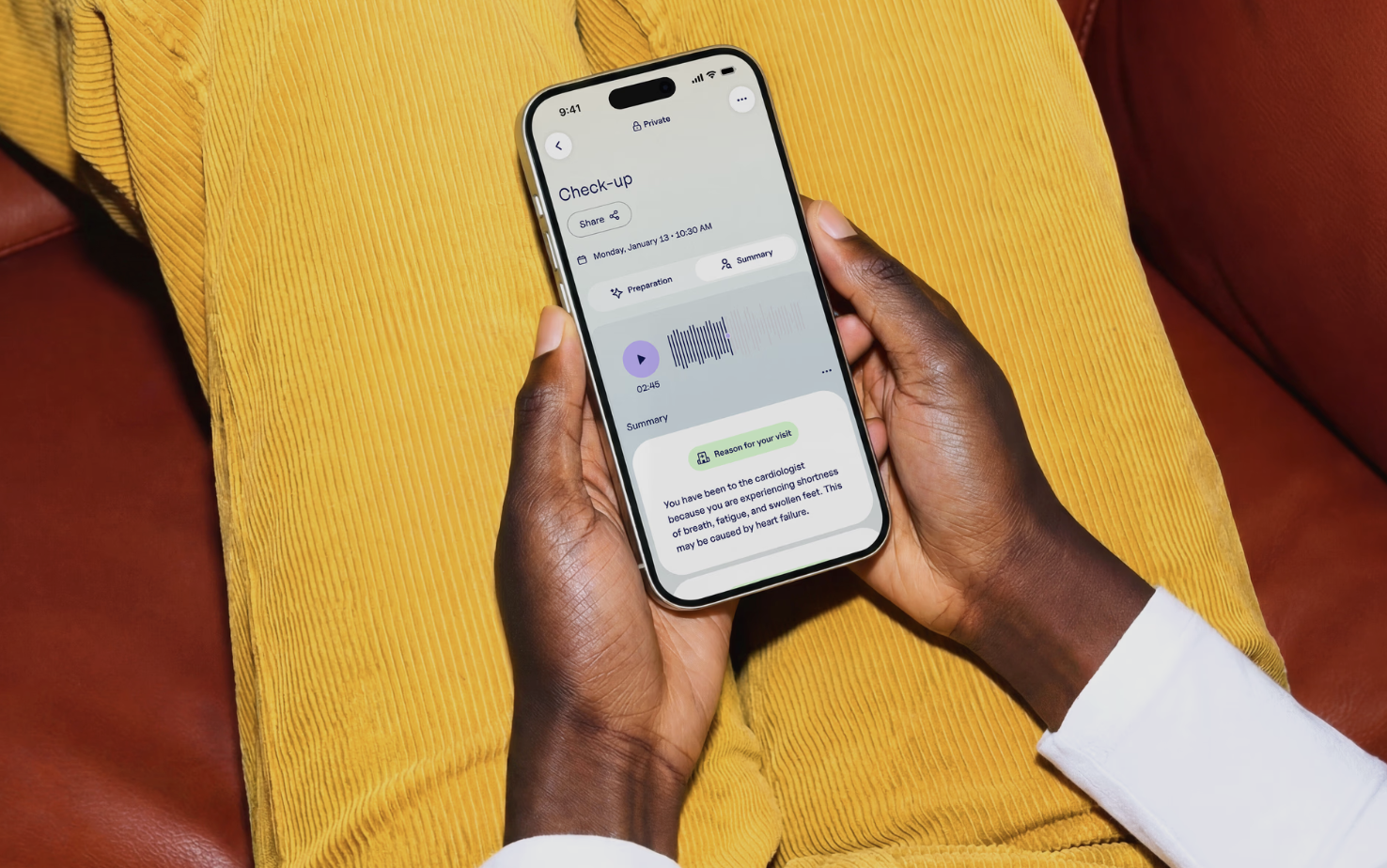 Patients forget up to 80% of what is said in a consultation, and families often act on distorted second-hand accounts. This recall gap sits upstream of medication errors, missed red flags and weak informed consent. Olivier Desloges discusses how digital technology can help patients record their appointments and generate plain-language summaries they can share. The problem Patients forget between up to 80% of the information given to them in a medical consultation.[1] Roughly half of what they do remember is recalled incorrectly and, when families rely on a relative's account, the picture distorts further with each retelling. This isn't a peripheral usability issue. Patients leaving consultations unable to accurately recall or share what was discussed is a recognised patient safety issue and can lead to: Medication errors at home: wrong dose, missed timing, stopped early. Failure to act on red-flag symptoms the clinician explicitly flagged. Care decisions made by family members on the basis of second-hand accounts. Missed follow up appointments. Where it matters most The risk of recall gap can vary depending on the patient, their condition and their environment. For example: Oncology consultations: dense information, distressed patient, time-critical decisions. Older patients leaving GP or outpatient appointments with multiple medication changes and no companion. Parents leaving paediatric A&E with safety-netting instructions to remember overnight. Antenatal advice that needs to translate into action weeks later. Mental health appointments where safety planning is discussed under emotional load. The right to record your consultation Most patients don’t know this, but In the UK patients have a legal right to record their own consultations for personal use. They don't need the clinician's approval, and the right extends even to covert recordings. The British Medical Association and Medical Defence Union both acknowledge this position. However, I would always encourage patients to ask first. It's a matter of courtesy, it sets the tone of the consultation and it tends to produce a better conversation. But the underlying right is established and uncontroversial. How apps are helping patients Smartphone apps, such as Ditto, can be used by patients to record a consultation. It produces a plain-language summary the patient can read, save and share; with a partner, adult child, carer or anyone else they choose. Nothing is shared automatically and it runs under UK GDPR. Summaries can be produced in the patient's preferred language. Limitations to be aware of AI summaries aren't a substitute for the clinician's notes or a follow-up letter, although these too can be uploaded into an app to be summarised in easy language for patients. It depends on the patient having a smartphone and being comfortable using it. Not everyone will. Clinician comfort with being recorded varies. We always encourage patients to ask their clinician first. It's a matter of courtesy, trust and a better consultation overall. But the right itself is established in the UK. How clinicians and safety teams can engage Suggest it to patients facing a consultation where recall is likely to matter most. Pilot it in a service where recall failure is already known to cause harm. Tell us where you think these apps fall short: the critique will help developers ensure apps are designed for the clinician and the patient. Reference Kessels RPC. Patients' memory for medical information. J R Soc Med. 2003;96(5):219–222. About the Author Olivier Desloges is Head of Expansion at Ditto, a free app that allows patients to record their medical conversation and receive a plain text summary that they can then refer back to or share with family, a carer or another clinician. Opinions expressed in blogs and other content are those of the author. Patient Safety Learning welcomes sharing content and opinions that promotes safer patient care and for the reduction of avoidable harm. The views expressed on the hub however do not necessarily represent Patient Safety Learning's views or values. References to a specific product or service does not imply a recommendation or endorsement.
 -
Content Article Comment
My hysteroscopy experience felt like gold standard

Anonymous commented on Patient_Safety_Learning's article in Women's health
Hi im so glad you had a posative experiance but you are rare approximately 13% what concerns me is liverpool's womens hospital is notoriously a bad place to have one done numerous stories on care opinion , instagram and the campaign against painful hysteroscopy survey. there. There are 2 female garnecologists that ( they also run a podcast ) perform it at that hospital, and one of them said distraction is pain relief. It's also been an issue with access to gas and air. I believe one woman is better at giving it out than the other. Im also conserned at the misinformation you are giveing out you were not greated by 3 nurses 1 of them was possibly a nurse the other 2 would be HCA they have NOT medical traned and are there to "support" sometimes by holding you down and and cover them legaly when they tourure some one also ibropropfine gives no pain relif during only after as i say im realy glad it was ok but plese reamember you are the exseption not the ruel and most women do not tolerate it well please tell me did they say other wise i channel genuinely, want to know what was said- Posted
- 1 comment
-
- Yesterday
-
Content Article
IBM: What is physical AI? (19 January 2026)
Patient Safety Learning posted an article in Artificial Intelligence
Physical AI refers to artificial intelligence (AI) systems that operate in and interact with the physical world, rather than existing only in software or digital environments. Physical AI typically involves the combination of AI models with sensors, actuators and other control systems that allow models to act upon real-world environments, taking models from the realm of bits to the realm of atoms. With AI, advanced physical systems can now perceive the environment, reason with the power of a large language model (LLM), act accordingly, and then learn from the outcome of that action. This IBM article explains more. -
EventThis conference focuses on patient involvement and partnership for patient safety including implementing the New National Framework for involving patients in patient safety, and the role of the Patient Safety Partner (PSP) in your organisation or service. The conference will also cover engagement of patients and families in their own safety, and patient involvement under the Patient Safety Incident Response Framework: For further information and to book your place visit https://www.healthcareconferencesuk.co.uk/virtual-online-courses/patient-involvement or email [email protected] Follow the conference on X @HCUK_Clare #PatientPSP2026 hub members receive a 20% discount. Email [email protected] for a discount code.
-
EventThis conference focuses on recognising & responding to the deteriorating patient in paediatrics and ensuring best practice in the use of the National Paediatric Early Warning System. The conference will include National Developments including effective implementation of PEWS in inpatient and emergency departments, Marthas Rule in Paediatrics and will update you on the November 2025 Suspected sepsis in under 16s: recognition, diagnosis and early management. For further information and to book your place visit: https://www.healthcareconferencesuk.co.uk/virtual-online-courses/deterioration-in-paediatrics or email [email protected] hub members receive a 20% discount. Email [email protected] for a discount code.
-
EventThis conference brings together leading experts at the forefront of ensuring adherence to Martha’s Rule and offers a comprehensive and practical guide for clinical staff to seamlessly integrate Martha’s Rule into their daily practice. The conference delves into the caregiver’s perspective, principles and implications of Martha’s Rule, legal and patient safety considerations, effective communication strategies, and the use of technology in the adoption of Martha’s Rule. The 2026 six core Martha’s Rule core standards will be discussed and we will explore using the core standards to self-assess and obtain assurance on Martha’s Rule implementation or identify gaps for focused improvement. For further information and to book your place visit https://www.healthcareconferencesuk.co.uk/virtual-online-courses/marthas-rule-patient-safety or email [email protected]. hub members receive a 20% discount. Email [email protected] for discount code.
-
Event
Eliminating corridor care
Patient Safety Learning posted an event in Community Calendar
Corridor care refers to the practice of providing patient care in spaces that are not designed or equipped for clinical use. Whilst patients and staff agree this is completely unacceptable a report by the APPG in 2025 stated that In a survey of Emergency Department Clinical Leads in summer 2025, almost one in five patients were being cared for in corridors. NHS England have committed to eliminating corridor care and will begin collecting data on corridor care, and will publish it, subject to data quality, each month from May 2026 on NHS England’s website. This conference focuses on improving practice in eliminating corridor care through practical solutions and action plans to eradicate the practice. This conference will enable you to: Network with colleagues who are working to eliminate Corridor Care Understand the National definition and requirements in terms of escalation and incident reporting Learn from outstanding practice in reducing corridor care Reflect on how a human factors approach can change culture and practice Develop your skills in escalation, reporting and learning from incidents of corridor care Ensuring board ownership and escalation Implement the principles for providing safe patient care in corridors when it does happen Understand how you can action plan to eradicate corridor care Identify key strategies for improving patient flow Ensure you are up to date with the latest national developments Self assess and reflect on your own practice Supports CPD professional development and acts as revalidation evidence. This course provides 5 Hrs training for CPD subject to peer group approval for revalidation purposes For further information and to book your place visit https://www.healthcareconferencesuk.co.uk/virtual-online-courses/eliminating-corridor-care or email [email protected]. hub members receive a 20% discount. Email [email protected] for discount code. -
Content ArticleThe Health Economics Unit (HEU) has developed A framework for the ethical and effective decommissioning and disinvestment in clinical services, in partnership with the HFMA. The framework is designed to support health and care leaders to systematically evaluate, prioritise and implement decommissioning and disinvestment decisions, particularly in systems facing significant financial deficit. In producing the framework, the HEU explored the following questions: Reasoning: How are services or providers identified for decommissioning, consolidation or other significant change? Process: What constitutes best practice in decommissioning, consolidation, service redesign and the reallocation of funds? Challenges: What gaps and limitations have been identified that affect or constrain the decommissioning process and associated decision-making. Decommissioning framework - accompanying guide.pdf
-
Content ArticleThe Learn from patient safety events (LFPSE) service is a national NHS system set up by the National Patient Safety Team at NHS England, it is free to use and is available online as a web portal, to record information about patient safety events and support the improvement of safety across all care settings. NHS Somerset has produced an information sheet for primary care.
-
Content ArticleLanguage in electronic health records (EHRs) can transmit stigma, discrediting patients in ways that undermine the clinician-patient relationship and compromise future care. The authors of this study sought to develop a taxonomy of stigmatising language in EHRs to understand what patients are being stigmatised for, how that stigma is conveyed linguistically, and why. The authors identified six categories of stigmatising sentiments characterising patients as: (1) Socially undesirable, (2) Difficult to interact with, (3) Incompetent, (4) Manipulative, (5) Noncompliant, and (6) Not credible. These were implied through negative descriptions of patient behaviour portraying them as, e.g., Demanding, Adversarial, Deceptive, etc. Linguistic mechanisms extended beyond keywords, including practices for emphasising the intensity of patient behaviour (e.g., intensifiers), marking distance or divergence from the patient’s perspective (e.g., skeptical evidentials) and casting the clinician as the neutral or rational party (e.g., euphemisms). Stigmatising language in EHRs is not limited to discrete terms but is embedded in broader linguistic practices that shape how patients are represented and understood, particularly those describing how they fail to align with clinical expectations. This language may serve to document professional challenges, but it nonetheless reinforces paternalistic norms and compromises care. Understanding these dynamics is critical for moving toward patient-centered documentation and reducing harm in the EHR.
-
Content ArticleThe Medicines and Healthcare products Regulatory Agency (MHRA) regulates medicines, medical devices and blood components for transfusion in the UK. This roundup provides a summary of their latest safety advice for medicines and medical device users. It includes details of medicine recalls, medical device field safety notices and details of how to report drug reactions and device incidents. This month's Safety Roundup includes: Drug Safety Update on ACE-inhibitors: Be aware of the distinction between bradykinin- and histamine-mediated angioedema, as treatment strategies differ significantly. Letters, medicines recalls and device notifications sent to healthcare professionals in June 2026 . News and guidance on: MHRA launches AI sandbox to accelerate medicines development and improve safety.
-
Content ArticleStephen Bolsin, the anaesthetist who raised concerns about paediatric heart surgery services at the Bristol Royal Infirmary, told a BMJ conference on whistleblowing that all doctors should be given regular anonymous feedback about their performance so that they can "blow the whistle on themselves" before serious errors occur. "Risk adjusted measures of performance can be achieved," he said, "and these need to be anonymously fed back to the people carrying out the treatment. All medics will want to improve their performance once they have seen the data." He argued that this type of feedback could be an important mechanism of quality improvement. Related reading: Stephen Bolsin: Whistleblower on the Bristol scandal Whistleblower in Bristol case says funding was put before patients
-
Content ArticleMeaningful patient and public involvement and engagement (PPIE) is fundamental to delivering a health and care system that is equitable, effective, and responsive to the needs of the populations it serves. This new report highlights the collective impact of PPIE activity across the 15 health innovation networks in 2025/26, showcasing how insights from lived experience are shaping the design, delivery, and spread of innovation. From early-stage research and development through to implementation at scale, patient insight strengthens relevance, improves outcomes, and ensures that innovation is not only clinically effective, but also accessible and acceptable to those who need it most. Across the Network, PPIE activity is helping to strengthen innovation pathways, reduce health inequalities, improve relevance and adoption, and build stronger relationships with local communities and partners. Related reading on the hub: 10 questions every organisation should ask about their PPIE Avoiding tokenism: ensuring meaningful Patient and Public Involvement and Engagement (PPIE)
-
Content ArticleHow one of the poorest towns in England bought its abandoned local hospital and transformed it into a model for the future of health care and public services.
-
News Article
Northern Ireland: Concerns raised over 'deteriorating' health buildings
Patient Safety Learning posted a news article in News
There are significant concerns that a substantial number of Northern Ireland's healthcare buildings cannot deliver safe and effective services, according to a new report from a public spending watchdog. The Auditor General's latest analysis of what is known as the health estate said only 40% of facilities were in an acceptable condition, with many categorised as being "high risk" and requiring urgent maintenance costing more than £250m. The report said almost half of the estate was more than 50 years old and about one sixth more than 75 years old. The Department of Health welcomed the report and said work had already begun to tackle some of the issues identified. It added that health trusts had "provided assurance" that all associated risks were managed to ensure buildings remained "in a safe state to support service delivery". Read full story Source: BBC News, 2 July 2026 -
News ArticleThe NHS will have to divert £45bn from essential services to pay for new medicines under the terms of the UK-US trade deal agreed last December, leading to more than 200,000 avoidable deaths of patients, analysis has found. Ministers have defended the deal as a way of helping British drug exports to the US avoid tariffs, and giving patients in England access to potentially life-extending drugs that would otherwise be denied. But they have been accused of caving in to US demands to spend billions of pounds a year extra on drugs supplied to the NHS after pressure from Donald Trump. The potentially devastating impact on NHS care has also caused growing alarm among health experts. Now analysis, published in the British Medical Journal, lays bare the likely cost of the deal to the NHS – and the projected deadly impact of cuts to health services on the population in England – for the first time. In total, £44.7bn in NHS cash will be diverted from health services by 2036 in order to pay more for new medicines under the trade deal, unless extra funding is made available to cover the additional costs, the analysis suggests. Reduced NHS spending on services will have an adverse effect on the nation’s public health, the analysis found, causing 229,000 excess deaths by 2036. The estimated avoidable death toll is larger than the number that occurred during the Covid-19 pandemic, between March 2020 and June 2022 (137,000). If the indirect effect on adult social care was also included, excess deaths would increase to 291,000, the report from the University of York, the University of Liverpool and Christchurch hospital in New Zealand found. Most of the preventable deaths would be among people with heart, respiratory and gastrointestinal disease or cancer. Read full story Source: The Guardian, 1 July 2026
-
Content ArticleSamuel Cross, Karl Claxton, and Andrew Hill argue that diversion of billions of NHS funding to pay more for new drugs under the UK-US trade deal will harm public health and result in thousands of excess deaths.
-
News Article
Mackey issues 10-point ‘urgent’ maternity plan
Patient Safety Learning posted a news article in News
The CEO of NHS England has ordered trust boards to enforce joint accountability for maternity between medical directors and chief nursing officers, following criticisms of “siloed” leadership in major reviews. In a letter circulated to hospital trusts, Sir Jim Mackey said he had been “deeply moved” by recent reports by Baroness Valerie Amos and Donna Ockenden. In the note, seen by HSJ, Sir Jim said it must be a “turning point”, adding: “We cannot allow failures in care to persist and be followed by reviews that continuously highlight the same themes.” He announced a “10-point plan for maternity and neonatal services”, saying there are parts of the reviews that “we must focus on delivering now.” This includes asking boards to complete audits of their triage services within three months, and implement improvements within a year. They should ensure all pregnant women have 24/7 access to maternity units, with dedicated round-the-clock midwifery staffing to answer calls and provide face-to-face assessments, which should be separate from the labour ward. National standards for triage services will be circulated by the end of this week. Triage services were a major focus of criticism in the Amos review. Trusts must also check mortuaries by 31 July, in response to findings about shocking treatment of bodies, particularly by Ms Ockenden at Nottingham hospitals. Both reviews found leadership had become “siloed”, with conflicts between obstetricians and midwives. In response, Sir Jim said all trusts must establish clear joint accountability at board level for maternity and neonatal services. Read full story (paywalled) Source: HSJ, 1 July 2026