


Summary
Patients forget up to 80% of what is said in a consultation, and families often act on distorted second-hand accounts. This recall gap sits upstream of medication errors, missed red flags and weak informed consent. Olivier Desloges discusses how digital technology can help patients record their appointments and generate plain-language summaries they can share.
Content
The problem
Patients forget between up to 80% of the information given to them in a medical consultation.[1] Roughly half of what they do remember is recalled incorrectly and, when families rely on a relative's account, the picture distorts further with each retelling.
This isn't a peripheral usability issue. Patients leaving consultations unable to accurately recall or share what was discussed is a recognised patient safety issue and can lead to:
- Medication errors at home: wrong dose, missed timing, stopped early.
- Failure to act on red-flag symptoms the clinician explicitly flagged.
- Care decisions made by family members on the basis of second-hand accounts.
- Missed follow up appointments.
Where it matters most
The risk of recall gap can vary depending on the patient, their condition and their environment. For example:
- Oncology consultations: dense information, distressed patient, time-critical decisions.
- Older patients leaving GP or outpatient appointments with multiple medication changes and no companion.
- Parents leaving paediatric A&E with safety-netting instructions to remember overnight.
- Antenatal advice that needs to translate into action weeks later.
- Mental health appointments where safety planning is discussed under emotional load.
The right to record your consultation
Most patients don’t know this, but In the UK patients have a legal right to record their own consultations for personal use. They don't need the clinician's approval, and the right extends even to covert recordings. The British Medical Association and Medical Defence Union both acknowledge this position.
However, I would always encourage patients to ask first. It's a matter of courtesy, it sets the tone of the consultation and it tends to produce a better conversation. But the underlying right is established and uncontroversial.
How apps are helping patients
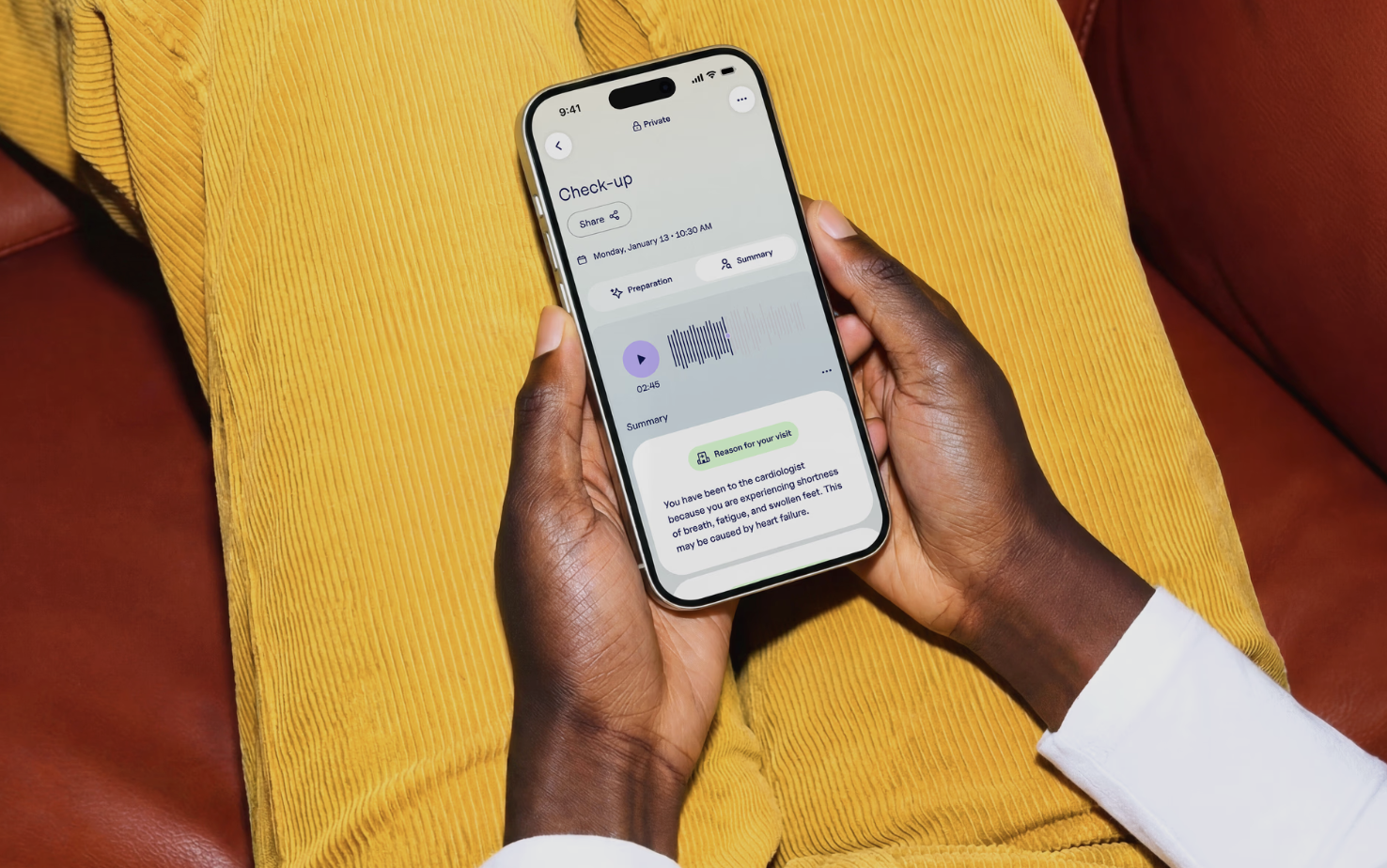
Smartphone apps, such as Ditto, can be used by patients to record a consultation. It produces a plain-language summary the patient can read, save and share; with a partner, adult child, carer or anyone else they choose. Nothing is shared automatically and it runs under UK GDPR. Summaries can be produced in the patient's preferred language.
Limitations to be aware of
- AI summaries aren't a substitute for the clinician's notes or a follow-up letter, although these too can be uploaded into an app to be summarised in easy language for patients.
- It depends on the patient having a smartphone and being comfortable using it. Not everyone will.
- Clinician comfort with being recorded varies. We always encourage patients to ask their clinician first. It's a matter of courtesy, trust and a better consultation overall. But the right itself is established in the UK.
How clinicians and safety teams can engage
- Suggest it to patients facing a consultation where recall is likely to matter most.
- Pilot it in a service where recall failure is already known to cause harm.
- Tell us where you think these apps fall short: the critique will help developers ensure apps are designed for the clinician and the patient.
Reference
About the Author
Olivier Desloges is Head of Expansion at Ditto, a free app that allows patients to record their medical conversation and receive a plain text summary that they can then refer back to or share with family, a carer or another clinician.
Opinions expressed in blogs and other content are those of the author. Patient Safety Learning welcomes sharing content and opinions that promotes safer patient care and for the reduction of avoidable harm. The views expressed on the hub however do not necessarily represent Patient Safety Learning's views or values. References to a specific product or service does not imply a recommendation or endorsement.

Recommended Comments
Create an account or sign in to comment