

Aditi Desai
Members-
Content Article Comment
When 'never' happens: what two wrong-side nerve blocks taught us about patient safety
Aditi Desai commented on Patient Safety Learning's article in Implementation of improvements
- (and 5 more)
A really thoughtful and important reflection about this 'never event', one of the most common in the 'wrong site surgery'. I particularly appreciated the systems-based and human factors/ergonomics approach. Your work highlighted the recognition that clinicians were working within conditions of cognitive overload and workflow friction rather than simple “human error”. The concept of reintroducing physical safety barriers and visual prompts back into increasingly digital environments is extremely valuable. The ‘Prep Stop Block Lid’ is a powerful example of human factors-informed safety design in practice. This is valuable work ! Best Wishes Aditi Desai- Posted
- 1 comment
-
- (and 5 more)
-
Content Article
Recognising unsafe surgeons—looking for early warning signs
Aditi Desai posted an article in Surgery
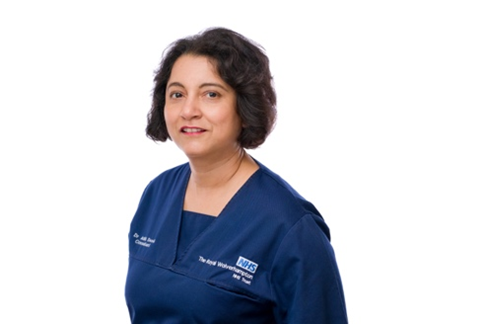 When repeated harm occurs in healthcare, public debate often centres on identifying an individual responsible. Although accountability is essential, patient safety may be better served by asking another question first: Were there earlier signals that something was going wrong? This blog reflects the perspective of Aditi Desai, a surgeon with nearly three decades of clinical experience and an interest in patient safety systems, surgical quality monitoring and organisational learning. Recent high‑profile cases, such as the case of surgeon Yasser Jabbar at Great Ormond Street Hospital,[1] have prompted difficult reflection across the profession about how systems detect repeated patient harm. These situations understandably lead to questions about individual responsibility, but they also highlight the importance of recognising warning signals earlier. After nearly three decades in surgical practice, I have seen how outcomes can fluctuate. A surgeon may perform many procedures safely, then experience several complications in close succession. Some of this represents natural variation. But sometimes patterns emerge that should prompt earlier concern. Modern healthcare systems collect large amounts of clinical data, yet we rarely use it systematically to detect deteriorating performance early.[2] Risk‑adjusted monitoring of outcomes over time, combined with supportive mentoring and fair accountability, could help organisations intervene sooner, protecting both patients and clinicians. Improving patient safety requires moving beyond a simple choice between blaming individuals or fixing systems. Safer care depends on recognising both the human realities of clinical practice and the need for strong organisational oversight. Recognising the early warning signs of unsafe surgical practice Having practised surgery for more than 28 years, I have learned that clinical outcomes are rarely perfectly predictable. A surgeon may perform a hundred operations without complication. Then, within a short period, several adverse outcomes may occur—like unexpected bleeding, infection or an unintended injury during surgery. When this happens, patients suffer first and most. For clinicians, complications also carry a heavy emotional weight. Many doctors recognise the sleepless nights and intense self‑reflection that follow when a patient is harmed. In recent years, public discussions around cases of repeated patient harm have raised difficult questions about how healthcare systems detect unsafe practice. The case of Yasser Jabbar at Great Ormond Street Hospital, widely reported in the UK, has prompted reflection not only about accountability but also about whether earlier signals of unsafe care might have been detectable. The instinctive response is often to ask: “Who is the rogue clinician?” But from a patient safety perspective, an equally important question may be: “Where was the signal that care was becoming unsafe?” Distinguishing variation from unsafe care All clinical practice carries risk. Even highly skilled surgeons experience complications. Medicine is complex, and outcomes vary according to patient condition, procedural difficulty and chance. The real challenge is distinguishing between: Expected complication rates and natural variation, and Patterns that may indicate deteriorating performance or unsafe practice. This distinction is rarely straightforward. It requires careful interpretation of clinical outcomes and trends over time. The human side of surgical practice Medicine often expects clinicians to perform at a consistently high level throughout long careers. Yet surgeons, like everyone else, experience illness, fatigue, personal stress and periods of reduced resilience. Most clinicians continue working through these pressures because the culture of medicine places great value on strength, reliability and professionalism. Recognising this human reality does not diminish professional responsibility. Instead, it highlights the importance of systems that can identify when a clinician may be struggling and offer support or review before patient harm accumulates. The missing safety infrastructure Healthcare organisations collect vast amounts of data about procedures and outcomes. Yet in many systems, we still lack robust mechanisms that can: Risk‑adjust outcomes for patient complexity. Monitor outcome trends over time. Identify negative outliers early. Trigger timely peer review or mentoring. Such systems are not primarily about punishment. Their purpose is to protect patients while supporting clinicians to maintain safe practice. Moving beyond 'individual versus system' Patient safety discussions often frame harm as either the fault of an individual clinician or the result of system failure. In reality, safety depends on both. Strong systems should be able to detect emerging risks early, while still ensuring fair accountability when unsafe practice becomes clear. This approach aligns with the principles of a just culture, where organisations seek to understand and respond to risks rather than relying solely on retrospective blame.[3] A role for data, mentorship and oversight In other high‑performance fields, such as aviation and elite sport, continuous monitoring and coaching are routine. Medicine has traditionally been slower to adopt this approach. Yet supportive oversight and mentoring could help clinicians identify and address problems earlier in their careers or during periods of difficulty. Clinicians may benefit from ongoing coaching and feedback, not only during training but throughout their professional lives.[4] Surgeon and writer Atul Gawande, the WHO checklist pioneer, highlighted this idea in his TED Talk “Want to get great at something? Get a coach”, where he describes how even experienced surgeons can improve performance and safety through structured coaching and peer observation.[5] Looking forward Cases where repeated harm occurs inevitably raise questions about accountability. Where clear incompetence or unsafe practice exists, fair accountability is essential. But patient safety improves most when healthcare systems are able to recognise warning signs early, before serious harm accumulates. By combining risk‑adjusted data, supportive oversight and a culture of learning, healthcare organisations can better protect patients while supporting clinicians to maintain safe practice. Ultimately, safer care depends not only on responding to failure, but on building systems capable of recognising risk sooner. References Triggle N. Great Ormond Street doctor who botched surgery harmed nearly 100 children. BBC News, 29 January 2026. Royal College of Surgeons of England. Surgical outcomes data and transparency. Outcomes FAQ. NHS England. Being fair tool: supporting staff following a patient safety incident. 9 May 2025. Pradarelli JC, Yule S, Panda N, et al. Optimising the implementation of surgical coaching through feedback from practicing surgeons. JAMA Surgery, 2021; 56;(1): 42-49. doi:10.1001/jamasurg.2020.4581. Gawande A. Want to get great at something? Get a coach. TED Talk, April 2017.
 -
Content Article Comment
Patient safety by design: a systems approach to preventing harm (MedTech Europe, 27 January 2026)
Aditi Desai commented on Mark Hughes's article in Leadership for patient safety
- (and 1 more)
Hi Greg, This is a thoughtful and timely piece. The shift from reactive investigation to proactive system design is exactly where healthcare needs to focus now. Too often, we treat safety as something to be reviewed after harm occurs, rather than something that should be engineered into everyday practice from the outset. What resonates most is the emphasis on human factors, culture, and usability. When systems are designed to support clinicians in reducing cognitive load, standardising critical processes, and making the safest action the easiest one, both patients and staff benefit. Patient safety will only improve at scale when prevention, learning, and design are treated as core infrastructure rather than optional add-ons. Collaboration between clinicians, patients, industry, and policymakers is essential to achieving that. Thank you for helping move the conversation in this direction. Best Wishes Aditi Desai NHS Consultant Gynaecologist & Obstetrician www.linkedin.com/in/aditidesai2thinkoutofbox- Posted
- 2 comments
-
1
-
- (and 1 more)
-
Content Article Comment
Lost tissue samples a thing of the past with new innovative tracking system?
Aditi Desai commented on Patient_Safety_Learning's article in Innovation programmes in health and care
- (and 2 more)
This is a really valuable.- Posted
- 1 comment
-
- (and 2 more)
-
Content Article CommentThis work is valuable, meaningful and will go a long way in improving the understanding of safety science in healthcare. Ultimately, this will leas to more resilient healthcare systems which make it easier for staff to deliver the right care. aditi desai
- Posted
- 1 comment
-
-
Content Article
Absence of user-centric design: a threat to patient safety
Aditi Desai posted an article in Design for safety
Aditi Desai is a Consultant Obstetrician and Gynaecologist and has worked as a doctor in maternity and women's healthcare for the last 25 years. Having recently read the blog ‘Dangerous exclusions: The risk to patient safety of sex and gender bias‘, Aditi highlights how many aspects presented in the blog resonate with staff working in healthcare and other industries. I have recently been introduced to your organisation. It came as a pleasant surprise to know that there is an organisation that is so passionate about patient safety. I have perused your platform, the resources and the contents showcasing your enthusiasm and efforts in detail. The content is easy to understand, succinct and relevant. You have been bringing important issues to the attention of the policymakers and regulators in a coherent and meaningful manner, which is a monumental task. I have recently read the blog ‘Dangerous exclusions: The risk to patient safety of sex and gender bias‘. Many aspects presented in this article resonate with staff working in healthcare and other industries. This especially affects women adversely and can cause fatigue and chronic musculoskeletal stress. Medical instruments and devices, as well as equipment such as operating theatre tables, have not been designed in a user-centric manner, taking into consideration the variation in anthropometrics. Operating theatre tables and laparoscopy equipment stacks are designed for users with a height of 5’10” and above. Many hand instruments are designed for large hands. I wish to share my personal experience. I have been working in healthcare, maternity and women’s surgery for the last 25 years. I’d like to share a couple of photos. The first photo shows me holding forceps which are used to hold tissue and stop bleeding. It is quite apparent that it has been designed for a large male hand. Smaller forceps are not available in the tray or have to be specially ordered through a process that is not easily accessible. The organisation that I work for is quite supportive but the entire system is not set up to enable healthcare providers with the tools and technology designed in a user-centric fashion to make it easier to do the right thing. The second photo shows me standing on a platform that is frequently used by short surgeons, usually female, to elevate themselves. This helps them operate effectively when patients are on theatre tables that are designed for tall surgeons. This results in a shuffling act, as you have to press the diathermy pedals during surgery time and again in gowns and clogs that may be ill-fitting, never mind the risk of tripping and falling. After years of effort of juggling and acrobatics, you get used to working around these annoyances. We are fiercely envious of tall colleagues (male and female) now and again.

