


Summary
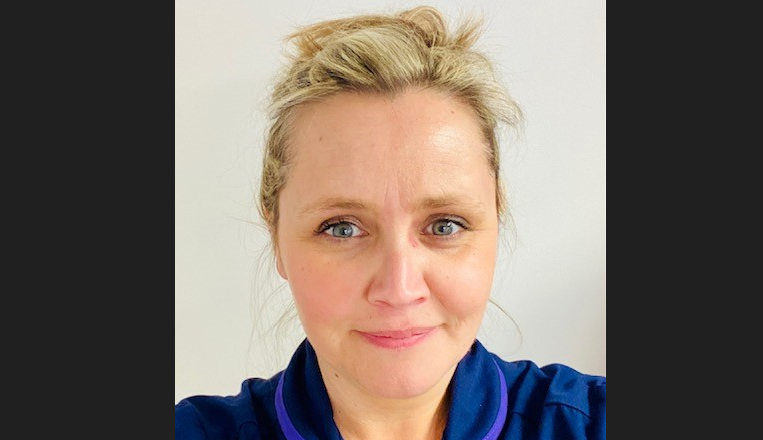
In this blog, Claire Cox, Patient Safety Learning’s Associate Director, talks about the opportunities to improve patient safety and the risks associated with the use of barcode technology in healthcare.
Content
As a nurse working in the NHS for over 25 years, I’ve seen first hand how technology has transformed patient care. One of the biggest changes in recent years has been the introduction of electronic scanning. We scan patient wristbands, which are printed with unique barcodes, for many reasons:
- Patient identification: ensuring that treatments, procedures and diagnostics (such as blood tests, X-rays and scans) are matched to the correct patient.
- Medication administration: ensuring the right patient receives the correct drug at the correct time.
- Theatre and surgery safety checks: confirming a patient’s identity before they undergo surgery, reducing the risk of wrong-site or wrong-patient procedures.
- Blood transfusion safety: ensuring the right blood type is matched to the correct patient to prevent transfusion errors.
- Specimen labelling: avoiding mix-ups in laboratory samples by linking them directly to the patients' records.
- Tracking patient movement: monitoring patient transfers between departments, which helps with bed management and continuity of care.
In theory, it’s a fantastic safety net. However, in practice it’s not always that simple.
If we take scanning for medication as an example, the idea behind barcode scanning is brilliant. We scan the patient’s wristband, scan the medication and the system cross-checks everything to flag up any prescription issues, the correct patient weight, allergies, previous doses, interactions with other medication and of course… the correct patient. It’s meant to reduce medication mistakes and improve efficiency. And when it works, it does just that. But ask any nurse on a busy ward and they’ll tell you about the times it doesn’t go so smoothly.
This blog will uncover some of the ‘workarounds’ we are using to enable us to do our job when the ‘system’ lets us down.
What are the challenges?
Technical glitches and system downtime
One of the most frustrating issues is when the scanner simply refuses to work. Maybe the barcode on the medication is damaged or the scanner won’t read the patient’s wristband. This means wasted time trying to troubleshoot or calling IT for support.
If the entire system goes down (which happens more often than I’d like), we have to revert to manual documentation. This not only slows us down but also increases the risks of getting it wrong—the wrong patient, wrong drug, wrong time, wrong dose, exactly what the system was designed to prevent.
With the increase of patients being placed in non-clinical areas and corridors (what NHS England describes as ‘temporary escalation spaces’), you find that internet access is not always readily available in these spaces and there is Wi-Fi dead spots.
The wristbands and the blood labels are generated by us and then sent to mini printers that print and dispense wrist bands; we have hundreds within our trust. The printers often require software updates, usually at different times. As a nurse I don’t know how to update these printers—so they end up not working. The point of escalation in these instances would be to call the IT team. However, the last time I did this I was in a queue for over 30 minutes. I haven’t the time for that, neither has our ward clerk. So, in the meantime the printer remains unusable and we revert to workaround measures.
|
Issue |
Workaround |
Risk |
|
Wi-Fi dead spot. |
Override option on scanner. |
Able to give incorrect drug to incorrect patient—no alerts will be visible |
|
Printer not working—due an update. |
Print out at a different printer. |
Risk of picking up a different blood label, wrist band—as this may be the only printer working on the ward. Patients may get mixed up, given the wrong drug, wrong blood in tube, etc. |
|
Whole system down. |
Revert to written wrist bands and blood labels. |
Transcription issues. |
Workflow disruptions and delays
With so many competing priorities, it’s a race to get everything done when you are working on a busy ward. Scanning every medication and waiting for the system to verify it can slow us down significantly, especially when caring for multiple patients. The process may be safer in theory but, when you’re juggling urgent patient needs, these extra steps can feel like a hurdle rather than a help.
We should be scanning each patient individually, then going to the electronic drug cupboard to collect the medication. However, when every nurse on the ward is doing the same thing, a queue forms. You could be in that queue for 30 minutes or more. Once you have waited your turn—you scan the patient again, administer the medication, then start again for the next patient. We can be caring for up to eight patients at a time—all with multiple medications. We haven’t the time to wait in the queue—our morning drug round may start at 8 am and if we scanned as policy states, our drug round will not be over until lunch time and then it starts again! Time critical medication such as Parkinson’s and epilepsy drugs are often delayed because of this.
|
Issue |
Workaround |
Risk |
|
Caring for many—unable to queue due to time. |
Scan one wrist band to get the drug cupboard open. Take ALL medications for ALL patient in numbered pots; e.g. bed number 1= pot labelled 1. |
Wrong patient, wrong drug, wrong dose. |
|
Drug cabinet far from ward area. |
Print multiple wrist bands and have them in your pocket. |
Wrong patient, wrong drug, wrong dose. |
Overreliance on technology
While barcode scanning is designed to catch problems before they happen—for example, providing the medication to the wrong patient—it can also create a false sense of security. Some staff trust the system so much that they ‘forget’ to double-check what they’re administering. I’ve seen cases where the scanner didn’t flag an issue, but a second manual check revealed a potential mistake. No system is fool proof and human judgment is still essential.
|
Issue |
Workaround |
Risk |
|
Blood administration—alert and checklist fatigue, over reliance on computer system information. |
No second checking. |
Wrong patient, wrong blood, wrong drug. |
Alert fatigue and workarounds
Another challenge is the constant alerts. The system is designed to notify us about potential drug interactions, duplicate doses or allergies, but sometimes it feels like we’re bombarded with warnings. Often these warning are because of a previous incident and the pop-up is seen as the solution. When you’re dealing with dozens of pop-ups, it’s easy to develop ‘alert fatigue’ and start ignoring them, which is dangerous.
|
Issue |
Workaround |
Risk |
|
Multiple alarms flagging and ‘hard stops’. |
Alerts overridden, checks on the scanner blindly ticked off the checklist. |
Wrong patient, wrong blood, wrong drug. |
Training and adoption challenges
Not all staff are equally comfortable with technology and training can be inconsistent. New nurses, agency staff and those who aren’t used to the system may struggle, leading to mistakes or delays. And when changes are made to the system, not everyone gets the same level of training, leaving gaps in understanding. Training is often seen as the solution to this problem; it in in some cases, but there is far more to it than training.
Integration issues
Ideally, the scanning system should integrate seamlessly with electronic health records (EHRs) and pharmacy databases. Unfortunately, that’s not always the case. Sometimes, medications don’t appear in the system properly or there’s a delay in updates. This creates confusion and extra work as we double-check records manually.
Patient-specific challenges
We also face issues with patient wristbands. If a wristband is missing, damaged or poorly placed, scanning can be a nightmare. In critical situations—like when a patient is unconscious or in distress—trying to scan their wristband adds another layer of complexity we don’t always have time for.
In healthcare, ensuring patient safety requires a deep understanding of how work is actually performed, known as 'work as done', rather than how it is ideally designed or imagined ('work as imagined'). The gap between these two perspectives can have serious consequences, making it essential for healthcare leaders to recognise real-world challenges and build systems that support safe and effective care.
|
Issue |
Workaround |
Risk |
|
Administering a sedative for a combative patient. |
No scanning—override device. |
Wrong patient, wrong blood, wrong drug. |
What are the potential solutions?
Understand the work system
Healthcare is a complex, adaptive system where variability is inevitable. Policies, procedures and best practices often represent 'work as imagined', providing a framework for care delivery. However, frontline clinicians operate in dynamic environments where unexpected challenges arise. By studying 'work as done', organisations can identify discrepancies, improve workflows and implement practical solutions that enhance patient safety.
Balancing accountability
Achieving patient safety requires a careful balance between accountability and learning. A just culture differentiates between ‘human error’, at-risk behaviour and reckless actions. Instead of blaming individuals for system failures, organisations should focus on systemic improvements while holding individuals accountable for making safe choices. This approach promotes trust, engagement and continuous improvement.
By involving frontline staff in the design, testing and implementation phases of introducing a new electronic system—or any new procedure, policy or tool—you may uncover these workarounds much sooner and be able to design them out.
Addressing technological gaps
When looking into new technologies to support healthcare, patient safety needs to be considered in the designed, development and implementation of new software and products. This means looking at how they are used in practice. It is not simply enough to put these in place, there also needs to be the infrastructure in place to support their operation. On some of the issues flagged earlier in this blog, improvements such as eliminating internet dead spots and having printers which manage their own updates would be small changes that could have a significant impact on how barcode scanning is used in hospitals.
Concluding thoughts
To bridge the gap between imagined and actual work, healthcare teams need psychological safety—the confidence to speak up about risks, inefficiencies and errors without fear of punishment. When staff feel safe to share their insights and concerns, organisations gain valuable real-world feedback, leading to proactive improvements. A culture of openness encourages learning from near misses and fosters a collaborative approach to safety.
I had some reluctance to share this blog, particularly when working at the organisation where I encountered these issues. However, these workarounds and issues are not just within my practice, this is happening across the country in some shape or form. You just need to be inquisitive and look without judgement.
Share your experiences
What are your experiences of barcode scanning? What are the challenges you face? What workarounds do you have to use to do your job?
Please comment below—you’ll need to be a hub member and signed in (sign up here). You can also email us at: [email protected].

Recommended Comments
Create an account or sign in to comment