


Claire Cox
Members
-
Joined
-
Last visited
Everything posted by Claire Cox
-
Content ArticleThere has never been a wider mix of illnesses and issues seen by the UK ambulance services. There's also never been more different care pathways. It can sometimes be hard to know what the best thing to do is. Choice fatigue, along with patients sometime presenting in the same way as others can lead crews to make some challenging decisions. In this podcast from General Broadcast, some of the patient safety team sit down to talk about what's important when leaving a patient at home and what safety netting needs to be in place. General Broadcast covers the whole of the Ambulance service, from clinical to non-technical skills, from best practice to learning from incidents and more.
-
Content ArticleAs well as designing specific products, ergonomists and human factors specialists can help understand how the space within which we work can be best designed. This can help encourage effective communication in a workplace, as well as considering the comfort of all those present. The Chartered Institute for Ergonomics and Human Factors have come together with stakeholders involved in the care of neonates to design a space that is safe for newborn babies and staff that care for them.
-
Content ArticleIn her latest blog, Claire reflects on the last few months working as a critical care outreach nurse during the pandemic and looks to the future and how we can transition into the new 'normal'. She urges us all to work together to redesign our health and social care services, building a service that meets all our needs.
-
Content ArticleThese top tips set out by the Royal College of General Practitioners, are for clinicians conducting telephone consultations to assess and advise patients concerned they may have COVID-19 (Coronavirus).
-
Content ArticleThe purpose of this document, from the Chartered Institute of Ergonomics and Human Factors, is to provide health and social care teams with advice and guidance on the human-centred design of work procedures such as written instructions, checklists or flow charts during this period of 'crisis management' in response to COVID-19 and to support the design and re-design of care services and new ways of working. Implementation of the guidance will contribute to safer and easier to use procedures, which better support how people work and reduce risks to themselves, patients, carers and others.
-
Content ArticleFor many people involvement with intensive care is a daunting experience. For some it's part of the care plan after major surgery but for many others it's a sudden and unexpected event.You find yourself in an alien environment unlike any you've known before where patients are connected to all kinds of machines and drips, where you might not be able to tell day from night and where there's constant noise and activity. The people that work in the Intensive Care Unit do an amazing job, but even when patients are on the road to recovery they still have a long way to go before they're fully better. Depending on how ill the patient has been, recovery can take a year or more. Knowing what might lie ahead and also that you're not alone in what you're going through can be a great help for both patients and relatives. This webpage set up by ICU Steps, include experiences from patients and relatives as they have spent time on the intensive care unit.
-
Community PostMedical professionals working in critical care do a lot of research to help improve outcomes for both patients and relatives. In recent years patient and public involvement in health care has become much more common and this extends into the area of research as well. Can you help? If you've been involved with intensive care, either as a patient or a relative, you may be able to help. Sign up to the ICU Steps patient and relative research volunteers list using the form below. What's involved? It depends entirely on what we're asked to help with as to what's involved. Work involved with recent research we've been contacted about with has ranged from: attending meetings with researchers, filling in online questionnaires and being asked to give opinions on the topics which mattered most to patients and relatives. The work undertaken by researchers is crucial in improving the care given to others going through a period of critical illness and your own experiences can help. By contacting us, you're under no obligation to help with anything you'd rather not and you're free to ask us to remove you from our list of contacts at any time. Your help is important and greatly appreciated. Click the link to access the form https://icusteps.org/research
-
Content ArticleBetween 25-30 April 2020, three nurses working at Waitakere Hospital, New Zealand tested positive for coronavirus (COVID-19). In the week prior to testing positive, the nurses had been working on a ward caring for a group of elderly patients with COVID-19. The patients were from an aged residential care (ARC) facility in West Auckland.
-
Content ArticleChartered Institute for Ergonomics and Human Factors has come together with industry and maternity units to redesign birthing pools to ensure they are safe and ergonomical for users. Read the attached case study.
-
Content ArticleNHS National Services Scotland has produced this video for Primary Care staff to aid safe donning, doffing and disposal of personal protective equipment during the COVID-19 pandemic.
-
Content ArticleThis infographic designed by Public Health England shows how to remove personal protective equipment safely.
-
Content ArticleThis inforgraphic by Public Health England shows the correct order to put on personal protective equipment .
-
Community PostEssential steps to design work better - Infographic by the Chartered Institute of Ergonomics and Human Factors CIEHF_Work_Procedures_Infographic (1).pdf
-
Content ArticleLondon clinicians have shared their top 10 tips to help prepare NHS staff in other parts of the country facing the COVID-19 crisis. UCLPartners asked clinicians working in a range of specialties across its region, the first in the UK to deal with a major escalation in COVID-19, to share their practical advice to support NHS staff elsewhere in the country preparing for a large number of COVID-19 cases.
-
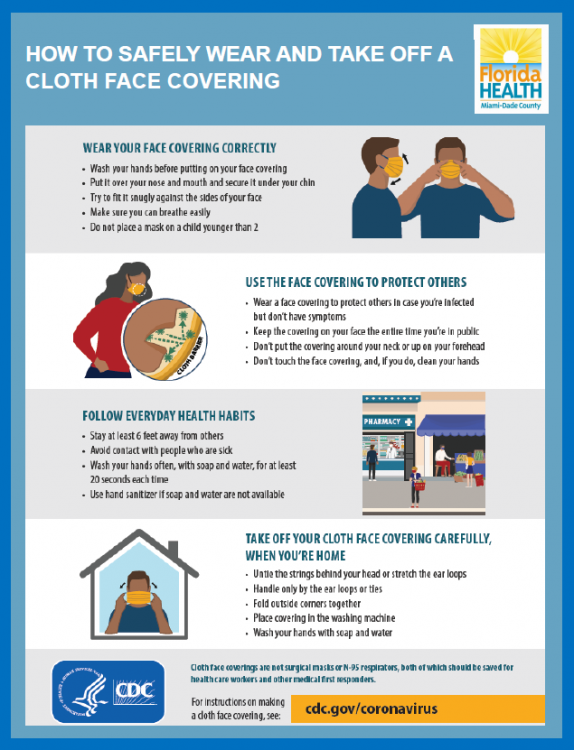
Community PostThis infographic from CDC (U.S) explains how to put on and remove face covering safely for the general public.
-
Content ArticleMore than six weeks into the lockdown and if you were to gauge the mood of the nation, it would be one of fatigue. It started as an all-hands-on-deck emergency situation, but it now transpires that the current work situation for healthcare professionals is not going to change any time soon. This is a marathon rather than a sprint. So how can we better look after ourselves to cope with this new realisation? This BMJ podcast features Dr Caroline Walker, an NHS-based psychiatrist and therapist. Wait until the end for Caroline's simple technique she uses to help when feeling overwhelmed.
-
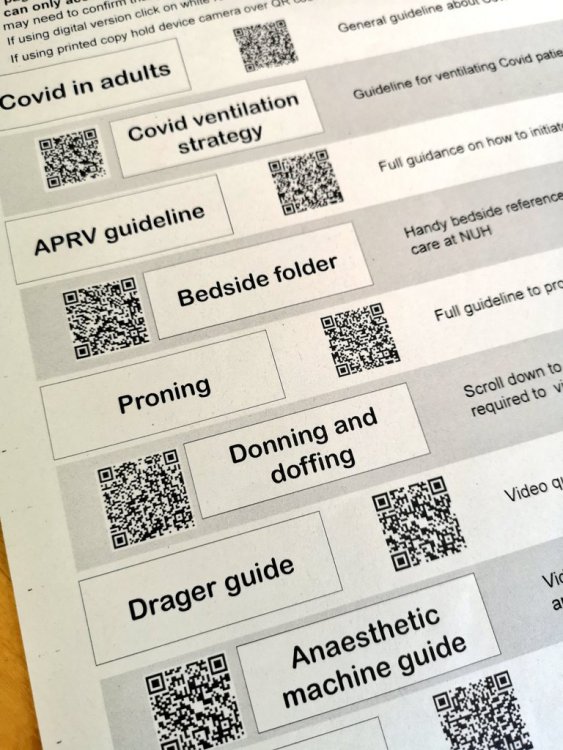
Community PostA Hospital in the UK is using QR codes to gain rapid access to important clinical guidelines via QR code.
-
Content ArticleInternational Council of Nurses (ICN) CEO, Howard Catton, expresses his concern for healthcare workers rising COVID-19 infections and deaths due to lack of personal protective equipment. He also speaks of the lack of data which should be collected systematically by governments to better monitor and control the spread of COVID-19 among healthcare workers.
-
Content ArticleThis is issue 30 of HindSight magazine (a publication about the safety of air traffic management). The theme of this Issue is ‘wellbeing’, which has an undeniable link to safe operations, though this is not often spoken about. This issue coincides with the COVID-19 pandemic. The authors of the articles were considering wellbeing in the context of aviation, and other industries. But the articles touch on topics that are deeply relevant to the pandemic. The spread of the virus and its effect on our everyday lives has brought the biological, psychological, social, environmental, and economic aspects of wellbeing into clear view in a way we have never seen before.
-
Content ArticleProvides guidance for both employers and staff on promoting positive mental health and supporting those experiencing mental ill health in the workplace Mental Health & Wellbeing in the Workplace is a valuable resource for those in the workplace wanting to look after their physical and mental wellbeing, and those looking for guidance in managing staff with mental health issues. 20% off for key workers! use code MWKEY
-
Content ArticleTo match the increasing demands that the coronavirus pandemic will place on critical care, new and flexible models of care are required. This document: states principles for deploying and redeploying staff to match the needs of a critical care department, independent of where this care is delivered sets out indicative staffing ratios and competencies suggests professional groups that could potentially form part of this new workforce during times of surge and super-surge. This guidance is correct at the time of publishing. However, as it is subject to updates, please use the hyperlinks within the document to confirm the information is accurate.
-
Content ArticleThis month’s Private Eye podcast is all about COVID-19. The Eye’s medical correspondent, Dr Phillip Hammond, discusses the latest developments, plus some faint lights at the end of the tunnel.
-
Content ArticleEleanor Balme and colleagues in this BMJ article discuss the findings of a review that they have undertaken into the need for, and potential of, resilience training in doctors.
-
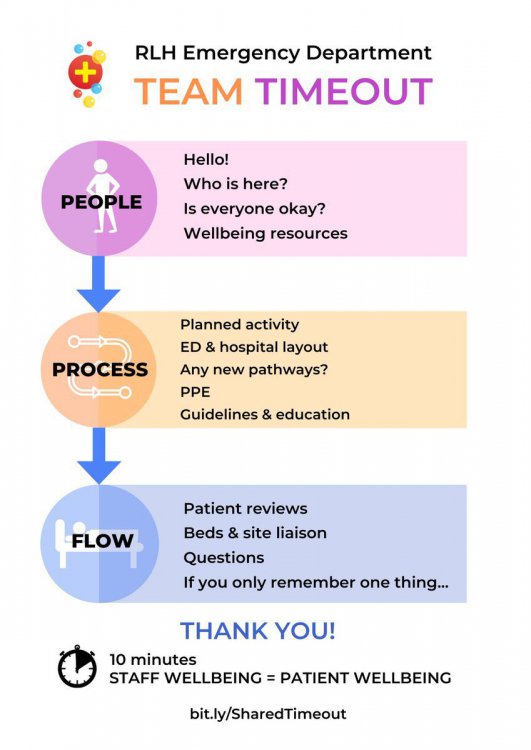
Community PostThis is from the Royal London Hospital. The aim is to use at the start of every shift. Aim is to streamline workflow, conversations, and to focus on patient and staff safety.
-
Content ArticleThe safe management of a patient’s airway is one of the most challenging and complex tasks undertaken by a health professional - complications can result in devastating outcomes. Develop safe airway management strategies for your patients. This FREE course by University College London Hospital NHS Trust, will provide answers to your key questions and help you develop strategies to improve patient safety in your area of practice, discussing safe airway management in patient groups and multidisciplinary clinical settings. This course has been updated with the latest guidance on airway management in patients with COVID-19 and relevant personal protective equipment.


