


Summary
Over 6,000 rare diseases are characterised by a wide range of conditions and symptoms that can vary not only between diseases but also among individuals with the same condition. 72% of rare diseases are genetic, and nearly one in five cancers is classified as rare.
Some common symptoms may overlap with those of rare diseases, which can make diagnosis challenging and delay access to appropriate care. These conditions can impact daily life due to their long-term, evolving nature.
At Patient Safety Learning we believe that sharing insights and learning is vital to improving outcomes and reducing harm. That's why we created the hub; to provide a space for people to come together and share their experiences, resources and good practice examples.
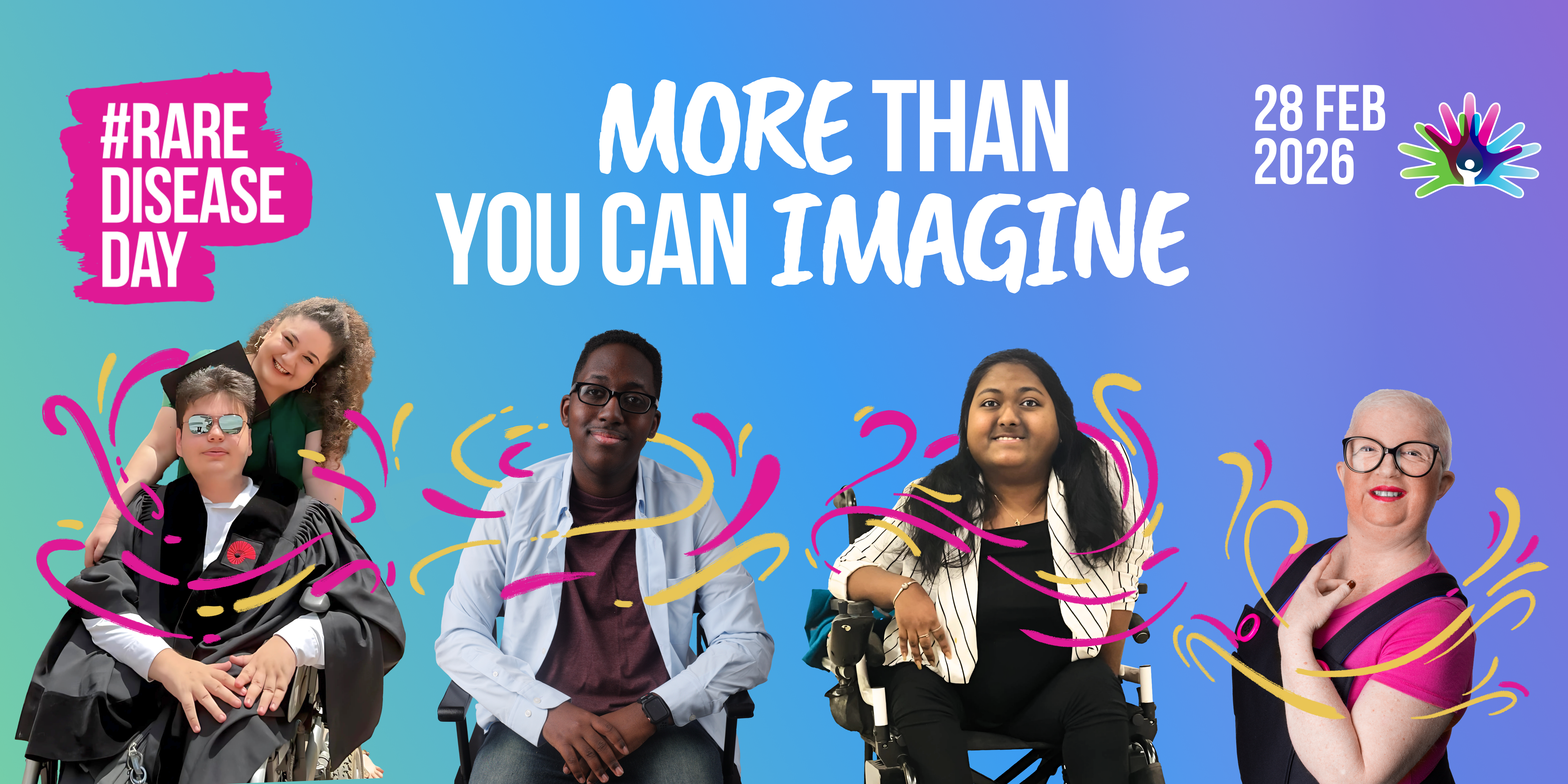
To support Rare Disease Day, we have pulled together 16 resources, including reports, guidelines and blogs, to raise awareness of the challenges faced by people with a rare disease, and to support healthcare professionals and patients and their carers.
Content
1 England Rare Diseases Action Plan 2025
The UK Rare Diseases Framework, published in January 2021, set out a shared vision for addressing health inequalities and improving the lives of people living with rare diseases across the UK. This is the fourth action plan setting out how the Department of Health and Social Care and delivery partners will implement the UK Rare Diseases Framework in England.
When Stuart Ball's wife Rachel passed away in August 2025, she was just 47 years old. Her death was not inevitable. It was the result of years of missed opportunities—signs that were there in plain sight but never joined together. What happened to Rachel should never happen to another family. Stuart shares Rachel's story and tells us why he is campaigning for Rachel's Rule—a call for a system safeguard that ensures hereditary risks are not missed.
3 National Organization for Rare Disorders: Rare Disease Database for patients and families
The National Organization for Rare Disorders (NORD)’s Rare Disease Database provides brief introductions for patients and caregivers to specific rare diseases.
4 OrphanAnesthesia: Patient Safety Card
OrphanAnesthesia offers a Patient Safety Card for all hospitals, patients, and support groups. The patient or the physician fills in the name of the rare disease to notify the anaesthesiologist/ emergency personnel of the rare disease, and of the recommendation for the anaesthetic management. The card should be given to the anaesthesiologist before anaesthesia. It should be carried by the holder in case of emergency.
5 Highlighting Loeys-Dietz syndrome and the need for awareness
Loeys-Dietz syndrome (LDS) is a genetic disorder affecting connective tissue, which supports, protects and gives structure to various tissues and organs. This article tells the story of Sharon, a 53-year-old woman from Bristol, who died in December 2022. Her family now advocates for greater awareness of LDS to prevent similar tragedies. Sharon’s death, attributed to natural causes compounded by neglect, highlights systemic failures in promptly recognising and treating her aortic dissection.
The Rare Autoimmune Rheumatic Disease Alliance (RAIRDA) has launched a report revealing that individuals living with rare autoimmune rheumatic diseases (RAIRDs) experience stark variations in their care and treatment. The report paints a concerning picture: nearly one in three respondents waited more than five years for a diagnosis, with the average wait time standing at two and a half years.
7 “No one would believe me”: A common feeling for people living with a rare disease
Having a diagnosis can be very important, not only in order to consider medical needs, but sometimes it can also come as proof that something is happening to the body, proof to others that there is something going on. Several people across the globe, with different rare diseases, have shared their story, telling us about needing to be heard and understood.
8 GIRFT - Spinal surgery: National suspected cauda equina syndrome (CES) pathway
Cauda Equina Syndrome (CES) is a rare but serious spinal condition and if not diagnosed and treated swiftly, it can result in lifechanging injury. Nearly a quarter of compensation claims for spinal surgery in England relate to CES. This CES pathway and accompanying guidance by the Getting It Right First Time (GIRFT) programme, aims to provide healthcare professionals working in all care settings with the ability to effectively diagnose and care for patients presenting with suspected Cauda Equina Syndrome.
9 Sickle Cell Society: Standards for the clinical care of adults with sickle cell disease in the UK
These standards for the clinical care of adults with sickle cell disease were produced by the Sickle Cell Society in collaboration with a broad multi-disciplinary group of healthcare providers, patients and support groups.
10 HSIB: Management of sickle cell crisis
In this investigation, the Health Services Safety Investigation Body (HSSIB) used a real patient safety incident to explore how sickle cell crises are managed within hospital settings. In particular, the investigation considered:
- the knowledge nursing staff may have about the care of patients in sickle cell crisis
- how patient-controlled analgesia (PCA) – where a patient can use a device to give themself doses of pain relief medication – is considered holistically, such as monitoring the patient and staff workload.
11 Medication supply issues: Mast cell activation syndrome (MCAS)
Joy Mason is the Director of Operations, Services and Engagement at Mast Cell Action. In this blog, Joy tells us more about Mast Cell Activation Syndrome and how medication supply issues are impacting people’s lives and causing avoidable harm.
12 Neonatal herpes – more common than you think?
Neonatal herpes is a rare, and potentially fatal, disease which usually occurs in the first four weeks of a baby's life. It is caused by the same virus that causes cold sores and genital infections – the herpes simplex virus (HSV). Early recognition and treatment has been shown to significantly improve babies' chances of making a full recovery. Sarah de Malplaquet, Chief Executive and Founder of the Kit Tarka Foundation, explains why they are joint-funding new research into neonatal herpes, and how the findings could help save many lives.
13 What can I do to prevent my baby getting neonatal herpes? (Kit Tarka Foundation)
There are some simple things you can do to help prevent babies from catching herpes infections. These include regular hand washing, covering cold sores and not kissing babies who are not your own. The Kit Tarka Foundation provide information on neonatal herpes and how to keep your baby safe.
14 Creon shortages: “It’s just another thing patients with cystic fibrosis could do without”
There is a current shortage of Creon, a pancreatic enzyme replacement therapy. Sophie, a patient with cystic fibrosis, tells us about her experience of trying to get hold of Creon and the challenges she has faced.
15 From diagnosis to system change: what rare disease is teaching us about safety, bias and AI
Professor Rob Galloway is an Emergency Medicine Consultant and Founder of the charity Rare People. In this article, Rob talks about his daughter’s recent diagnosis of a rare genetic condition. He describes the barriers to safe and equitable care for people with rare diseases, and his hopes for future treatment development, supported by AI.
16 Equity for Rare: Delivering fair healthcare systems for people affected by rare conditions
The Genetic Alliance UK 'Equity for Rare' report highlights the inequities the rare conditions community experiences, and found that equity broadly means ensuring that people with rare conditions can navigate the healthcare system with the same dignity and efficacy as those with common conditions. It's gives five recommendations for the Government.
For more resources, take a look at our Rare diseases area of the hub.
Do you have a resource or story to share about rare diseases? Could your insights or experiences help improve patient safety? Leave a comment below (join the hub for free first) or contact us at [email protected].

Recommended Comments
Create an account or sign in to comment