


Summary
A good night’s sleep is essential for healing, yet, for many patients, it can feel almost impossible to be able to sleep or get rest during an inpatient stay.
The Noise at night sleep pack project at Nottingham University Hospitals was a finalist at the Picker Experience Network 2025 Awards. In this blog, project lead Kelly Morley tells us why this initiative and a renewed focus on reducing noise at night was so important.
Content
Despite the dedication of staff and the comfort measures provided on our wards, night‑time noise remains one of the most common concerns raised through patient feedback and it was quickly identified as one of the top three patient experience priorities within our trust.
At Nottingham University Hospitals (NUH), we know that sleep isn’t a luxury it’s a vital part of the fundamentals of patient care.
Why night-time noise matters
Hospitals are naturally busy environments. Even after lights dim, clinical activity continues as staff carry out observations, respond to emergencies, check medications and support patients who are awake or unwell.
For patients, though, these unavoidable sounds can lead to:
- Interrupted sleep or the inability to fall asleep.
- Increased anxiety and stress.
- Decreased mental awareness.
- Higher pain sensitivity.
- Slower recovery times.
- Lower patient satisfaction.
- Complaints.
- Decreased uptake in rehabilitation exercises.
- Deconditioning.
- Longer patient stays.
Many patients tell us that a noise is one of the most challenging aspects of their stay. Sleep is not just a comfort—it’s a critical part of recovery.
Even as far back as in 1859, Florence Nightingale published her book 'Notes on Nursing', which contains lots of good advice about sleep in patients and these are still actions we would do well to take into consideration in modern nursing.
“Unnecessary noise, then is the most cruel absence of care that can be inflicted on either the sick or well” (Florence Nightingale)
What our patients were saying
Through patient surveys, ward feedback and conversations with patients and staff, we regularly heard that noise from equipment, conversations, staff, bins, alarms and other patients would significantly affect their sleep.
When asked the question: Do you have any suggestions as to how we can improve the quality of sleep for in-patients or any comments you would like to make? Patients responded:
- “Would be willing to try anything.”
- “I think the sleep pack should be mandatory and given to inpatients.”
- “Ask staff to speak quietly and answer the buzzers quicker—it sounded like they were moving furniture last night.”
When we asked staff what they thought prevented patients from sleeping they reported:
- “Noise from other patients.”
- “Lighting.”
- “Observations/medications/investigations/turns.”
- "Noise from staff.”
This feedback drove our improvement work.
Sleep packs: small items, big impact
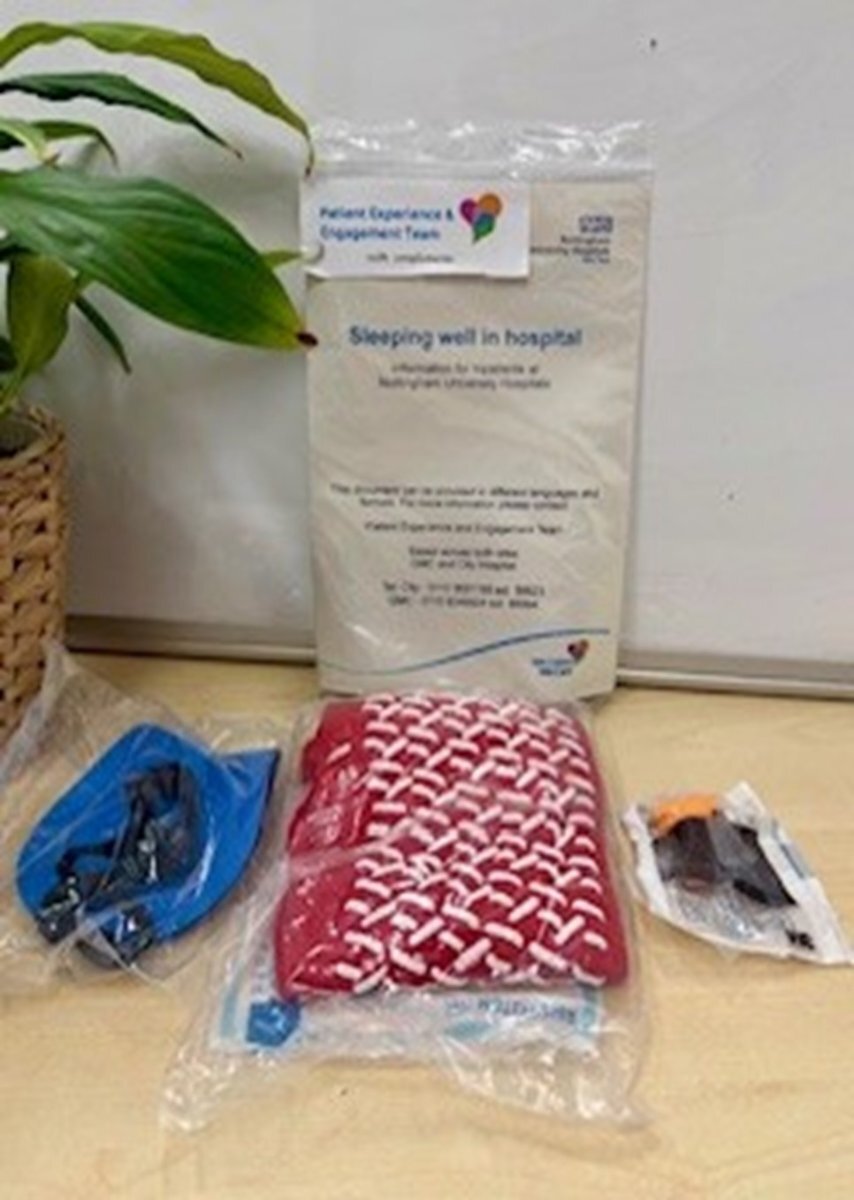
To help patients rest better, many wards at NUH now offer sleep packs. These typically include:
- A sleeping well in hospital leaflet—this was designed by clinical staff with an interest in sleep and why it matters. The leaflet pulls together all literature that has been written in the Trust to date in regard to sleep and amalgamates this into one simple evidence-based leaflet.
- Earplugs—to soften unavoidable environmental noise. These are in singular packs and can be replaced as and when needed.
- Eye masks—to reduce disruption from lighting on the wards, particularly when nurses tend to other patients.
- Slipper socks—these ensure patients are not looking around for slippers in the night, opening lockers, looking under beds and, best of all, they are a simple measure that can also reduce slips, trips and falls.
Sleep packs may seem like a small intervention, but patients consistently tell us they make a real difference—especially for those who struggle to settle in unfamiliar surroundings. The items are always used with the aid of clinical judgement, and it is reiterated that these items are not always suitable for everyone. Our aim is to ensure these packs are readily available and consistently offered, particularly to patients most likely to benefit.
Post implementation, the feedback was very different:
- “Thank you for supplying the sleep pack. They have definitely made a difference.”
- “The mask was comfy and helped.”
- “Sleep packs, very beneficial. Sleep interrupted a lot as observations being taken regularly, but this is to be expected and not a criticism.”
How our staff are supporting quieter nights
Staff play a crucial role in creating a calmer night‑time environment. Across NUH a quieter hospitals group was formed to work on the problems that were identified during this project, including:
Reducing unnecessary noise on wards:
- Lowering voices during night rounds.
- Limiting equipment noise where safe to do so.
- Closing doors softly.
- Using soft close bins/ doors.
- Having top tips poster for staff—reiterating the sleep leaflet guidance and making staff more aware.
Planning care to avoid multiple disturbances during the night:
- Grouping non‑urgent tasks together (cluster care).
- Using soft‑close bins and quieter equipment where possible.
Responding to patient needs:
- Offering sleep packs.
- Adjusting lighting levels where safe to do so.
- Addressing concerns quickly.
This work is guided by patient experience feedback and in collaboration with ward teams who see first‑hand how important sleep is for recovery. Below is the feedback from the ward manager of one of our pilot wards, and they continue to see the benefits of these packs.
“The ward can be noisy at night, and I think we had all just accepted that disturbed sleep is to be expected when you are in hospital, but this trial has changed that outlook. The sleep packs are really simple but very effective, they contain an eye mask, slipper socks, ear plugs and a leaflet with hints and tips of how to get a good night’s rest. Staff have been offering them to patients in the evening, feedback has been great with a few patients claiming ‘it’s the best night’s sleep they have had in years'. We will carry on with them after the study finishes.” (Amy, ward manager on sample ward for pilot – PDSA 2)
How the community can help
Support from families and visitors also plays a part in creating a restful environment. Simple actions can make a difference:
- Being mindful of noise during visiting times and remembering people are often sicker than they look and often need more rest.
- Avoiding phone calls late at night.
- Encouraging relatives to use call bells instead of raised voices.
- Bringing in comfort items that help patients relax.
- Sharing feedback so we can continue improving.
Together, we can support better sleep in our hospitals for everyone.
So what’s next?
Improving sleep in hospital isn’t solved by one intervention alone—it’s a combination of thoughtful design, staff awareness, helpful tools like sleep packs, and ongoing feedback from patients and families.
Our commitment at NUH is to continue:
- Listening to patient experiences.
- Reacting to feedback.
- Supporting clinical teams.
- Introducing practical solutions.
- Creating calming, quiet environments.
Because a quieter night isn’t just about comfort—it’s about better care and better patient outcomes.
Noise at night sleep pack presentation:
 Poster in wards:

About the author
Kelly Morley is a patient experience officer at Nottingham University Hospitals NHS Trust with over 20 years' experience in the NHS within both community and acute settings.

Recommended Comments
Create an account or sign in to comment