

All news
Showing .
Past hour
-
News article
 Concerns have been raised about NHS England watering down a key target for its controversial “advice and guidance” scheme, just weeks ahead of the October deadline. The fears surround plans to create “single points of access” for all primary care requests, other than urgent suspected cancers, which trusts were set a target to introduce for 10 specialties by next month. Instead of GPs routing referrals and A&G requests (where they get advice from a specialist) separately, the SPoA model is meant to send all requests via a single route, which NHSE believes will help reduce avoidable referrals and outpatient appointments. However, upgrades to the e-Referral System have been delayed, and NHSE has been forced to allow trusts to go live with incomplete SPoA models. Under an interim arrangement, A&G requests and referrals can enter the same SPoA service, but will arrive through separate e-RS routes, and will have to be managed on separate worklists, which experts said “appear to introduce fairly significant compromises”. Interoperability problems with the e-RS, which make it harder to share clinical information and track patients through pathways, were also identified in a recent report by the Health Services Safety Investigations Body. Read full story (paywalled) Source: HSJ, 18 September 2026
 Today
-
Content Article
 Despite having some of the highest death rates of any psychiatric condition, patients with eating disorders are being failed by a system that can’t cope with surging demand. In this BMJ feature, Emma Wilkinson looks at the state of services.
 -
News article
 About 20,000 disclosures of domestic abuse are estimated to be made to maternity services in England every year, analysis has found. The figures are likely to be an underestimate of the true scale of disclosures, according to experts, highlighting the role maternity professionals play in identifying abuse. About 3.3% of maternity bookings made within NHS trusts across England involved a disclosure of current or non-recent domestic abuse. Applying this proportion to national NHS maternity bookings activity suggests there are approximately 20,000 disclosures of domestic abuse made within maternity services in England every year. Gill Walton, the chief executive of the Royal College of Midwives, said the findings “lay bare” something that midwives already know from their day-to-day practice. “Midwives are often the only professional a pregnant woman sees regularly and alone, which makes them uniquely placed to spot the signs of domestic abuse and respond with care,” Walton said. “But recognising a disclosure is only the first step – staff need proper, specialist training to know how to respond and services need the time and resources to follow through with support, so that no disclosure is ever a missed opportunity to protect a parent and their baby. Experts have also called for midwives to receive adequate support and training on handling such domestic abuse disclosures, while also working long hours on busy maternity wards that can also face staff shortages. “Midwives and other maternity staff play such a crucial role when it comes to reporting disclosures of domestic violence which are made to them. However, maternity staff also need better support so they know what the next steps are regarding what to do with these disclosures,” Veronica Oakeshott, the interim head of external affairs at Women’s Aid, said. Read full story Source: The Guardian, 20 September 2026
 -
News article
 Adults with severe mental illness are nearly five times more likely than their peers to die from serious physical diseases before the age of 75, according to research. The analysis of NHS data by the Rethink Mental Illness charity reveals that people with severe mental health problems die 15-20 years earlier than the wider adult population, largely due to preventable physical conditions. Rethink’s calculations show that adults under 75 with serious mental ill health – defined as those referred to specialist secondary mental health services – are 6.3 times as likely to die from liver disease, 6 times more likely from respiratory illness, 3.8 times more likely from cardiovascular disease and 2.3 times as likely from cancer. They are also 14.6 times as likely to die due to suicide, compared with those who were not referred. Overall, they are 4.8 times more likely to die before the age of 75 than the general population. For some conditions, these health inequalities are the starkest to date. For working-age adults living with a mental illness, the number of deaths from cardiovascular disease and cancer are at their highest levels since records began, each with more than 24,000 deaths in the 2022-2024 reporting period, the charity calculated. Cancer, cardiovascular disease, liver disease and respiratory disease accounted for more than half (56.5%) of deaths for 18 to 74 year olds with severe mental health problems in England during this period. The report identifies a number of factors driving this excess mortality, including poverty, poor housing, higher rates of smoking, weight gain from medication, physical inactivity, and fragmented care. But the authors conclude that “diagnostic overshadowing” – where physical symptoms are wrongly attributed to mental illness – means potential illnesses are not always properly investigated and treated. Read full story Source: The Guardian, 20 September 2026
 -
News article
 Health economist Anita Charlesworth will independently co-chair a “reformed” National Cancer Board, seven months after the government’s cancer plan promised a body “accountable for delivery” of its commitments. The plan, published on 4 February, said the board would be chaired jointly by the Department of Health and Social Care and an independent figure from the cancer community, and would publish annual progress reports and an in-depth review after three years. Ms Charlesworth will co-chair with Mark Cubbon, Manchester University Foundation Trust chief executive and NHS England’s elective care, cancer, and diagnostics director. DHSC said the board would scrutinise progress against the plan’s more than 100 commitments, identify which areas were falling behind and advise ministers on further action. Its first task is a set of standards the NHS is missing. The 28-day faster diagnosis threshold rose to 80% at the start of 2026-27 and has not been met since; July’s 79.3% was the best of the four months so far. Read full story (paywalled) Source: HSJ, 21 September 2026
 -
Content Article
 The Maternity and Newborn Safety Investigations (MNSI) programme has published a new report setting out a number of areas in which care could be improved for women receiving intrapartum care at home. The report provides a series of safety observations and prompts for NHS trusts on topics such as staffing availability, training and guidance, and communications between different care professionals. The publication is based on learning and insights gained from the analysis of 59 maternity investigation reports (produced between 2018 and 2025) by both the Healthcare Safety Investigation Branch (HSIB) and MNSI. These investigations are carried out when they meet MNSI criteria and relate to early neonatal deaths, stillbirths and severe brain injury in babies born at term following labour and maternal deaths in England.
 -
Content Article
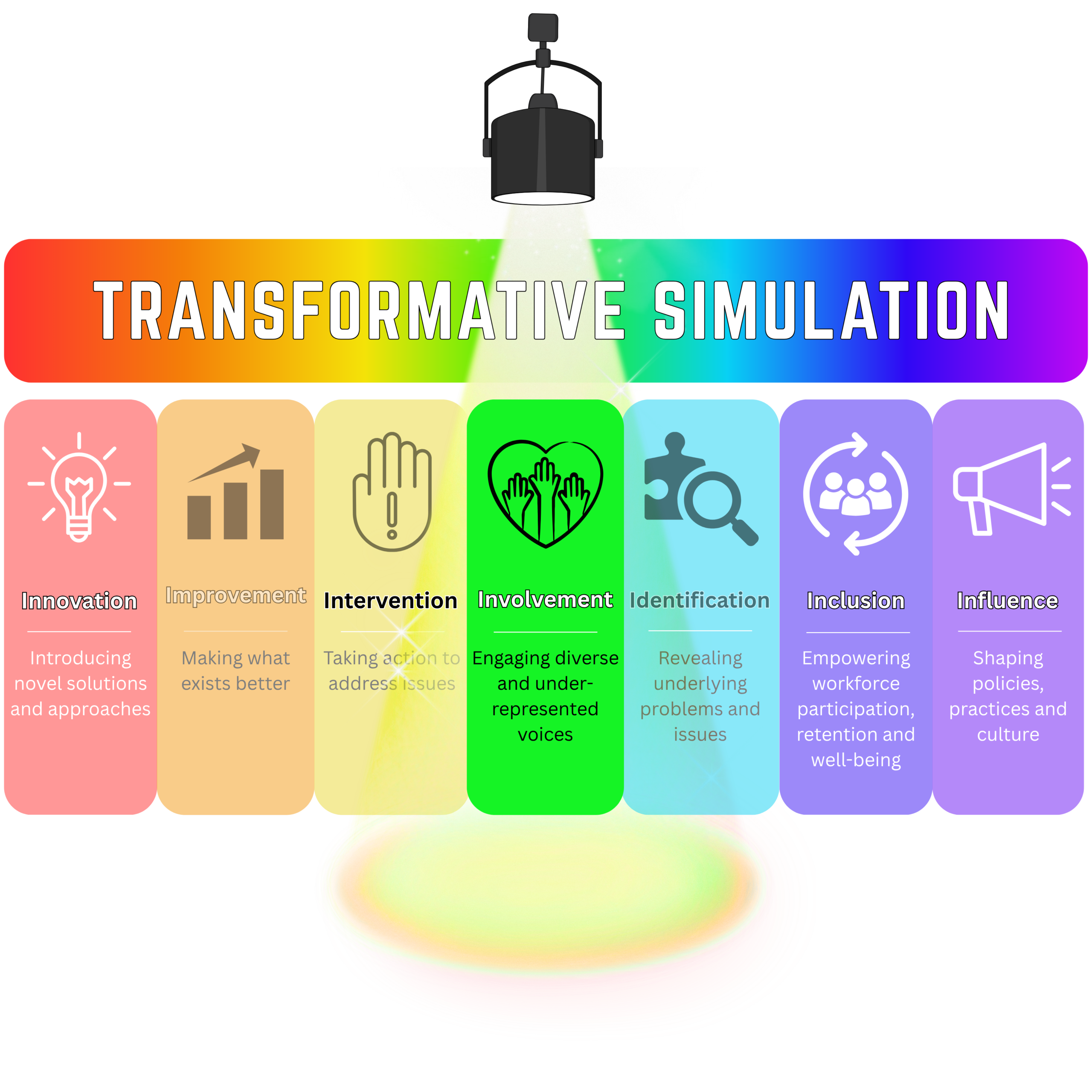 Transformative Simulation considers how simulation can be intentionally used beyond education to understand and contribute to change within healthcare systems. The Involvement Simulation-Based Intention focuses on using simulation to structurally involve patients, carers, communities and other diverse and under-represented groups in understanding healthcare culture and systems and shaping how care is designed and delivered. This resource from hub topic lead Sharon Weldon brings together a short Transformative Simulation thought piece, visual explainer and selected examples from the literature demonstrating how simulation has been used to bring different forms of knowledge and experience into patient safety and healthcare redesign. Further resources from Sharon on Transformative Simulation: Using simulation to improve patient safety and healthcare systems: The Improvement Intention Using simulation to strengthen workforce participation, belonging and wellbeing: The Inclusion Intention Using simulation to identify patient safety challenges: The Identification Intention
 Last week
-
Content Article
 The Uganda Alliance of Patients' Organizations has produced three videos for World Patient Safety Day 2026.
 -
Content Article
 SACCIA is not a set of communication rules to memorise. It is a framework for understanding, developing and applying the communicative competencies that enable people to build shared understanding together.
 -
News article
 Twenty women underwent mastectomies unnecessarily while being treated for breast cancer, an NHS trust in north-east England has told the BBC. They were among hundreds of patients who came to harm during treatment at the breast unit of the County Durham and Darlington Foundation Trust (CDDFT). The admission comes in the wake of revelations about serious failures in the unit, as reported by the BBC last year. Dozens of affected women and their families contacted us after we reported concerns about serious failings at the trust's breast cancer unit. These included: A high number of mastectomies compared with other NHS trusts. Operations that were carried out "too quickly". Outsourcing of some treatment to private clinics run by the trust's breast cancer clinical lead - an arrangement that one independent expert said created "a clear conflict of interest. Patients described the shock they had felt on being told a mastectomy (the removal of all or part of a breast) could have been avoided, as well as the psychological and physical pain that many still live with. CDDFT is now carrying out an internal review of breast cancer cases between January 2023 and February 2025, alongside the cases of 640 former patients who contacted a dedicated helpline. It says that cases have also been identified where cancer diagnoses were missed or delayed. Some of these patients subsequently saw their cancer spread. Last year, BBC News reported that nearly £6m had been paid by the trust over six years to breast cancer diagnostic clinics and surgery companies run privately by Mr Amir Bhatti, who was CDDFT's clinical lead for breast services from 2013-24. Concern about this arrangement was raised in a 2025 review into the running of the trust carried out by governance specialist Mary Aubrey, She said outsourcing patient appointments had created financial incentives which were potentially "a risk to clinical standards". Mr Bhatti has now been suspended from carrying out clinical practice but is still employed by the trust on full pay. Read full story Source: BBC News, 18 September 2026 Related reading on the hub: Report of the independent Inquiry into the issues raised by Paterson
 -
News article
 Pennsylvania is seeking emergency assistance from the US Centers for Disease Control and Prevention (CDC) as a major measles outbreak spreads across the state. The state warned the request could be withdrawn unless the federal agency publicly recognises four measles-associated deaths reported by the state. The Pennsylvania department of health has begun the process of requesting CDC emergency support known as an Epi-Aid, according to a letter reviewed by the Guardian. The letter was first reported by Reuters on Thursday. Debra Bogen, Pennsylvania’s secretary of health, outlined the condition in a letter sent on Wednesday to the CDC director, Erica Schwartz. “The CDC’s choice not to publicly recognize the deaths undermines our response,” Bogen wrote. “For this reason, if CDC is unable to transparently and accurately communicate information about those measles-associated deaths, the department will respectfully rescind our request for a CDC Epi-Aid.” The development comes amid an ongoing dispute involving Josh Shapiro, the state’s Democratic governor, and Robert F Kennedy Jr, the US health secretary, over the state’s handling of the outbreak and how measles-related deaths are being counted. Read full story Source: The Guardian, 17 September 2026
 -
News article
 Major concerns have been raised about patient and staff safety on wards at a Welsh hospital in a damning report by the watchdog. The investigation into two mental health wards at the University Hospital Llandough in Cardiff by Healthcare Inspectorate Wales (HIW) comes just months they published a similar report raising concerns about other mental health units at the hospital. An unannounced inspection at the Meadow and Daffodil mental health rehabilitation services in June found mould, ceiling leaks, faulty showers and bathing facilities at the hospital. Inspectors also identified "significant concerns" regarding mandatory training compliance and were not satisfied that sufficient staff could manage risks safely. HIW said "urgent action was required at the unit" to address immediate patient staff and safety concerns as a result. Progress across the health board will be monitored closely as a result of the recent inspections, the watchdog added. Read full story Source: Wales Online, 17 September 2026
 -
News article CommentThanks Helen I would be happy to share the process of identifying barriers alongside the other core elements of implementation such as stakeholder mapping, early signal indicators, etc. It's been really insightful working a country through the WHO IPC implementation steps and adapting them as per the implementation science recommendations. The steps for implementation remain important but making sense of the actual actions within each step has been insightful and there is a lot to share with others - soon. Claire
-
News article CommentHi @Claire Kilpatrick Great comment and it would definitely be great to hear more about the barriers to implementation gaps and how they’re being addressed. That would be a fabulous resource for others, given your expertise and experience on this area. Many thanks
-
Content Article
 Cyber incidents can have a major impact on care services. Systems may be unavailable, information may be difficult to access, and staff, people drawing on care, families and partners may need clear updates quickly. Good communication helps reduce uncertainty, supports safe care and makes sure the right people know what is happening, what they need to do and when they will be updated again. Digital Care Hub has developed editable communication checklists to help adult social care providers prepare before a cyber incident and communicate during one. There are separate versions for home care services and care homes. Each checklist should be used alongside your Business Continuity Plan.
 -
Content Article
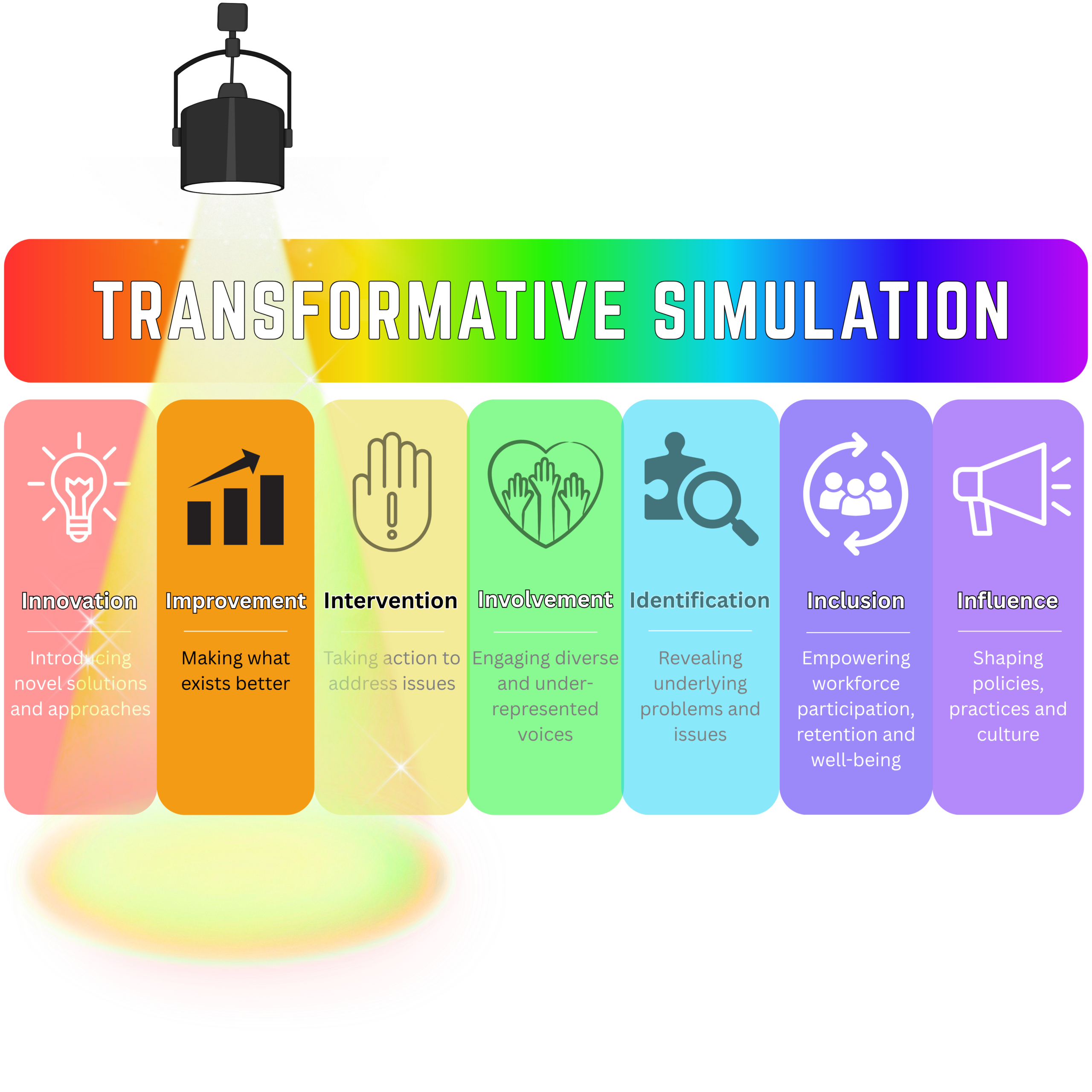 Transformative Simulation considers how simulation can be intentionally used beyond education to understand and contribute to change within healthcare systems. The Improvement Simulation-Based Intention focuses on using simulation to make what already exists better—testing and refining healthcare processes, pathways and systems where a problem or desired outcome has already been identified. This resource from hub topic lead Sharon Weldon brings together a short Transformative Simulation thought piece, visual explainer and selected examples from the literature demonstrating how simulation has been used to support patient safety and system improvement in practice. Further resources from Sharon on Transformative Simulation: Using simulation to strengthen workforce participation, belonging and wellbeing: The Inclusion Intention Using simulation to involve patients and communities in shaping safer care: The Involvement Intention Using simulation to identify patient safety challenges: The Identification Intention
 -
News article
 Prime Minister Andy Burnham is facing calls to set a national waiting-time target for dementia care in England. An Alzheimer's Society proposal to set an 18‑week referral‑to‑treatment target has been backed by Professor Sir Mike Richards, England's former national cancer director, and Baroness Louise Casey, who's leading a major review of adult social care. In a report, Alzheimer's Society and the King's Trust said a "cancer-style revolution" was needed to improve dementia care, which they described as being "stuck in the 20th century". In a speech at Alzheimer's Society conference on Thursday, Social Care Minister Alison McGovern expressed support for the report, external. She said: "The report that the Alzheimer's Society published today on going on the journey that we've been on with cancer, with Alzheimer's and dementia, I think that's spot on." The minister said dementia had been "neglected for far too long". She added: "And nowhere is this division between health and social care felt more sharply than by people living with dementia in their families, too often left to navigate a shattered system at the most difficult time in their lives." Read full story Source: BBC News, 17 September 2026 Further reading on the hub: Making patient safety work for people living with dementia
 -
News article
 Proposals to limit the number of patients being formally diagnosed with attention deficit hyperactivity disorder have been attacked as “rationing” healthcare and pushing children and adults to self-diagnosis via social media. The comments came before a government review due next week, which is expected to say that patients with ADHD symptoms should not automatically be formally diagnosed, but should be “triaged” and offered support without the need for a formal diagnosis. Details of this “needs-based” system, first revealed in the Times, would mean NHS services target those most acutely affected by ADHD, such as those at risk of self-harm or unable to work. Less severely affected people may not be referred for a formal diagnosis to NHS clinics but would be offered help according to a “holistic” assessment of their needs, the report will say. Proposals to limit the number of patients being formally diagnosed with attention deficit hyperactivity disorder have been attacked as “rationing” healthcare and pushing children and adults to self-diagnosis via social media. The comments came before a government review due next week, which is expected to say that patients with ADHD symptoms should not automatically be formally diagnosed, but should be “triaged” and offered support without the need for a formal diagnosis. Details of this “needs-based” system, first revealed in the Times, would mean NHS services target those most acutely affected by ADHD, such as those at risk of self-harm or unable to work. Less severely affected people may not be referred for a formal diagnosis to NHS clinics but would be offered help according to a “holistic” assessment of their needs, the report will say. The government’s independent review of mental health conditions, autism and ADHD was commissioned in December by the then health secretary, Wes Streeting, amid concerns over the sharp rise of people making sickness benefit claims due to mental health, autism and ADHD diagnoses. Led by Prof Peter Fonagy, a clinical psychologist and psychoanalyst at University College London, the interim review concluded that the system forces children and adults to obtain a formal diagnosis in order to get support. Official figures show that patients are waiting years to be assessed, with 800,000 on NHS waiting lists. Meanwhile, complaints about autism and ADHD services in England have more than tripled in five years. Read full story Source: The Guardian, 17 September 2026
 -
News article
 Government has named a chair for its public inquiry into care and governance failings at a mental health trust – nine months after the probe was promised. Judge John Potter is to lead the inquiry into Tees, Esk and Wear Valley Foundation Trust, which will examine the deaths of teenagers Christine Harnett, Nadia Shariff, and Emily Moore, who died by suicide while in the trust’s care, in 2019 and 2020. He is a retired circuit judge and former deputy judge of the Criminal Division of the Court of Appeal, with over 40 years of experience in public service, judicial leadership, and the administration of justice. He said his first priority would be to meet and “listen to those affected”, who would be “central to the inquiry’s work” and terms of reference. Its formal start date will be Monday. Lawyers and the families have called for the inquiry’s scope to include all sites run by the trust, not just West Lane Hospital, where two of the teenagers died. Read full story (paywalled) Source: HSJ, 18 September 2026
 -
Content Article
 This is the second of two investigation reports into crisis care in emergency departments (EDs). An interim report was published in April 2026 following early identification of a significant legal, policy and safety gap in the care of people in mental health crisis in EDs. This report is part of the Health Services Safety Investigations Body (HSSIB)’s wider work on safety issues for people experiencing a mental health crisis who come into contact with urgent and emergency care services. A related investigation is examining the 999 and 111 response to mental health crisis and will report its findings in spring 2027. The two investigations consider different points in the same pathway. Wider health and care system issues are included where they directly affect ED care, and further themes may be brought together in a separate, final report drawing on evidence from both investigations. Around 3% of ED attendances are mental health-related. However, people experiencing mental health problems are twice as likely as other patients to remain in the ED for more than 12 hours.
 -
Content Article
 Richard Yates and Magdalene Plesa gave a presentation at a recent Safer Healthcare Biosafety Network meeting describing the issue of formalin and formaldehyde exposure in UK healthcare settings, with harmful side effects for healthcare workers and a lack of occupational protection or safety regulation.
 -
Community Post*Trigger warning. This post includes personal gynaecological experiences of a traumatic nature. Patient Safety Learning is clear that outpatient hysteroscopy is a valuable diagnostic procedure and that when patients are given all the available information, offered appropriate pain relief options and feel treated with respect and dignity, experiences of a hysteroscopy procedure can be good. However, in some cases women do experience severely painful and traumatic hysteroscopies and significant safety concerns persist. What is your experience of having a hysteroscopy? We would like to hear - good or bad so that we can help campaign for safer, harm free care. You can read Patient Safety Learning's blog about improving hysteroscopy safety here. You'll need to be a hub member to comment below, it's quick and easy to do. You can sign up here. You can read more about Patient Safety Learning's position here: Hysteroscopy: 6 calls for action to prevent avoidable harm Further resources you may find helpful: Outpatient hysteroscopy: RCOG patient leaflet
-
Community PostI was lucky enough to have a hysteroscopy plus biopsy via GA yesterday. However, the pain in recovery was so bad! It's been 24 hours since I woke up, and without ibuprofen and my pxd cocodomol 30/500, I still have severe cramping. The bleeding isn't too bad, but my God, I don't know how anyone could have this procedure with just LA. This procedure should remain in an operating theatre under GA.
-
Content Article
.png.0f771b125cf244faa6f5338943f855b1.png) Transformative Simulation considers how simulation can be intentionally used beyond education to understand and contribute to change within healthcare systems. The Inclusion Simulation-Based Intention focuses on using simulation to strengthen workforce participation, belonging, empowerment and wellbeing, creating conditions in which people feel able to contribute meaningfully to healthcare systems and change. This resource from hub topic lead Sharon Weldon brings togethers a short Transformative Simulation thought piece, visual explainer and selected examples from the literature demonstrating how simulation can contribute to more inclusive, connected and psychologically safe healthcare workplaces. Further resources from Sharon on Transformative Simulation: Using simulation to improve patient safety and healthcare systems: The Improvement Intention Using simulation to involve patients and communities in shaping safer care: The Involvement Intention Using simulation to identify patient safety challenges: The Identification Intention
Transformative Simulation considers how simulation can be intentionally used beyond education to understand and contribute to change within healthcare systems. The Inclusion Simulation-Based Intention focuses on using simulation to strengthen workforce participation, belonging, empowerment and wellbeing, creating conditions in which people feel able to contribute meaningfully to healthcare systems and change. This resource from hub topic lead Sharon Weldon brings togethers a short Transformative Simulation thought piece, visual explainer and selected examples from the literature demonstrating how simulation can contribute to more inclusive, connected and psychologically safe healthcare workplaces. Further resources from Sharon on Transformative Simulation: Using simulation to improve patient safety and healthcare systems: The Improvement Intention Using simulation to involve patients and communities in shaping safer care: The Involvement Intention Using simulation to identify patient safety challenges: The Identification Intention -
Content ArticleAs quality depends on the decisions made every day, it should be part of daily planning, decision-making and operational delivery, not checked after the event or seen as a separate governance process. A quality management system (QMS) can help NHS organisations do this by providing a consistent approach, creating a clearer link between patient care, organisational priorities and board oversight. This guide explains how a QMS works and includes an example implementation plan that organisations can adapt to their local context.


.png.0f771b125cf244faa6f5338943f855b1.png)

