


Sharon Weldon
Members
-
Joined
-
Last visited
-
Content Article
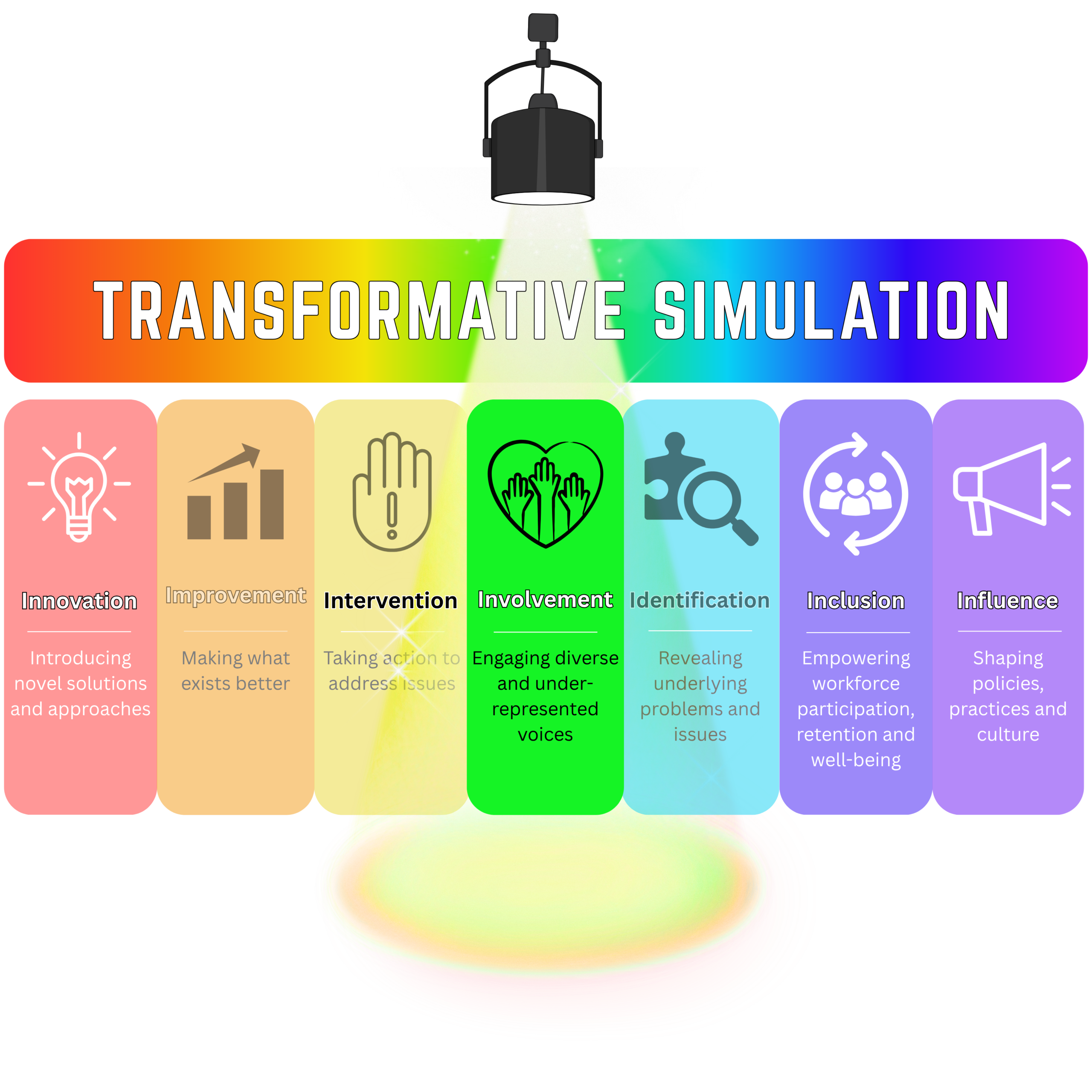 Transformative Simulation considers how simulation can be intentionally used beyond education to understand and contribute to change within healthcare systems. The Involvement Simulation-Based Intention focuses on using simulation to structurally involve patients, carers, communities and other diverse and under-represented groups in understanding healthcare culture and systems and shaping how care is designed and delivered. This resource from hub topic lead Sharon Weldon brings together a short Transformative Simulation thought piece, visual explainer and selected examples from the literature demonstrating how simulation has been used to bring different forms of knowledge and experience into patient safety and healthcare redesign. Further resources from Sharon on Transformative Simulation: Using simulation to improve patient safety and healthcare systems: The Improvement Intention Using simulation to strengthen workforce participation, belonging and wellbeing: The Inclusion Intention Using simulation to identify patient safety challenges: The Identification Intention
 -
Content Article
.png.0f771b125cf244faa6f5338943f855b1.png) Transformative Simulation considers how simulation can be intentionally used beyond education to understand and contribute to change within healthcare systems. The Inclusion Simulation-Based Intention focuses on using simulation to strengthen workforce participation, belonging, empowerment and wellbeing, creating conditions in which people feel able to contribute meaningfully to healthcare systems and change. This resource from hub topic lead Sharon Weldon brings togethers a short Transformative Simulation thought piece, visual explainer and selected examples from the literature demonstrating how simulation can contribute to more inclusive, connected and psychologically safe healthcare workplaces. Further resources from Sharon on Transformative Simulation: Using simulation to improve patient safety and healthcare systems: The Improvement Intention Using simulation to involve patients and communities in shaping safer care: The Involvement Intention Using simulation to identify patient safety challenges: The Identification Intention
Transformative Simulation considers how simulation can be intentionally used beyond education to understand and contribute to change within healthcare systems. The Inclusion Simulation-Based Intention focuses on using simulation to strengthen workforce participation, belonging, empowerment and wellbeing, creating conditions in which people feel able to contribute meaningfully to healthcare systems and change. This resource from hub topic lead Sharon Weldon brings togethers a short Transformative Simulation thought piece, visual explainer and selected examples from the literature demonstrating how simulation can contribute to more inclusive, connected and psychologically safe healthcare workplaces. Further resources from Sharon on Transformative Simulation: Using simulation to improve patient safety and healthcare systems: The Improvement Intention Using simulation to involve patients and communities in shaping safer care: The Involvement Intention Using simulation to identify patient safety challenges: The Identification Intention -
Content Article
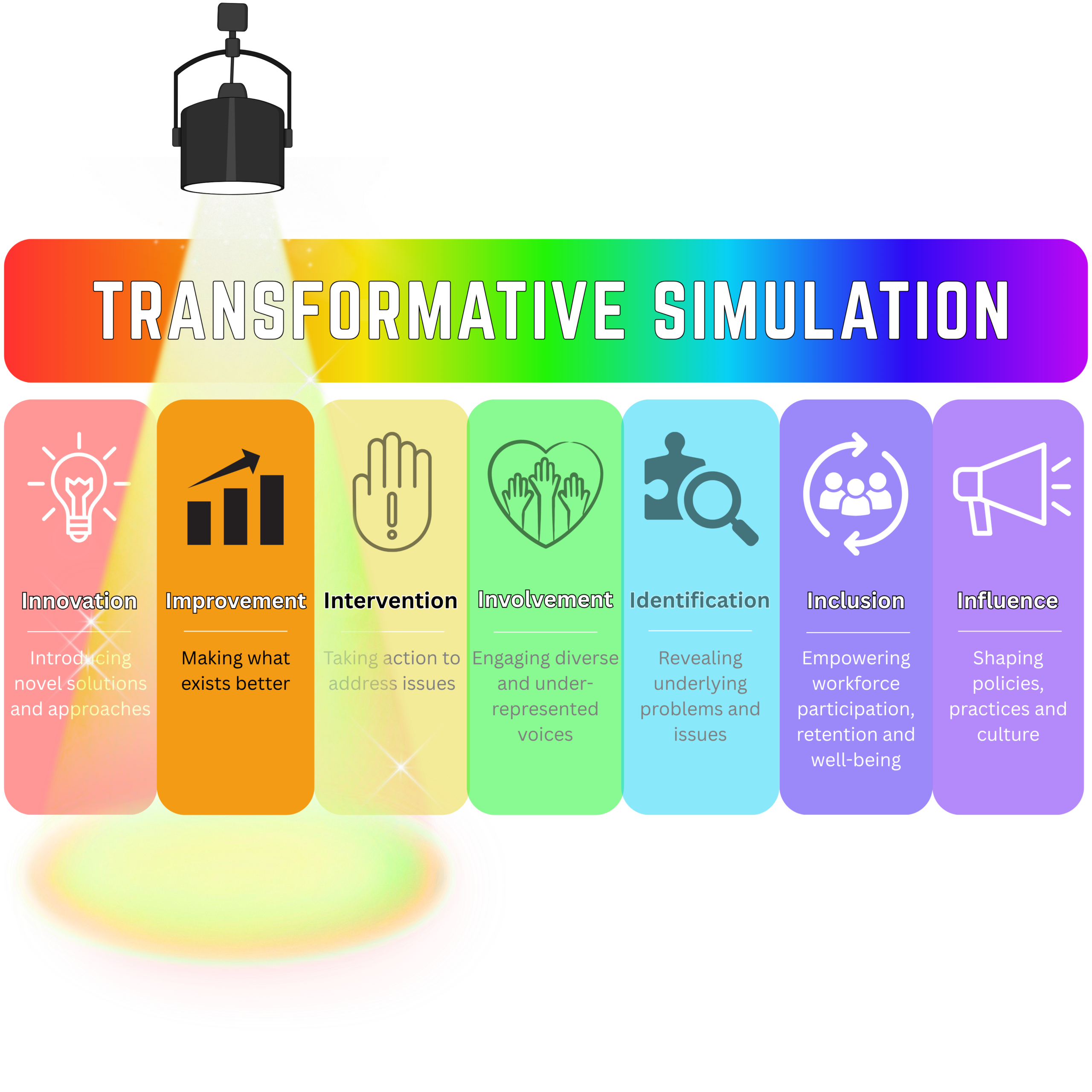 Transformative Simulation considers how simulation can be intentionally used beyond education to understand and contribute to change within healthcare systems. The Improvement Simulation-Based Intention focuses on using simulation to make what already exists better—testing and refining healthcare processes, pathways and systems where a problem or desired outcome has already been identified. This resource from hub topic lead Sharon Weldon brings together a short Transformative Simulation thought piece, visual explainer and selected examples from the literature demonstrating how simulation has been used to support patient safety and system improvement in practice. Further resources from Sharon on Transformative Simulation: Using simulation to strengthen workforce participation, belonging and wellbeing: The Inclusion Intention Using simulation to involve patients and communities in shaping safer care: The Involvement Intention Using simulation to identify patient safety challenges: The Identification Intention
 -
Content Article
 The Transformative Simulation framework provides an overarching, theory-aligned, taxonomy that helps simulation designers clarify the purpose, intention, systems-level aims of their work. Here is a key concept infographic.
 -
Content Article
 Transformative simulation in the energy and utility sector.
 -
Content Article
 Artificial intelligence (AI) is increasingly applied to healthcare decision-making; however, many persistent patient safety risks arise from sociotechnical conditions such as communication breakdowns, coordination failures, and organisational culture rather than diagnostic or decision error alone. While simulation can engage these dimensions of care, AI-supported simulation remains limited by heterogeneity and a lack of explicit conceptual structure. This study presents a narrative and conceptual review of the healthcare simulation and AI literature to identify structural barriers to coherent AI reasoning about simulation. Drawing on this synthesis, we introduce Transformative Simulation (TfS) as an intentional framework that can be formalised as an ontology for AI-supported simulation focused on cultural and systems-level change. TfS structures simulation through explicit Simulation-Based Intentions, an aligned design–delivery–data–debrief process, and foundational considerations of purpose, perspective, power, preparation, and possibility. Framed in this way, TfS enables AI systems to interpret simulation artefacts in relation to declared intent, sociotechnical context, and ethical boundaries. We further describe an Intentionality–Simulation–Intelligence triad and a continuous learning loop that align human values, simulation structure, and AI reasoning. The findings of this review suggest that an important challenge in applying AI to healthcare simulation may be ontologica
 -
Content Article
 Transformative Simulation and Translational Simulation in healthcare can sound like two polished terms fighting for the same seat at the healthcare simulation table. Both move healthcare simulation beyond learner checklists, yet each term points simulationists toward a different kind of change. The clean way to separate the terms is this: Translational Simulation asks how simulation can improve healthcare delivery through quality, patient safety and system performance. Transformative Simulation asks what the system and the people within the system need to understand about themselves before meaningful change can occur. One helps translate simulation into better care delivery. The other helps people see the care system with new eyes.
 -
Content Article
 Sharon Weldon is the Transformative Simulation topic lead for the hub. In this blog, Sharon introduces Transformative Simulation, explains how it can be applied to patient safety, how teams might use it to test and refine safer ways of working, and signpost you to where you can find further information and resources on Transformative Simulation.
.png.0f771b125cf244faa6f5338943f855b1.png)
