

All learn
Showing articles.
Today
-
Content Article
 Patient experiences reported online can reveal safety incidents in healthcare organisations, but they can only translate into quality improvement if organisations engage with them. Accordingly, healthcare organisations’ responses to online feedback offer a new data source on corrective culture, namely, the norms and practices for identifying, interpreting, and acting on safety incidents. This study explored the feasibility of using a large language model to reliably code these responses for two candidate indicators of corrective culture: engagement and organisational learning. The results indicate that large language models can reliably code engagement in these responses, while their ability to code organisational learning remains inconclusive. Organisational culture in healthcare is usually assessed with staff surveys, which rely on self-report. Large language models could complement surveys by measuring observed behaviour in naturally occurring data, although whether engagement reflects corrective culture requires external validation.
 -
Content Article
 On 20 October 2025, the then-Secretary of State announced the decision to commission an independent review into maternity and neonatal services at Leeds Teaching Hospitals NHS Trust (LTHT). This was due to: LTHT having one of the highest extended perinatal mortality rates. hearing families’ experiences. the ‘inadequate’ rating in the latest Care Quality Commission (CQC) report. The purpose is to review the care women, babies and families received in a maternity and neonatal context, identify any failings and recommend actions for improvement. For clarity and consistency, references to ‘women’ throughout this document are intended to include women and all birthing people, including those who do not identify as women. During the defined time period, the governance and leadership of the trust and the extent to which the regulators were aware of issues will be reviewed to determine if the regulatory response was sufficient.
 -
Content Article
 This NHS Resolution thematic review explores learning from suicide-related compensation claims made against mental health trusts in England. The report highlights opportunities to strengthen communication, support effective family involvement, improve risk assessment processes and address organisational factors that can influence patient safety and care.
 -
Content Article
 The National Audit of Inpatient Falls (NAIF) has published its 2026 annual report, Beyond hip fracture: reporting on the expansion to include other injuries for the first time. This is the first NAIF report to extend beyond hip fracture, providing broader insights into the prevention, assessment and management of patients who sustained a fracture, head injury or spinal injury following an inpatient fall. The report highlights opportunities for trusts and health boards to improve patient safety and outcomes. It also introduces a new key performance indicator on timely pain management following an injurious fall and sets out key recommendations to strengthen participation and falls governance, standardise post-fall processes, and improve patient outcomes.
 Yesterday
-
Content Article
 Evidence is limited on how people experience government-commissioned inquiries, what they value about them and the impacts of procedures. This study applies realist logic to examine the experiences of those designing and participating in a government-commissioned restorative approach to harm associated with surgical mesh use in Aotearoa New Zealand. Attention is paid to divergent perspectives about harm and responsibility, desired outcomes, and the multiple identities that shaped people's responses to the programme.
 -
Content Article
 In this 2 minute video, Chief Medical Officer for The UK Sepsis Trust, Ron Daniels explains how antibiotics can enter your food chain, and how this is having an impact on sepsis and antimicrobial resistance. Read the transcript
 -
Content Article
 Preventable harm continues to be a major problem in health care. The WHO estimates the global rate of patient harm is 1 in every 10 patients, and that roughly half of harm is preventable. There has been progress in improving safety over the last quarter century, but rates of patient harm remain high. One reason is that essential patient safety concepts have not been adopted as a central part of professional education and training. We do not expect clinicians to learn anatomy or pharmacology on the job. Why do we expect patient safety can be learned that way? A principal reason for the foot dragging is inertia. Anatomy and chemistry have been the mandatory foundation for medical education for over a hundred years. Since that time, curricula have expanded, but the persistent assumption has been that well-trained, conscientious clinicians will not make errors. Systems thinking, which explains how flawed structures, policies and processes lead to errors and harm, has not been a part of that training. By allowing this mindset to persist, we are setting up future clinicians to fail. If we want safer care, teaching about safety must play a more central role in medical education. In this paper, Albert Wu suggests that this should begin as early as possible, stretching back into pre-professional education and even grade school.
 Last week
-
Content Article
 Generative artificial intelligence (AI) systems now summarise health-related search results, answer medical questions and offer guidance people once sought from clinicians. These systems bring real benefits, including plain-language explanations of medical information, around-the-clock availability and expanded access for people facing language or literacy barriers. They also carry new risks: inaccurate guidance can harm people at scale, and malicious actors can now generate personalised health misinformation at negligible cost. In this Perspective published in Nature, the authors argue that these risks are largely invisible to the institutions responsible for protecting public health. When AI guidance causes harm, no record exists outside the platform, no channel allows users to report it and no independent researcher can measure the consequences. The authors trace these invisible risks across two settings: incidental exposure online and active seeking through search engines and chatbots. Minimising harm from AI-generated health information requires making it observable. The authors therefore offer recommendations that aim to improve transparency, mitigate harm at the point of delivery and assign accountability, ranging from voluntary platform measures to regulatory ones.
 -
C34bd4a6c3d3bb5492bcbdf92833b575Your reflection seems spot on. It would be really interesting to understand which balancing measures are being considered as part of the review of Martha’s Rule, particularly to explore any unintended consequences alongside the intended benefits.
-
Content Article
 Risa Mallory is a retired psychotherapist from Canada and a hub Topic leader. After a serious cardiovascular event in 2018 she became a patient advocate, collaborating with organisations across the globe. In this blog, Risa says that when patients are listened to, respected, and engaged as partners, treatment adherence becomes about collaboration rather than compliance.
 -
Content Article
 Good hand hygiene in healthcare is essential to reduce the spread of healthcare associated infections (HAIs), which are the most frequent adverse event in healthcare globally. Although progress has been made in improving hand hygiene, there is still a pressing need to give healthcare professionals around the world the necessary knowledge and facilities to achieve effective infection control. The latest World Health Organization (WHO) data shows that globally, half of healthcare facilities do not have basic hand hygiene services, one in five facilities have no water services and one in ten have no sanitation services.
 -
Content Article
 This report sets out the findings and recommendations of an independent review into prevalence and support for mental health conditions, ADHD and autism. The review, chaired by leading clinical psychologist Professor Peter Fonagy with the support of vice chairs Professor Sir Simon Wessely and Professor Gillian Baird, found that mental distress has increased substantially among children and young people. The findings show this has been driven by several factors, including social media, financial insecurity, increased uncertainty about the future, poorer sleep, and reduced feelings of connection and belonging. While referrals and diagnoses for ADHD and autism have risen significantly, the review found that population-level prevalence of these conditions appears broadly stable.
 -
Content Article
.png.e2df4a1b3b7bde0f52dc1db7ab2120db.png) This Health Services Safety Investigation Body (HSSIB) learning resource is aimed at learners with roles in healthcare safety investigation, including investigation, commissioning, oversight and involvement. By the end of this resource, you will be able to: Understand why you would use SEIPS in an investigation. Explain the elements of the SEIPS framework in their relation to a patient safety event. Justify the use of SEIPS as part of a safety investigation.
This Health Services Safety Investigation Body (HSSIB) learning resource is aimed at learners with roles in healthcare safety investigation, including investigation, commissioning, oversight and involvement. By the end of this resource, you will be able to: Understand why you would use SEIPS in an investigation. Explain the elements of the SEIPS framework in their relation to a patient safety event. Justify the use of SEIPS as part of a safety investigation. -
Content Article
 This strategy sets out Spain's strategic framework for strengthening patient safety over the next decade, promoting safer healthcare systems, fostering a culture of safety, and advancing patient-centred care across all levels of the health system.
 -
Content Article
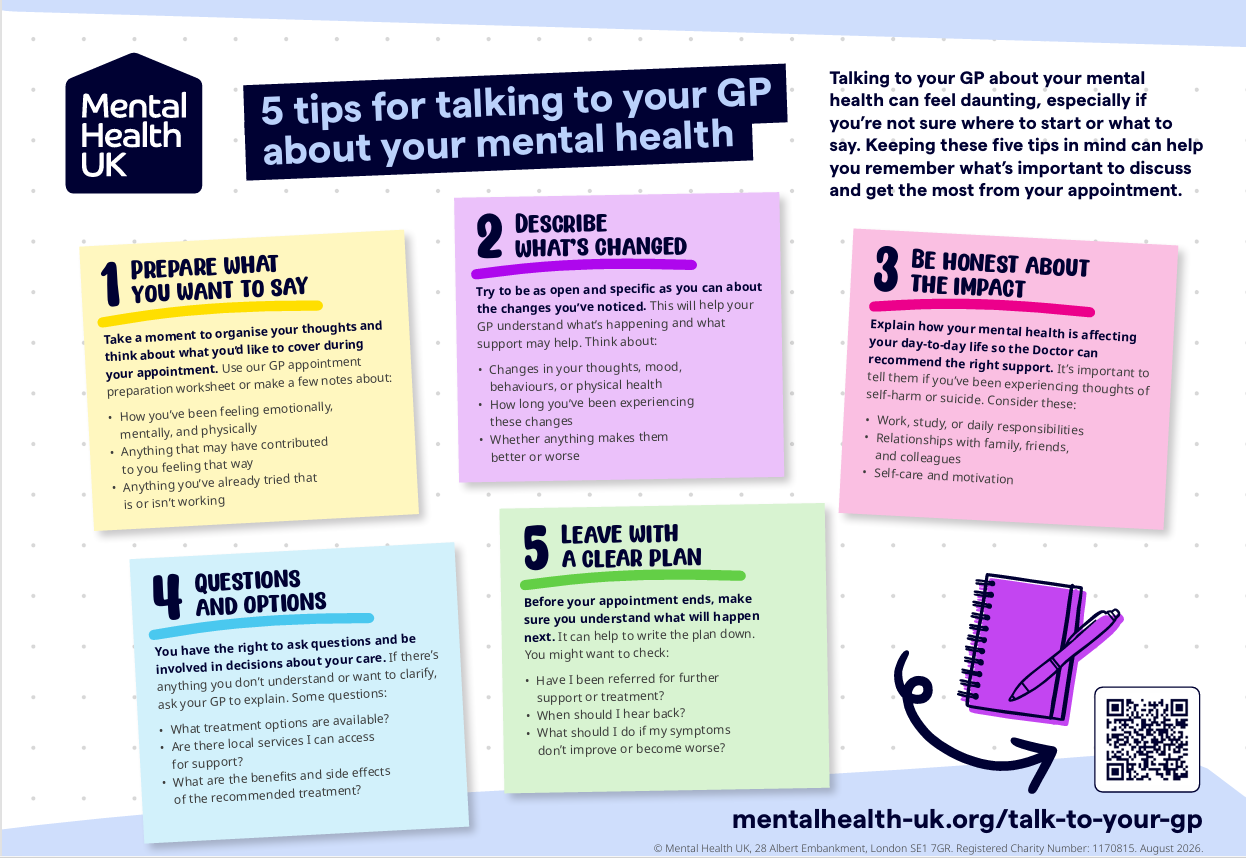 Talking to your GP about your mental health can feel daunting, especially if you’re not sure where to start or what to say. Keeping these five tips in mind can help you remember what’s important to discuss and get the most from your appointment. See further resources from Mental Health UK: free downloadable mental health resources.
 -
Content Article
 This scoping review synthesises current evidence on artificial intelligence (AI) governance in healthcare organisations, outlining key components of AI governance frameworks. Seventy-seven frameworks were identified and examined for four components: (1) Guiding principles (ethics or governance-related); (2) Assessment methods; (3) AI lifecycle stages; and (4) Oversight mechanisms. Most frameworks were not applicable to real-world healthcare settings and missed key principles or components, such as an oversight mechanism. Only 10 frameworks (13.0%) included all four framework components, with oversight mechanisms (e.g. AI-specific governance committee) being the least common. There is a need to move beyond principles to implementing AI governance frameworks in healthcare organisations and evaluating their real-world impact.
 -
C34bd4a6c3d3bb5492bcbdf92833b575Clive Flashman commented on Clive Flashman's article in Digital health regulatory bodies/standards/guidanceThanks PJ - yes, I'm interested to see what others think too....
-
C34bd4a6c3d3bb5492bcbdf92833b575Following Julie's blog, we heard from a patient who has had similar experiences. She was happy for her story to be shared below:
-
Content Article
 When someone dies by suicide, or by a self-inflicted death, including in a psychosis, or a mental health homicide (when a person is killed by someone experiencing mental illness), it is initially called an unexplained death by the Police and it is referred to the Coroner in the area the person died. For families the processes that follow can be confusing and distressing. Trying to navigate your way through these processes at a time of profound traumatic grief can feel almost impossible. This brief guide from Making Families Count provides an overview of what might happen and signposts you to further information and sources of support.
 -
Content Article
 The government is committed to bringing down waiting times for elective care in England, aiming to achieve 92% of waits within 18 weeks by the end of the current parliament (at the latest in July 2029). In September 2025, The Health Foundation projected that – based on trends over Labour’s first year in power – 92% of waits would last up to 20.3 weeks by July 2029, falling just short of the headline pledge. This analysis shows that, over the 12 months to July 2026, the percentage of waits within 18 weeks improved from 61.3% to 65.4%. The waiting list also fell by 62,000 to 7.33 million, and the share of waits longer than 52 weeks improved from 2.6% to 1.5%.
 -
Content Article
 The Regulators’ Pioneer Fund from the Department for Science, Innovation and Technology awarded funding to the Care Quality Commission to test the use of ambient voice technology (AVT) during regulatory assessments. The aim of the project was to explore how AVT could support CQC assessment activities beyond how service providers use it when delivering care to patients.
 -
Content Article
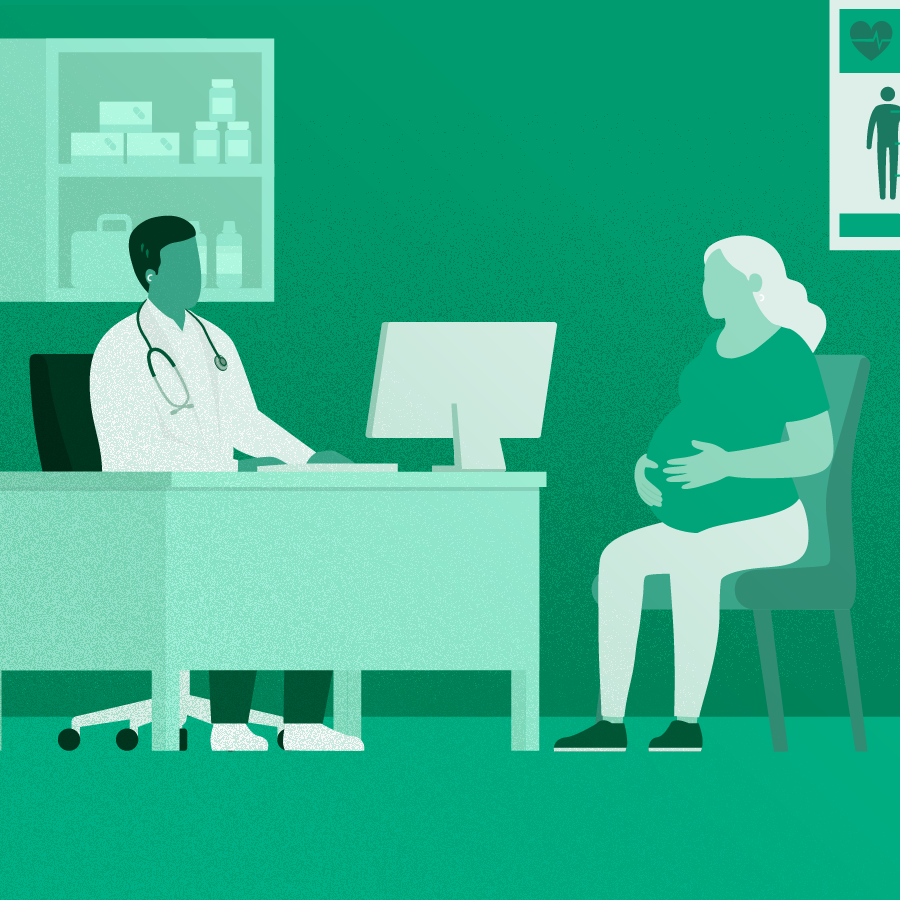 According to a report from the Royal College of General Practitioners, around two-thirds of patients trust their GP for advice on how to live healthily, yet three quarters of GPs say they lack the time to offer preventive care, which may include advice on lifestyle, vaccinations and self-care. It argues that a stronger preventive approach could lead to better patient outcomes, reduced health inequalities, fewer avoidable hospital admissions and a more sustainable NHS. The report focuses on the role general practice can play in prevention, and the support needed to create the capacity for this work.
 Earlier
-
Content Article
 To mark World Patient Safety Day 2026, Voices for Safety released a special episode featuring Prof Alarcos Cieza, Head of Management of Non-communicable Diseases at the World Health Organization (WHO), and Prof Maria Panagioti from The University of Manchester and NIHR PSRC: Greater Manchester. The conversation explores a WHO-commissioned meta-analysis on patient safety and non-communicable diseases, led by Prof Maria Panagioti.
 -
Content Article
 Artificial intelligence (AI) technologies are being rapidly adopted in healthcare, yet organisational governance often lacks the processes needed to oversee their safe and responsible use. Previous AI governance frameworks largely focus on high-level AI ethics principles, leaving healthcare organisations struggling to translate these principles into practice, assess risk and embed AI oversight into existing processes. This study published in BMJ Digital Health and AI aimed to develop and validate a practice-oriented AI governance framework for healthcare organisations. The framework provides healthcare organisations with a structured approach to assessing, governing and monitoring AI systems throughout their life cycle and may support the safe and responsible adoption of AI in practice. Further research is needed to evaluate the framework across diverse healthcare settings and emerging AI technologies, including generative and agentic AI.
 -
Content Article
 World Patient Safety Day 2026, celebrated on 17 September, focused on safe care for non-communicable diseases, encouraging communities, healthcare practitioners, organisational leaders and policymakers to work together to tackle patient safety challenges and reduce harm for people living with long-term conditions. The six NIHR Patient Safety Research Collaborations are committed to improving patient safety and addressing health inequalities, including the challenges faced by people living with non-communicable diseases. Explore some of the ways in which NIHR PSRCs are helping to improve patient safety and health outcomes for people living with non-communicable diseases.


.png.e2df4a1b3b7bde0f52dc1db7ab2120db.png)

