

All learn
Showing articles.
Today
-
D73dfdc9e1c317b93dc4262b1d5a9440Following Julie's blog, we heard from a patient who has had similar experiences. She was happy for her story to be shared below:
-
Content Article
 When someone dies by suicide, or by a self-inflicted death, including in a psychosis, or a mental health homicide (when a person is killed by someone experiencing mental illness), it is initially called an unexplained death by the Police and it is referred to the Coroner in the area the person died. For families the processes that follow can be confusing and distressing. Trying to navigate your way through these processes at a time of profound traumatic grief can feel almost impossible. This brief guide from Making Families Count provides an overview of what might happen and signposts you to further information and sources of support.
 -
Content Article
 The government is committed to bringing down waiting times for elective care in England, aiming to achieve 92% of waits within 18 weeks by the end of the current parliament (at the latest in July 2029). In September 2025, The Health Foundation projected that – based on trends over Labour’s first year in power – 92% of waits would last up to 20.3 weeks by July 2029, falling just short of the headline pledge. This analysis shows that, over the 12 months to July 2026, the percentage of waits within 18 weeks improved from 61.3% to 65.4%. The waiting list also fell by 62,000 to 7.33 million, and the share of waits longer than 52 weeks improved from 2.6% to 1.5%.
 -
Content Article
 Earlier this year, NHS England ran a national review of the clinical risk management standards DCB0129 and DCB0160: the two standards that govern how health IT systems are assessed for safety before and during use.[1] In this blog, Clive Flashman, Patient Safety Learning's Chief Digital Officer, summarises his response to that review. His central argument is that the standards are the right instrument and should not be replaced, but that in practice they have been reduced to a documentation exercise completed to satisfy procurement. Three things would change that: Putting patients inside the framework rather than outside it. Connecting digital safety incident data to national learning through the Learning from Patient Safety Events (LFPSE). Giving clinical safety officers the time, authority and protection their role has never had.
 Yesterday
-
D73dfdc9e1c317b93dc4262b1d5a9440Martha's Law is one of the NHS's success stories, but the tragedy is that it takes suffering and public campaigning to carry out what should be getting done already. You mentioned operational pressures. Surely this is ripe for AI? Surely patients deserve objective second opinions? We have the technology.
-
Content Article
 The Regulators’ Pioneer Fund from the Department for Science, Innovation and Technology awarded funding to the Care Quality Commission to test the use of ambient voice technology (AVT) during regulatory assessments. The aim of the project was to explore how AVT could support CQC assessment activities beyond how service providers use it when delivering care to patients.
 -
Content Article
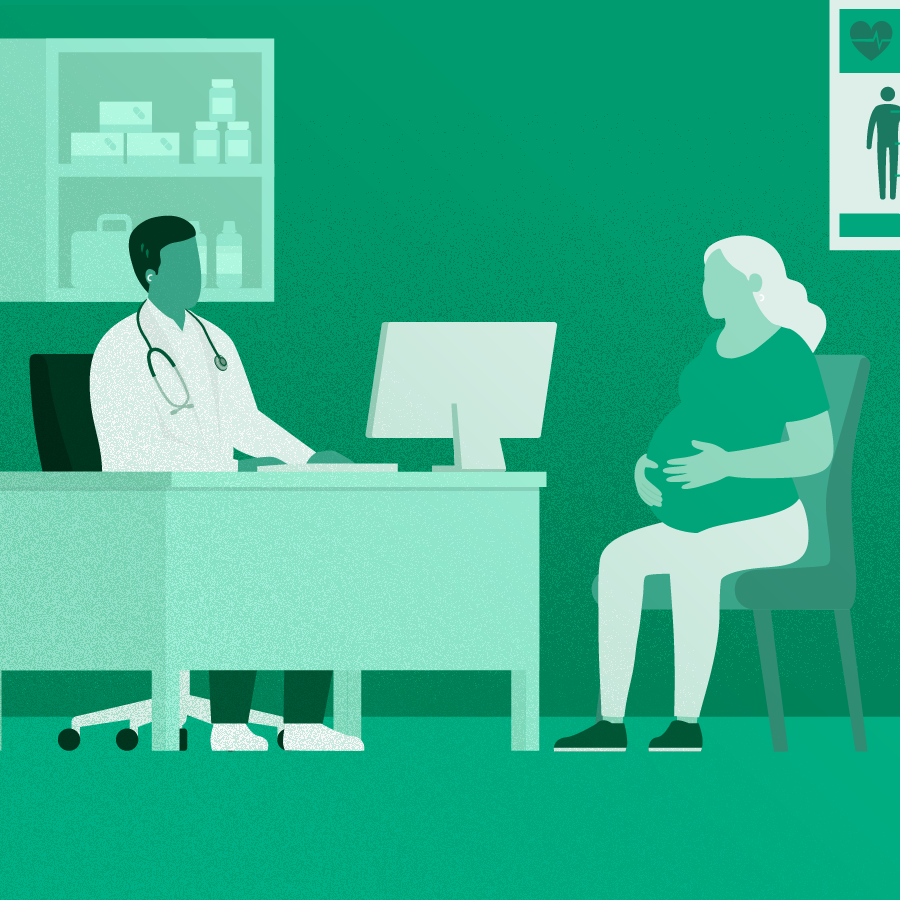 According to a report from the Royal College of General Practitioners, around two-thirds of patients trust their GP for advice on how to live healthily, yet three quarters of GPs say they lack the time to offer preventive care, which may include advice on lifestyle, vaccinations and self-care. It argues that a stronger preventive approach could lead to better patient outcomes, reduced health inequalities, fewer avoidable hospital admissions and a more sustainable NHS. The report focuses on the role general practice can play in prevention, and the support needed to create the capacity for this work.
 -
Content Article
 To mark World Patient Safety Day 2026, Voices for Safety released a special episode featuring Prof Alarcos Cieza, Head of Management of Non-communicable Diseases at the World Health Organization (WHO), and Prof Maria Panagioti from The University of Manchester and NIHR PSRC: Greater Manchester. The conversation explores a WHO-commissioned meta-analysis on patient safety and non-communicable diseases, led by Prof Maria Panagioti.
 Last week
-
Content Article
 Artificial intelligence (AI) technologies are being rapidly adopted in healthcare, yet organisational governance often lacks the processes needed to oversee their safe and responsible use. Previous AI governance frameworks largely focus on high-level AI ethics principles, leaving healthcare organisations struggling to translate these principles into practice, assess risk and embed AI oversight into existing processes. This study published in BMJ Digital Health and AI aimed to develop and validate a practice-oriented AI governance framework for healthcare organisations. The framework provides healthcare organisations with a structured approach to assessing, governing and monitoring AI systems throughout their life cycle and may support the safe and responsible adoption of AI in practice. Further research is needed to evaluate the framework across diverse healthcare settings and emerging AI technologies, including generative and agentic AI.
 -
Content Article
 World Patient Safety Day 2026, celebrated on 17 September, focused on safe care for non-communicable diseases, encouraging communities, healthcare practitioners, organisational leaders and policymakers to work together to tackle patient safety challenges and reduce harm for people living with long-term conditions. The six NIHR Patient Safety Research Collaborations are committed to improving patient safety and addressing health inequalities, including the challenges faced by people living with non-communicable diseases. Explore some of the ways in which NIHR PSRCs are helping to improve patient safety and health outcomes for people living with non-communicable diseases.
 -
Content ArticlePatient Safety Learning posted an article in Australian Commission on Safety and Quality in Health Care
 Posters are an effective infection prevention and control (IPC) education tool, particularly in resource- limited healthcare settings without dedicated IPC teams, such as aged care settings. The Australian Commission on Safety and Quality in Health Care has released new standard and transmission-based precautions posters to support infection prevention and control (IPC) within aged care.
 -
Content Article
 Maximising the value of AAR means getting answers to both parts of the fourth AAR question: “What have we learned?” and “What might we do with this learning? Yet the list of actions arising from an AAR can become needlessly long and this can both reduce the likelihood of the actions being completed and could add meaningless activity into an already over burdened system. In edition 16 of her newsletter, Judy Walker reflects on how the last part of an After Action Review (AAR) should not be to add more unnecessary steps on the patient pathway or commit to new activities that have little evidence for their efficacy. It should instead focus on a few actions that will have real impact and to make recommendations for others higher up the chain of command to be responsible for assessing.
 -
Content Article
 Over 100,000 women in England were implanted with pelvic mesh. Thousands were left with life-changing injuries. The company now selling it says its mission is to reach one million women by 2027. Kath Sansom has spent a decade fighting for the women mesh harmed. Her friend Gail is one of them. This is their story, and the story of a device that was never designed to come out. If you have been affected by mesh, fSling the Mesh is a support and campaign group run by women who have been through it: https://slingthemesh.co.uk/
 -
Content Article
 In this blog, hub topic lead Aditi Desai considers whether retrospective inquiries alone are enough to improve maternity safety, arguing that individual errors rarely explain the full picture. Aditi explores how systems thinking and human factors expertise can reveal the pressures, interactions and everyday working practices that create hidden risks across maternity services. She calls for the considerable energy currently devoted to investigating harm to go towards designing safer maternity systems before the next incident occurs.
 -
Content Article
 Mental Health Awareness Week is an annual event which aims to raise awareness and promote open conversations about mental health. In this Top picks, we’ve pulled together resources, blogs and reports from the hub that focus on improving patient safety across different aspects of mental health services and also supporting staff with their own mental health and wellbeing.
 -
Content Article
 To celebrate World Patient Safety Day’s 2026 theme “Safe care for noncommunicable diseases”, the BMJ Quality & Safety Journal speak with Professor Jose Valderas about the importance of patient engagement in delivering safer care. Professor Valderas is an academic family physician and Director of the Centre for Research in Health Systems Performance at the National University of Singapore. He is also the current lead for research at the World Organisation of Family Doctors (WONCA). He has led the development of tools to measure patient experience and outcomes, such as PREOS-PC and PaRIS-PQ, and has co-ordinated work with the World Health Organization (WHO) on patient engagement to promote safer care in primary care.
 -
Content Article
 Every clinical leader knows that healthcare depends on communication. We can diagnose accurately, prescribe appropriately, and design the best possible care plan – but if the patient cannot read, understand or act on the information we give them, our care has fallen at the first hurdle. Accessible communication isn’t an administrative bonus – it is a core clinical duty that directly impacts patient safety, dignity and NHS efficiency. Using the example of appointment letters arriving in standard print, with faded font making it difficult for blind and partially sighted patients to read. Medication instructions too small . Crucial information about treatment and care, sometimes in life-or-death moments, being handed to people in a way they can’t read. Dr Oscar Duke shares steps healthcare leaders can take right now which would go a long way in improving patient experiences and outcomes.
 -
Content Article
 In this HSJ article, Jaymit Patel argues that the crisis in NHS dentistry is not simply a funding problem but a consequence of a capped system that already rations care through geography and persistence rather than need. He suggests moving away from repeated tweaks to the dental contract and instead adopting a phased package of reforms, including risk-based recall intervals, greater use of pharmacies, therapists and hygienists, automatic charge exemptions, water fluoridation and, potentially, a regulated dental insurance model for higher earners.
 -
Content Article
 The Patients Association hear often from patients and their loved ones that the care they receive is not what they had hoped for, that something has gone wrong, or that they are now unsure where to go from there. In this blog the Patients Association reflects on the slogan ‘Safe care for life’ for this year's World Patient Safety Day.
 -
Content Article
 Doug Woodcock and Marieke Emonts share Newcastle upon Tyne Hospitals' Family Health Board governance improvement journey.
 -
Content Article
 World Hospice and Palliative Care Day takes place on 11 October 2026. Patient safety in hospice and palliative care involves ensuring that every patient is able to access the services, support and pain relief that they need when they reach the end of life. It is also vital that families and carers are given relevant and timely support and information by healthcare services during their loved one’s hospice or palliative care, and following their death.
 -
Content Article
 Organisations across health and care are using and experimenting with AI to solve problems in clinical and non-clinical settings. This includes redesigning workflows, reducing pressure on staff and existing NHS services, and improving patient experience. Some organisations are also using larger-scale AI technologies from the likes of Microsoft and Anthropic to develop agentic AI solutions for more complex problems. Agentic AI refers to systems that can carry out tasks or workflows with a degree of autonomy while operating within defined rules and human oversight. The King's Fund brought health and care leaders together to reflect on the opportunities, risks and practical realities of adopting agentic AI across services.
 -
Content Article
 Coroners have warned public bodies six times in three years about the threat medicine shortages pose to patients. The Pharmaceutical Journal looks at the deaths behind those warnings and what pharmacists and patient groups say must change. Further reading on the hub: Creon shortages: “It’s just another thing patients with cystic fibrosis could do without” Medication supply issues: A pharmacist’s perspective Medicines shortages: minimising the impact on patients (a blog by Catherine Picton)
 Earlier
-
Content Article
 In this blog, Naomi Fulop, board member of Covid-19 Bereaved Families for Justice and Professor of Health Care Organisation and Management UCL, argues that although the UK Covid-19 Inquiry has exposed serious systemic failures around the procurement of personal protective equipment (PPE), meaningful accountability remains largely absent. She says that the Covid-19 Inquiry’s findings on the Government’s High Priority Lane, or 'VIP Lane', reveal a procurement system that was biased, poor value for money and harmful to the pandemic response.
 -
Content Article
 In this blog for World Patient Safety Day 2026, Kim Ball, Jane Ball and Rose Gallagher share what this year's theme means to nursing from their perspective, through the lens of prevention, safe staffing, and sustainability.


