
Summary
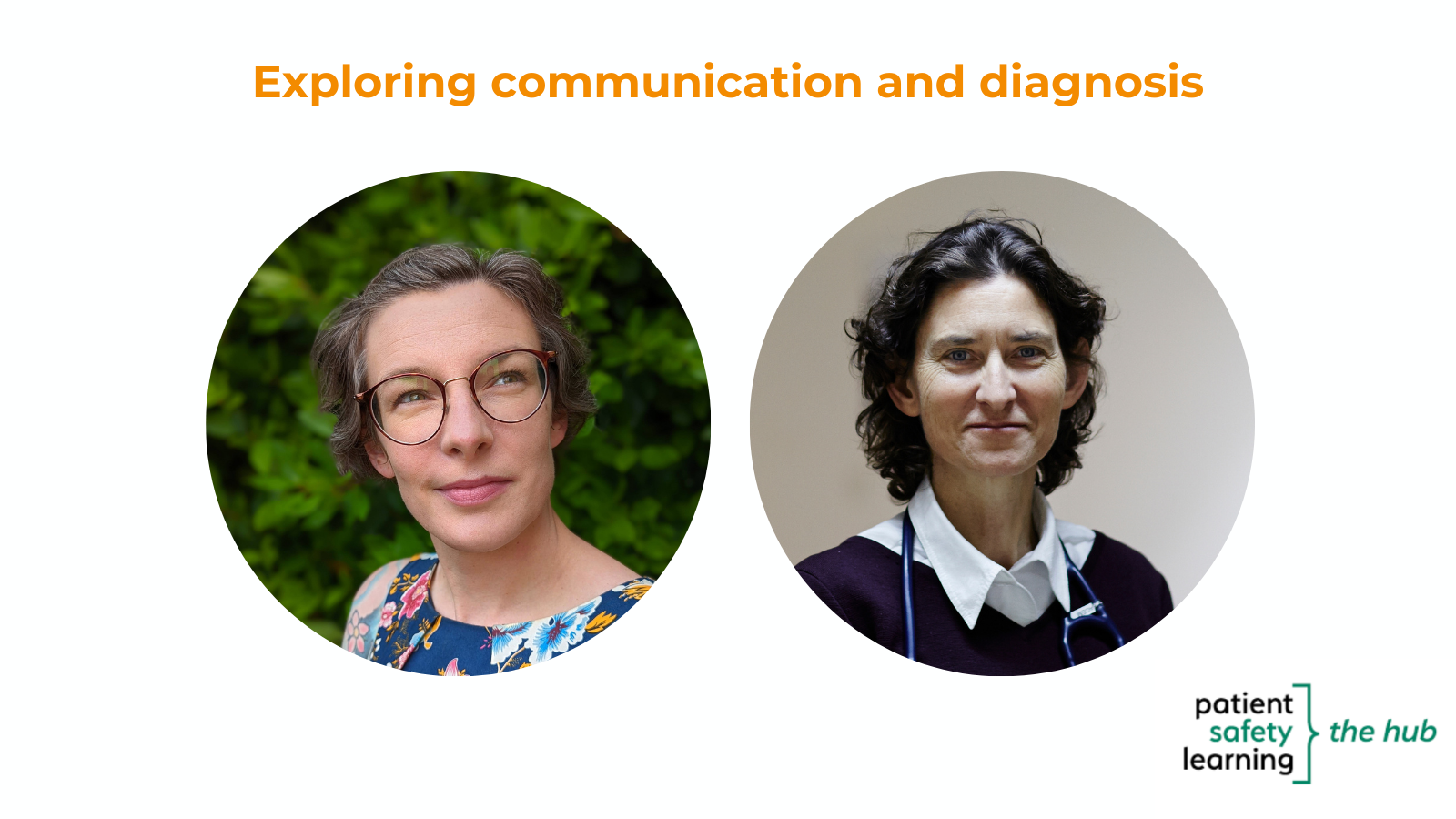
Mary Dahm is a Senior Research Fellow at the Australian National University. Carmel Crock is Director of the Emergency Department at the Royal Victorian Eye and Ear hospital Melbourne. Through their work, they aim to identify communication issues to improve diagnosis, patient safety and quality of care.
In this blog, they tell us more about their research to explore the relationship between communication and diagnostic accuracy. The findings highlight how critical it is to spend time listening to the patient, and for doctors to communicate uncertainties well.
This blog has been published as part of a series for World Patient Safety Day 2024 and the theme of Improving diagnosis for patient safety. #WPSD24, World Patient Safety Day 2024, WPSD 2024.
Content
Communication plays a crucial role in the diagnostic process. In fact, up to 80% of misdiagnoses occur during the clinical encounter between patient and doctor. Despite this, we still know very little about how doctors communicate when they talk with patients about a diagnosis. Our research helps us understand this better, so we can make health care safer for patients by reducing diagnostic errors.
Exploring communication and diagnosis
Doing research on communication and diagnostic errors is difficult because in real life we can't know ahead of time if an error will happen. So, for this project we analysed video recordings of simulated role plays where a group of 16 internationally trained doctors all saw the same patient who had predefined diagnosis. In other words, there was only one right answer.
We wanted to see if doctors who got the diagnosis wrong talked differently to those who got the diagnosis right. We looked at how long doctors talked about certain things, such as taking the patient’s history, and delivering the diagnosis to the patient.
We also studied the linguistic structures they used to deliver the diagnosis. For example did they:
- give plain statements, ‘You have tonsillitis'
- also include observations 'I can see your tonsils are red and inflamed, you have tonsillitis'
- hedge their diagnosis 'I think you might have tonsillitis.'
Key findings
Listening to the patient is key
Our study[1] showed that doctors who got the diagnosis wrong spent less time listening to their patients' history and more time delivering the diagnosis than doctors who got the diagnosis right.
This illustrates that the time doctors spend taking a patient’s history is time well spent. It gives doctors better information to finetune their thinking about the diagnosis, and means they are more likely to get the diagnosis right.
The findings also highlight how important it is for doctors to really listen to their patients, and make sure they give them time to voice their concerns and discuss their symptoms fully.
It also suggests that doctors need to be aware of how they gather information when taking a patient’s history. Are they interrupting patients? Are they leaving room for patients to speak up?
Communication styles linked to misdiagnosis
We also found that in the cases where doctors gave a wrong diagnosis, their language showed a degree of uncertainty, including silences, hesitations, false starts and hedges.
When clinicians are uncertain about a patient’s diagnosis, they should share this uncertainty with their colleagues and patients,[2] but this can be difficult to do. Some might feel it will be perceived as failure or incompetence. Not communicating uncertainty can create risks, result in patient harm and an in extreme case even contribute to preventable deaths. This might happen when patients take a tentative diagnosis to be a final diagnosis or are unaware of any uncertainty altogether because their doctor didn’t disclose it explicitly.
Interestingly and perhaps surprisingly, we also found that doctors who misdiagnosed their patient, gave more observational findings than those who gave the correct diagnosis. For example, pointing to a foreign object in the ear (the right diagnosis), they would refer to ‘a red and inflamed eardrum’ to support their (wrong) diagnosis of a middle ear infection.
The links between uncertain language, citing observational findings and misdiagnosis are useful. They can potentially help us identify and hopefully prevent diagnostic errors.
Final thoughts
Diagnostic error has the potential to touch every one of us at least once during our lifetime, sometimes with harmful and even fatal consequences. Shining a light on clinicians’ communication styles could provide a vital key to improving diagnostic safety. We urgently need more studies on how interpersonal communication affects diagnosis so that we can make the diagnostic process safer.
References
1. Dahm MR, Crock C. Diagnostic statements: a linguistic analysis of how clinicians communicate diagnosis. Diagnosis 2022; 9(3), pp.316-322.
2. Dahm MR, Crock C. Understanding and communicating uncertainty in achieving diagnostic excellence. JAMA, 2022; 327(12), 1127-1128.
Share your experience
Have you been affected by a late diagnosis? Or perhaps you have insights to share on diagnostic safety through the work that you do. If you would like to write a blog or share your thoughts, experiences or resources through the hub please get in touch with our team at [email protected] or add your comments to our community forum page.
About the Author
Dr Mary Dahm is a Senior Research Fellow at the Institute for Communication in Health Care (ICH) at the Australian National University. She is also an Honorary Research Fellow at the Centre for Health Systems and Safety Research at the Australian Institute of Health Innovation at Macquarie University. She has a keen interest in Communicating for Diagnostic Excellence, improving the critical diagnostic conversations clinicians have with patients, from history taking to providing diagnosis, discussing risk and managing and communicating uncertainty.
Dr Carmel Crock is Director of the Emergency Department at the Royal Victorian Eye and Ear hospital Melbourne. She is Chair of the Quality and Patient Safety Committee of the Australasian College for Emergency Medicine. Dr Crock also received a Medal of the Order of Australia (OAM) 2021 for service to emergency medicine and to medical education. Associate Professor Crock is a passionate advocate for reducing diagnostic error, diagnostic safety and excellence, shared decision-making and the quality and safety of patient care.
0 Comments
Recommended Comments
There are no comments to display.
Create an account or sign in to comment
You need to be a member in order to leave a comment
Create an account
Sign up for a new account in our community. It's easy!
Register a new accountSign in
Already have an account? Sign in here.
Sign In Now