


Patient-Safety-Learning
PSL Moderators
-
Joined
-
Last visited
Everything posted by Patient-Safety-Learning
-
Content ArticleDespite not being indicated for lactation in the UK, the anti-sickness medicine domperidone is increasingly being prescribed or bought illegally to aid lactation, but its side-effects can include anxiety, depression and suicidal thoughts. In this account for The Guardian, Rose Stokes describes her experience of being prescribed domperidone after the birth of her son. When her milk production didn't increase and with her mental health rapidly deteriorating, Rose bought her own supply of the drug online and through a private doctor and ended up taking more than five times the NHS maximum dose. When her mental state continued to worsen, she decided to suddenly stop taking domperidone which left her suicidal. She describes receiving no guidance on the mental health risks associated with the medication or sudden withdrawal.
-
Content ArticleAntimicrobial resistance (AMR) remains a global threat, which the Lancet is highlighting in a series of articles. This piece was written by a group of AMR survivors and their caregivers in order to share individual stories and perspectives on the impact of AMR. The authors highlight challenges in raising the profile of AMR, including insufficient funding, research, motivation and knowledge. They also call for meaningful patient engagement in the AMR agenda.
-
Content ArticleThis webinar hosted by The Patients Association aimed to highlight the realities of life with a long-term condition. Four people who live with long-term health conditions shared what their day-to-day lives are like.
-
Content ArticleIn this Forbes article, Robert Pearl MD looks at how AI will affect the legal situation when a patient is harmed in healthcare. He highlights growing confidence and an increasing body of research that points to generative AI being able to outperform medical professionals in various clinical tasks. However, he outlines many questions that still remain about the legal implications of using AI in healthcare. He also argues that liability will become increasingly complex, especially in places where AI is being used without direct individual oversight.
-
Content ArticleSafety-netting advice is information shared with a patient or their carer to help them identify the need to seek further help if their condition fails to improve or changes. In some instances, it is mandatory for pharmacists to give patients safety-netting advice. This article in the Pharmaceutical Journal provides advice for pharmacists on how they can provide this advice clearly and appropriately. The article explains the importance of safety-netting and when it is appropriate, describes elements to include when safety-netting and provides advice on how to adequately document advice given.
-
Content Article
 This June marks nine years of Sling The Mesh, the campaign group set up by Kath Sansom after she was harmed by pelvic mesh surgery. In this blog, Kath reflects on the valuable support the group has offered thousands of people harmed by surgical mesh. She highlights the successes the group has achieved by coming together to raise public awareness and advocate for better regulation and support for patients. She also outlines the many issues still faced by people harmed by mesh surgery and describes how Sling The Mesh will continue to press for better informed consent, greater transparency and an effective redress system for harmed patients.
 -
Content ArticleIn 2011, trainee paediatrician Hadiza Bawa-Garba was convicted of manslaughter over the death of six-year-old Jack Adcock. In this blog for the BMJ, medical law campaigner Jenny Vaughan looks at how the case has raised the issue of legal responsibility for care within a stretched medical system, for a whole generation of doctors.
-
Content Article
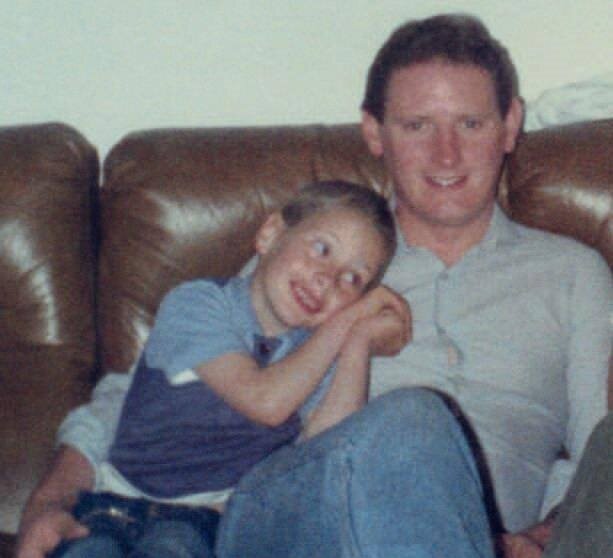 In 1990, 10-year-old Robbie Powell died due to undiagnosed Addison’s disease. Tragically, his death was preventable. Concerns that Robbie may have had Addison’s disease had been raised following a previous hospital admission and a diagnostic test requested, but this was not followed up or shared with his parents, Will and Diane. In the two weeks before Robbie died, Robbie was seen by five GPs on seven occasions, but his parents were consistently told that there was nothing seriously wrong with their son. Robbie’s father Will has worked for decades to uncover why his son died and how the doctors and organisations involved responded following Robbie’s death. In this long-read interview, Will describes the events that led to Robbie’s death and his subsequent fight for justice, including his role in the successful campaign which resulted in organisational legal duty of candour. He talks about the devastating impact that having the truth withheld continues to have on his family and other families. Will then outlines what needs to be done to better protect families and ensure they get the full truth when a child dies due to avoidable harm. Please note: readers may find the following content distressing.
 -
Content ArticleWhen GP practices have a patient who is violent or exhibiting behaviour that makes them fear for their safety, the patient should immediately be removed from the practice list. This guidance from the BMA explains how to do this as well as outlining the special allocation scheme (SAS), which provides primary care medical services in a secure environment to patients who meet the criteria. In the SAS, designated GP practices provide services to patients by appointment at specific locations and times as detailed in individually agreed contracts. Patients join the scheme after being immediately removed as a result of an incident that was reported to the police. It aims to protect GPs, practice staff and patients who have the right to be in the practice without fear of intimidating behaviour.
-
Content ArticleThe National Association for Healthcare Security (NAHS) was formed in 1994 as a UK non profit-making professional organisation. The NAHS operates in a single national network and aims to support and enable healthcare provision through the delivery of professional security management; promoting and ensuring members are best placed and equipped to provide a safe and secure environment for their organisations staff, patients and visitors. This process ultimately enhances and improves staff wellbeing and the healthcare environment along with improving the quality of a patient’s treatment journey. The website includes a library of resources relating to security in healthcare settings.
-
Content ArticleAccurate and accessible medical information is key to successful patient-centred care, which can be supported by the availability of easy-to-understand summaries of articles published in medical journals. In this short Lancet article, Mohamed Seghier of Khalifa University of Science and Technology, makes the case for plain language summaries that enable clinically useful research to be understood by the general public.
-
Content ArticleThis cohort study in JAMA Network Open aimed to determine whether US Food and Drug Administration (FDA) warnings to prevent prenatal exposure to valproic acid are associated with changes in pregnancy risk and contraceptive use. The study examined 165 772 valproic acid treatment episodes among 69 390 women and found that pregnancy rates during treatment remained unchanged during the 15-year study, and were more than doubled among users with mood disorder or migraine compared with epilepsy. Contraception use among users was uncommon, with only 22.3% of treatment episodes having a 1-day overlap of valproic acid and contraception use. The authors argue that these findings suggest a need to review efforts to prevent prenatal exposure to valproic acid, especially for clinical indications where risk of use during pregnancy outweighs therapeutic benefit and safer alternatives are available.
-
Content ArticleAccording to the United Nations Convention on the Rights of the Child, all children have the right to the highest attainable standard of health “without discrimination of any kind”. The UK has committed to upholding this right—but not all children in the UK are equally protected. Racism is a known risk factor for health in children, ranging from preterm birth and low birthweight, to major depression and asthma, and childhood is a vital period that can shape health throughout the life course. The authors of this Lancet article report on a roundtable discussion convened by Race & Health and the Race Equality Foundation in October 2023. The discussion focused on racism in the UK health system, with the aims of identifying key areas of exposure to racism in the UK health system for children, and the main barriers to uprooting racist structures and practices in the health system. The roundtable recommended the following immediate actions: Adopt a human rights-based approach that upholds children's rights to the highest attainable standard of health without discrimination and abolish policies that undermine these rights for minoritised children. Incorporate anti-racist health and research practice into the health system's functioning and commissioning, including by increasing engagement during decision making, and co-creation of processes, policies, and procedures with minoritised communities to foster greater trust. Integrate anti-racist training wit
-
Content ArticleThis US cross-sectional study in JAMA Network Open aimed to find out whether there is a difference in reported inappropriate antipsychotic medication use between severely and less severely deprived neighbourhoods, and whether this difference is modified by greater total nurse staffing hours. The study included 10,966 nursing homes and found that nursing homes that fell below critical levels of staffing (less than three hours of nurse staffing per resident-day), were associated with higher inappropriate antipsychotic medication use among nursing homes in severely deprived neighbourhoods (19.2%) compared with nursing homes in less deprived neighbourhoods (17.1%). These findings suggest that addressing staffing deficiencies in nursing homes, particularly those located in severely deprived neighbourhoods, is crucial in mitigating inappropriate antipsychotic medication use.
-
Content ArticleThis Lancet study examines the discrepancy between occurrence of Long Covid as perceived and reported by participants in longitudinal population-based studies and evidence of Long Covid recorded in their EHRs. The authors argue that this discrepancy might reflect substantial unmet clinical need, particularly amongst patients of non-White ethnicity. This is in keeping with reports from individuals with Long Covid of difficulties accessing healthcare, and poor recognition of and response to their illness when they do.
-
Content ArticleThe last two decades have seen substantial advancement in the practice of team-based, safe care delivery. In parallel, burnout has been recognised as prevalent among US doctors and influenced by workplace structure and experiences. This study assessed US doctors’ perceptions of team-based care delivery and safety climate within their institutions and how these domains were associated with burnout.
-
Event
until
Despite being one of the largest economies, the UK suffered the third worst Covid-19 death toll in Western Europe, largely due to entrenched inequalities that were exposed and worsened by the pandemic. The Unequal Pandemic film, executively produced by Debbie Abrahams MP and Good Guys Productions, draws to light the disproportionate impact of the pandemic on marginalised communities. This pre-release screening and panel event, created in collaboration with Covid-19 Bereaved Families for Justice UK and UCL, provides an opportunity for policy makers, bereaved families, experts and all with an interest in protecting lives in the future, to take stock of what went wrong, and what can and must be done to make sure the UK is better prepared when the next pandemic hits. We hope this event will allow us to gather and learn from the experiences of experts, government workers and community members, and help us forge a practical path towards pandemic preparedness. Watch The Unequal Pandemic Film trailer. Chair Prof Ibrahim Abubakar, Pro-Provost (Health) at UCL and Dean for the Faculty of Population Health Sciences Speakers Prof Sir Michael Marmot, Director, UCL Institute of Health Equity Debbie Abrahams MP, Executive Producer of 'The Unequal Pandemic' Lobby Akinnola, Spokesperson for Covid-19 Bereaved Families for Justice UK whose personal story is featured in the film Prof Naomi Fulop, Professor of Health Care Organisation and Management, UCL and a Director, Covid-19 Bereaved Families for Justice UK -
Event
until
The session will explore the system wide risks involved in prescribing through reference to clinical negligence claims from NHS Resolution and the panel firm, Hill Dickinson. Event programme The invaluable role of pharmacists Common medicine error claims Recommendations Q&A panel discussion Contributors Joanne Hughes – Partner | Hill Dickinson Dr Anwar Khan – Senior clinical advisor | NHS Resolution Register for the webinar 20240703 Dispelling the myth-towards safer practice flyer.pdf -
Event
until
NHS Resolution’s Safety and Learning team, in collaboration with HSSIB and NHS England are hosting a virtual forum, on the benefits of implementing safety science in primary care, responding to patient safety incidents and the support available to staff working in general practice and primary care. Event programme How claims data can support us | NHS Resolution Patient safety education offer and the role of HSSIB in primary care | Health Services Safety Investigations Body Primary care patient safety strategy | NHS England Q&A panel discussion Contributors Andrew Murphy-Pittock – Education director | Health Services Safety Investigations Body Dr Nick Woodier - Senior Safety Investigator | Health Services Safety Investigations Body Dr Kiren Collison – Deputy medical director for primary care | NHS England Hester Wain – Head of patient safety policy | NHS England Samantha Thomas - National safety and learning lead for General Practice (Midlands and North) | NHS Resolution Register for the webinar here Benefits of patient safety in primary care webinar v.F.pdf -
Content ArticleThis cross-sectional study in JAMA Network Open aimed to explore whether prescribing of psychotropic medications for children and adolescents changes in the two years following the onset of the Covid-19 pandemic. The authors retrieved and analysed all 8,839,143 psychotropic medication prescriptions dispensed to individuals aged from 6 to 17 years in France between 2016 and 2022. They found steady increases in prescription trends for all psychotropic medications after the pandemic onset, with prescription rates of all psychotropic medication classes except psychostimulants higher than expected rates.
-
Content ArticleIn this Byline Times article, the family of 18 year-old Mollie McAinsh describe her treatment in an NHS hospital after they sought help for her life-limiting ME. Millie developed the condition after a viral illness in 2019 and became increasingly unwell. When she was no longer able to feed herself, she was admitted to the Royal Lancaster Infirmary, where her family believed she would have a feeding tube fitted and then be sent home. However, while in hospital her mother was banned from visiting and Millie was sectioned under the Mental Health Act. The article looks at the issues facing people with severe ME and examines the history of how the illness has been perceived, which many believe has resulted in the wrong treatment being offered to ME patients.
-
Content ArticleThis webpage outlines the role of the Patient and Client Experience team at the Northern Ireland Public Health Agency. The team analyses the experiences of patients, clients, carers, relatives (collectively referred to as service users) and staff through a number of tested data collection methods. The two main methods are: Care Opinion This is an online user feedback system providing a platform for services users to share feedback on services they have engaged and to share what is important to them. The system supports two-way feedback between the service user and service staff and allows for analysis of the experience from service level supporting local service improvement, to regional strategic learning to influence commissioning and service development. 10,000 More Voices This initiative supports in depth analysis of experience using service user narrative and software called “Sensemaker®”. Sensemaker captures and orders the thinking of people’s attitudes, perceptions and experiences within a complex culture. The workplan for 10,000 more voices is informed by strategic programmes and feedback from other sources (such as Care Opinion/complaints/incident) to look deeper at the issues and the experience of a defined service or process.
-
Content ArticleThis handbook produced by the Healthcare Financial Management Association (HFMA) is designed to help NHS governing bodies and audit committees in reviewing and reassessing their system of governance, risk management and control. This is to make sure the governance remains effective and fit for purpose, whilst also ensuring that there is a robust system of assurance to evidence it.
-
Content ArticlePatients’ waits do not begin when the NHS clock starts—on referral to a consultant. They begin when the person decides their symptoms merit professional attention. In this blog, Sue Brown, CEO of the Arthritis and Musculoskeletal Alliance (ARMA) looks at the patient’s experience of waiting and how it differs from the NHS understanding. She argues that if the NHS is to deal with waiting lists well, it needs to understand what waiting means to patients.
-
Content ArticleHome dying is a policy indicator of ‘quality dying’ in many high-income countries, but there is evidence that people living in areas of higher deprivation have a reduced likelihood of dying at home. However, there is limited research which centres the views and experiences of people living with both socioeconomic deprivation and serious advanced illness. This study used visual methods to address this gap in knowledge, focusing on barriers to and experiences of home dying for people experiencing poverty and deprivation in the UK. The authors used photovoice and professional documentary photography between April 2021 and March 2023 with eight participants with serious advanced illness, six of whom had died by the end of the study. They also worked with four bereaved family members to create digital stories.

