


Summary
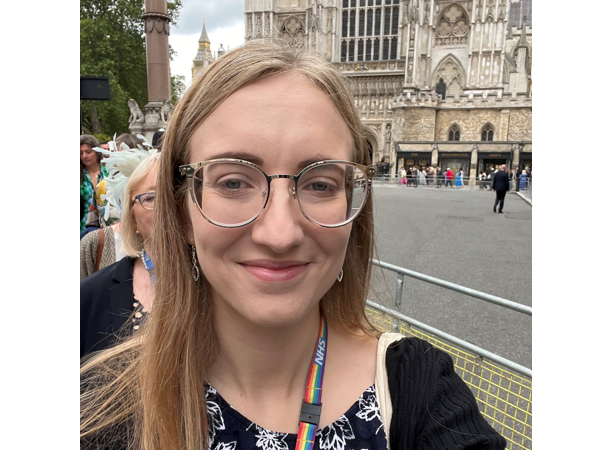
Lucy Harding is a Patient Safety Partner at North London NHS Foundation Trust, where she has also been a patient and Peer Support Worker.
In this reflective piece, Lucy shares her insights around how design in healthcare can impact patient safety. She draws on her professional background and lived experience of inpatient mental health care as an autistic person, to highlight the critical relationship between design and emotional safety.
*Content warning: references to suicidality and self-harm.
Content
I have a particular interest in how the physical environment shapes emotional regulation, sensory experience, and feelings of safety. As an autistic person, I also value sensory design and service accessibility, and I’m passionate about creating therapeutic spaces that genuinely support recovery.
Design is a core component of patient safety
My interest comes from experiencing first-hand how profoundly the built environment can affect emotional state, distress levels, and the ability to feel safe and engage in treatment. Poorly designed wards can feel chaotic, overwhelming, and sometimes frightening. My experience of patient involvement in co‑production projects, from artwork to furniture selection, helped me realise that design isn’t superficial; it’s a core component of patient safety and experience.
As an autistic person, sensory design is very important to me, and I’ve experienced how unmet sensory needs can escalate distress.
These experiences have made me want to advocate for safer and more therapeutic environments. Seeing the transformative impact of thoughtful design for mental health —such as improved acoustics, better lighting, and more predictable, calming spaces— has shown me how design can actively support or hinder safety.
How the environment can impact patient safety
- Environments that feel like containment: institutional or outdated spaces can make people feel unsafe, watched, or confined. People should have access to outdoor spaces and fresh air, but not every mental health ward provides immediate access (eg. many wards require leave from hospital to be agreed by a care team, as there are not gardens designed into the ward environment).
- Sensory overload: harsh lighting, echoing voices in corridors, and unpredictable multi‑use spaces can heighten distress, especially for autistic people and those with experiences of trauma. There were times I had no control over sensory input as a patient, and this felt extremely destabilising and made me unsafe. I disengaged with and resisted treatment, and I self-harmed. The National Autistic Society reports that the average length of stay for autistic people in mental health hospital is 4.6 years, which is a considerably long time.[1] The Assuring Transformation dataset can help ICBs to look at where inequalities are for autistic people without LD in comparison to the general population.[2] I am curious about how much building design contributes to this inequity (rather than the clinical care provided).
- Lack of temperature control: wards that become extremely hot or cold can make rooms unsafe both physically and emotionally. Hot rooms feel stuffy and uninviting to use, both for staff and patients. High temperatures can make me feel more irritable and less rational. Many psychiatric medications also impact body temperature regulation. As temperatures are rising globally, improving ventilation and prioritising resources for this is becoming more essential.
- Poor acoustic design: noise and echoing make communication difficult, increasing misunderstandings and conflict.
- Lack of safe respite spaces: without somewhere quiet to withdraw, people may seek unsafe alternatives. I hid on my windowsill often as a patient, escaping observations and noise – but being unseen for two hours was a risk, and I wasn’t always keeping myself safe.
- Old buildings and shared facilities: shared bathrooms and dormitory bedrooms, and a lack of purpose-use ward spaces can create conflict, distress, and act as a barrier to treatment being therapeutic. Designing ensuite bedrooms, creating dedicated rooms for therapy, group activities, and quiet/sensory rooms can make a difference to how safe a ward feels.
When design supports safety
An example of a positive design change I experienced was the installation of a sound‑absorbing panel at an inpatient mental health service. It made a noticeable difference- reducing echoing and softening the overall noise level, which helped communication feel calmer and more respectful.
This kind of acoustic improvement reduces the intensity and unpredictability of sounds on a ward. Also, seeing our photographs on the wall made me, as a patient, feel safe, heard, and included.
Connecting with others through art and design ultimately lifted me out of a state of intense suicidality and depression. That lens has led me to be very passionate about design being directly connected to patient safety.
Challenges and barriers
Key challenges and barriers to designing healthcare environments in ways that support patient safety:
- Budget constraints: sensory‑friendly or trauma‑informed design is often seen as optional rather than essential.
- Legacy buildings: older wards may be structurally unsuitable for modern design standards.
- Competing priorities: safety is often interpreted narrowly (eg ligature reduction, or a reduction in a particular category of reported incidents) rather than holistically, which can overshadow sensory and emotional safety.
- Lack of awareness: designers and decision‑makers may not fully understand sensory needs or lived experience perspectives.
- Operational pressures: busy wards can deprioritise environmental improvements or require more focus and time than ward staffing allows.
- Limited co‑production: without meaningful involvement from service users, important design needs can be overlooked.
These barriers mean that environments sometimes prioritise containment over comfort, despite evidence that therapeutic design improves safety.
Considerations for safer design
- Co‑production from the start: involve service users, carers, and staff in every stage of design—not just as a consultation step.
- Sensory‑informed design: consider lighting, acoustics, temperature, predictability, and access to quiet spaces.
- Flexibility and choice: offer different types of spaces for different needs—calming rooms, social areas, private space, and low‑stimulus zones.
- Accessibility as standard: such as acoustic design for autistic people, people with hearing impairments, and sensory processing differences.
- Trauma‑informed principles: prioritise dignity, autonomy, and emotional safety.
- Feedback loops: continue involving patients after the building opens to refine and improve the environment.
Final reflections
Feeling safe is not the same as being objectively safe, and both matter equally in mental health settings. Design should never be an afterthought: it is a therapeutic intervention in its own right.
When we create environments that respect sensory needs, reduce distress, and promote autonomy, we support recovery and reduce risk.
Co‑production with patients isn’t just good practice, it’s essential for designing spaces that truly work for the people who use them.
References
1. National Autistic Society. Number of autistic people in mental health hospitals: latest data. June 2025. Accessed online 13/15/26.
2. NHS England. The Assuring Transformation dataset (Table 3, column F&G: average length of stay for autistic patients without a learning disability). March 2026. Accessed online 13/05/26.
About the author
Lucy’s background spans both mental health services and the arts. She has been involved in co‑design for over a decade, from having her photography printed on sound‑absorbing panels to helping choose furniture and colour palettes for healthcare service redevelopment. Her focus as a Patient Safety Partner is on improving safety in mental health services, and advocating for involving patients and carers in safety.

Recommended Comments
Create an account or sign in to comment