


Summary
Harm due to medicines and therapeutic options accounts for nearly 50% of preventable harm in medical care. This World Health Organization (WHO) policy brief is a resource for policy-makers, health workers, healthcare leaders, academic institutions and other relevant institutions to help understand the global burden of medication errors, address and prevent medication-related harm at all levels of healthcare, aligned with the strategic plan of the third WHO Global Patient Safety Challenge: Medication Without Harm.
Content
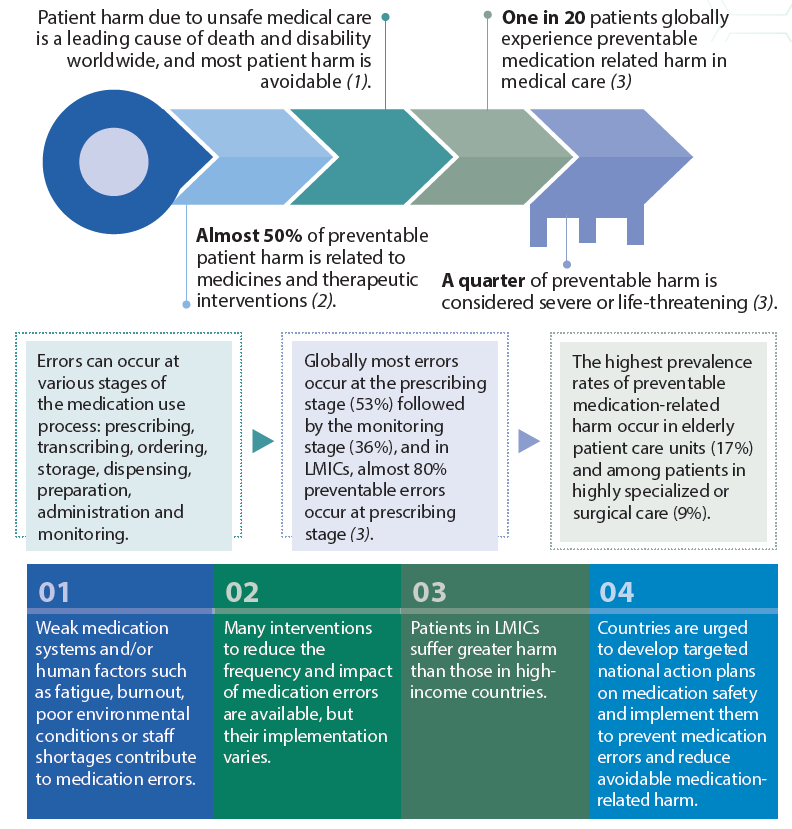
The report initially details the type of errors that can occur during the medication use process before exploring in detail the scale of these and their contributory factors. It goes on to discuss policy options available to address medication errors.
It outlines that the WHO Global Patient Safety Challenge: Medication Without Harm introduced a strategic framework with three key action areas aimed at improving medication safety:
- High-risk situations.
- Polypharmacy.
- Transitions of care.
These are accompanied by four domains where interventions can be taken in each of these areas to improve patient safety:
- Patients and the public – e.g. improving public awareness of these issues, greater patient engagement in healthcare and involving patient organisations in medication safety.
- Health and care workers – e.g. improving education, training and incident reporting and learning.
- Medicines as products – e.g. clarity in naming, labelling and packaging and robust systems and processes to ensure medicines are safe.
- Systems and practices of medication – e.g. improving leadership for medication safety and monitoring and evaluating the impact of medication safety programmes.
Related reading

Recommended Comments
Create an account or sign in to comment