

All Activity
Today
-
Community PostOver the past few years I've pondering what is wrong with most of the data systems I interact with. To be honest I've been pondering this for most of my career as I was frequently sent to the dungeon (aka medical records) to review, sometimes also find on the stacks when that was allowed and synthesise it into something. That evolved to doing the same digitally and that is what most data analysts and scientists spend most of their time doing. Granted they generally use more sophisticated techniques then I ever did. That is probably the first concern.....data capabilities have become incredibly good but in big data before it and AI more contemporaneously the problem is as all good data/computing people know garbage in garbage out (for some reason I prefer it to the more British, and therefore correct, rubbish!). Amalgamating data sets, federation (good and bad forms of this....no I don't mean the FDP specifically), SDEs, data linkage etc all are held up with the promise of moving us to the truth. But the real truth is that improving data quality is a wicked problem. So what am I getting at? Well I am interested in how people feel about data management, what they might think about how to shift the entire ecosystem if in fact that is needed to tackle said wicked problem and what the critical non-technical considerations need to be. If there is an appetite I will elaborate and we'll see if we can get some conversation going.
-
Farayi Ziweya joined the community
-
Abdul joined the community
-
News article
 A final report into the care provided by neurologist Michael Watt finds some patients were misdiagnosed and received inappropriate treatment. Northern Ireland health minister Robbie Butler has apologised for failings in the care of patients treated by consultant neurologist Michael Watt. A final report into the cases has now been published by the Regulation and Quality Improvement Authority (RQIA). It found that patients were harmed in some cases by delayed or incorrect diagnoses, inappropriate treatment and failures in communication and support. The report reinforces significant failings identified in an earlier review published in 2022. The RQIA said poor diagnostic practice, inadequate communication, isolated clinical decision-making and weak multidisciplinary oversight meant standards of care “frequently fell below expectations”. Read full article. Source: Healthcare Today, 25 September 2026
 -
News article
 The Chartered Society of Physiotherapy has urged caution over the use of autonomous artificial intelligence (AI) for the assessment and treatment of NHS patients. AI firm Flok Health secured Class IIa Medical Device approval under EU regulations in October 2025, meaning that it can carry out diagnostic decisions without human supervision. The regulatory clearance originally covered care for back pain and sciatica, but was extended to in August to cover all musculoskeletal and pelvic health pathways, including hip and knee problems and urinary incontinence. However the Chartered Society of Physiotherapy has warned that AI technologies being approved to perform specific diagnostic or clinical functions should not be confused with the autonomy of a healthcare professional. Read full article. Source: Digital Health, 24 September 2026
 -
Content Article
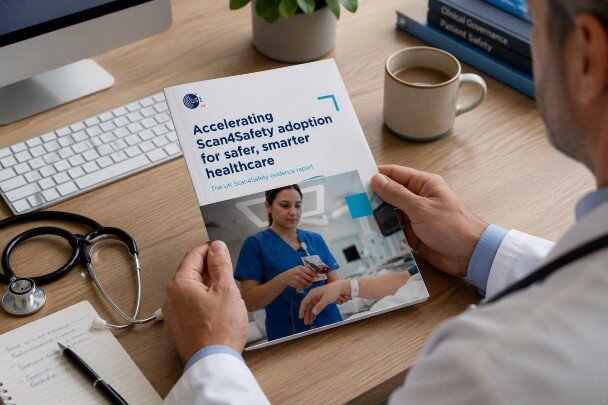 Ten years after Scan4Safety was launched, a new independent report brings together evidence of how barcode scanning and GS1 standards are supporting patient safety across healthcare. The findings show how scanning can provide an additional check before medicines or medical devices are used. They also demonstrate how better information and inventory management can reduce manual work and return valuable time to clinical care. In this blog, Georgina Lawton, head of healthcare at GS1 UK, reflects on what she has learned from working with healthcare organisations on Scan4Safety. She explains why successful implementation starts with a patient safety problem, rather than the technology, and why clinical involvement, senior leadership, reliable data and dedicated capacity all matter.
 -
News article
 Overcrowding in accident and emergency (A&E) departments and corridor care is linked to hundreds of deaths every week in the UK, a new study has found. A review of more than 19,000 adult patients found that, for every 10% increase in emergency department occupancy, the chance of dying in the following 28 days rose by 1%. The work was carried out at 134 A&Es in Wales, Northern Ireland and England last year, and presented at the European Emergency Medicine Congress in France. For the research, occupancy was calculated by how many spaces, such as cubicles, the A&E department had compared with how many patients were being treated. Results indicated that, on average, emergency departments were operating at 175% occupancy, a marker of overcrowding. Read full article. Source: ITV News, 25 September 2026 Related reading Corridor care and patient safety
 -
Content Article
 In this Guardian article, George Monbiot argues that people with ME/CFS (myalgic encephalomyelitis/chronic fatigue syndrome) have been systematically neglected, disbelieved and harmed by healthcare systems despite the severe, life-limiting nature of the condition. In the UK, an estimated 400,000 people live with the condition. It affects women far more than men, by a ratio of about 4:1, according to a study in England. The number of people with long Covid, some of whom meet the diagnostic criteria for ME/CFS, was estimated in 2024 at 2 million in England and Scotland. Drawing on hundreds of patient testimonies, he describes experiences of being dismissed and denied support: “I’ve just been completely abandoned”; “a 10-year waiting list for treatment”; “we’ve given up seeking medical support”; “stuck in limbo”; “I just felt utterly unheard, invalidated”. Further reading on the hub: Exploring the barriers that impact access to NHS care for people with ME and Long Covid Improving healthcare services for people with ME and Long Covid: Patients share their challenges, and the actions needed
 -
Content Article
 Each year, World Patient Safety Day focuses on a critical area of healthcare safety. This year's theme is ‘Safe care for non-communicable diseases'. In this context, pathology plays a central role in timely, accurate diagnoses and appropriate interventions across the 17 specialties. Pathologists and laboratory staff play a critical, often behind-the-scenes role in managing non-communicable diseases (NCDs), such as cancer, diabetes and cardiovascular diseases, which are responsible for the majority of deaths in the UK. This September, the Royal College of Pathologists hosted a series of webinars.
 -
News article
 The chief people officer of a leading hospital trust has been subjected to “racist” abuse by colleagues, HSJ has learned. Frimley Health Foundation Trust chief executive Lance McCarthy sent an all-staff email claiming the provider’s CPO Shajeda Ahmed “was subjected to anonymous comments that became personal and aggressive” during an online briefing. She was also “repeatedly muted while trying to speak”, said Mr McCarthy. The CEO’s email, which was sent on the eve of the trust’s annual inclusion conference and has been seen by HSJ, continued: “Given that Shajeda was the only person from a minority ethnic background speaking on that call, the circumstances raise serious concerns that this was not simply unacceptable behaviour but had a racialised dimension. “It is not the first time Shajeda, or other colleagues from a minority ethnic background, have faced hostility while trying to lead difficult conversations on behalf of this organisation and, ultimately, for the benefit of our patients.” The CEO declared: “This makes me angry. Not concerned. Angry.” Read full story (paywalled) Source: HSJ, 24 September 2026
 -
Francis Ogbise joined the community
Yesterday
-
Community PostHi Everyone There has been a great deal of conversations been had in the media surrounding the changes CQC are making in relation to the single assessment changes etc. I was wondering if anyone has a staff briefing pack they are willing to share that gives an overview of the forthcoming changes. Thanks Ian
-
Ania joined the community
-
News article
 The Professional Standards Authority for Health and Social Care (PSA) and 38 health and social care regulators and registers have committed to developing shared principles for the use of AI across the UK. The organisations have signed a joint Statement of Intent supporting the safe, effective and ethical use of AI by health and social care professionals. The work aims to bring greater consistency to regulatory expectations, while protecting patients, service users and public confidence as the use of AI across health and social care grows. The statement highlights the need for clarity on when patients and service users should be told that AI is being used in their care. It also says professionals must remain accountable for decisions made with AI-assisted tools. The signatories comprise the PSA, 10 professional regulators and the Accredited Registers Collaborative (ARC), which represents 28 Accredited Registers. They include the General Medical Council, Nursing and Midwifery Council, General Dental Council, General Pharmaceutical Council and Health and Care Professions Council. Caroline Corby, chair of the PSA, said that “as AI becomes increasingly embedded in health and care, regulation must keep pace”. “Confidence by the public and professionals in the benefits of AI rests on appropriate safeguards, accountability and consistency in expectations about how it is used. “By working together, we can take a preventative approach to regulation that supports innovation while maintaining professional standards,” she added. Read full story Source: Digital Health, 17 September 2026
 -
Event
until
There is concern that decisions around care and products for patients with bladder and bowel intimate care needs are being made on the basis of cost to the NHS, at the expense of patients receiving the right care and treatment for their needs. Working in partnership with patients, the Patients Association and Coloplast have developed a number of resources that are designed to support patients understand their rights and get access to the products and services they need. At this free Patients Association webinar, you'll hear about patients' experiences of accessing bladder and bowel products and services, including some of the challenges people face in getting care that meets their individual needs. It will explore the importance of shared decision-making between patients and healthcare professionals, and how working together can help ensure people have a say in decisions about their care and are able to access the products, treatment and support that are right for them. You'll also hear from the team that developed the resources about how they can help patients understand their rights, have more informed conversations with healthcare professionals, and advocate for their individual needs. Register -
News article
 Hospital chiefs in County Durham have agreed to review up to a further 4,500 breast cancer cases after failings including delayed diagnoses and unnecessary surgeries were found. Hundreds of patients suffered harm under County Durham and Darlington NHS Foundation Trust, according to a review of cases dating back to 2023. The BBC previously investigated the failings and has spoken to multiple women affected, including one who said she felt "mutilated" and the trust's mistakes were "absolutely unforgivable". Ahead of agreeing to expand the review to cases dating back to 2015, members of the trust's board offered "sincere" apologies for the failings and harm caused. At an extraordinary meeting of the board held in Durham, board chair Alison Marshall said: "I would like to offer a sincere apology to all the women and their families who have been affected by the failings in our breast services. "I can't imagine the impact that has had." She said they could "not turn back the clock" but would be "open, honest and transparent" about the failings. Read full story Source: BBC News, 24 September 2026
 -
News article
 The trust where Lucy Letby worked has been heavily criticised for how it looks after the bodies of fetuses. The Countess of Chester Hospital did not have procedures in place to check the condition of bodies of babies and fetuses and a “small number” were incorrectly kept in refrigerators instead of freezer storage, according to the Human Tissue Authority. The trust told HSJ this involved two fetuses and no babies. Moving a body to a freezer after 30 days is normally recommended because of the risk of deterioration. Failure to do so is regarded as a “critical shortfall”, its more serious censure, by the HTA. The authority also discovered a number of “major shortfalls” at the trust. These included a risk of families viewing the wrong body or the wrong body being released to funeral directors. The use of three identifiers before a body is viewed or released is standard practice but the inspection team found that operating procedures at the Countess of Chester did not always comply with this approach. Some forms used by the trust to authorise the release of bodies say families only need to confirm two identifying details and can “rely on the name of the deceased if attendees do not know the date of birth”. SOPs – such as weekly checks of bodies – were not always carried out, while one 2025 review included no “physical audit of bodies”. Read full story (paywalled) Source: HSJ, 23 September 2026
 -
News article
 The mother of a teenage boy who died in hospital has said she is "deeply concerned and hurt" after learning his medical records may have been accessed inappropriately for years after his death. Paula McGowan, whose 18-year-old autistic son Oliver died in 2016, was told that at least five members of staff at Bristol Foundation NHS Trust may have accessed his records without permission as recently as this year. The trust said it was "deeply sorry" for any stress and anxiety caused. It said it had voluntarily referred itself to the Information Commissioner's Office. It is the latest case involving concerns that NHS staff may have accessed patient records without a legitimate professional reason. In July the head of NHS England, Sir Jim Mackey, issued a "stark warning" that staff could face the sack or even prison for doing so. Oliver, who had a mild learning disability and epilepsy, died in 2016 at Southmead Hospital in Bristol after being given anti-psychotic medication that his family had repeatedly warned he should not receive. After requesting information about his medical records, his mother was told that 38 people had accessed the data since his death, with 637 items viewed and 67 printed off. Most access was appropriate and linked to complaints, legal proceedings, and the coroner's inquest into his death. But three nursing staff not involved in his care are currently under formal investigation after initial inquiries could find no evidence they had a legitimate reason to view her son's records. Read full story Source: BBC News, 24 September 2026
 -
News article
 Only half of people being treated by a GP for high blood pressure in England have it under control, and millions more are completely unaware they have the “silent killer” condition, research reveals. Most people with hypertension (59%) are in the dark and undiagnosed, raising their risk of stroke, heart attack and early death, according to the largest ever study of its kind. Even among those who are diagnosed and receiving medication via their family doctor, in 50% of cases their blood pressure is out of control, the Oxford University study of 1.4 million adults suggests. Researchers said the findings, published in journal BMJ Public Health, suggested the current approach to detecting and treating high blood pressure in England was “not fit for purpose”. Wenyu Liu, a medical statistician at Oxford Population Health and lead author of the study, said: “While hypertension is largely a ‘silent killer’, the current approach to detecting and treating high blood pressure is not fit for purpose. “Our study highlights the prevalence of hypertension across demographics. This underscores the need for population-wide prevention strategies alongside targeted treatment for people at high cardiovascular risk.” Read full story Source: The Guardian, 23 September 2026
 -
Content Article
 Falls contribute significantly to injury and mortality among community-dwelling older adults, with societal costs expected to rise. In the Netherlands, a nationwide falls prevention pathway, aligned with World Falls Guidelines was introduced. This includes case finding, multifactorial falls risk assessments, evidence-based interventions and sustained exercise programs. This study explores its implementation, focusing on barriers and facilitators.
 -
Content Article
 The National Patient Safety Improvement Programmes 2025-2026 impact report highlights the NHS's commitment to continuous improvement in patient safety. The report details the progress made in implementing various safety initiatives, such as Martha's Rule, which allows patients and families to request rapid reviews of deteriorating conditions. It also discusses the implementation of a new early warning system for staff treating children and the rollout of tools for early identification of deterioration in maternity and neonatal care.
 -
Content Article
 In this blog, Kath Sansom, founder of Sling the Mesh, argues that Sunshine legislation, which requires pharmaceutical and medical device companies to publicly disclose payments to healthcare professionals and organisations, is essential for improving transparency and patient safety. She highlights concerns that undisclosed financial relationships can influence research, prescribing and treatment recommendations, potentially leading to patient harm.
 -
Content Article
 The Patient Safety Commissioner for England's strategy for 2026-2028 sets out an ambitious programme of work to make medicines and medical devices safer and ensure patients’ voices shape decisions across the healthcare system. It outlines practical action to address some of the most pressing patient safety challenges facing healthcare today, including strengthening safeguards around remote prescribing, improving medicines information, enhancing monitoring of medical devices and ensuring artificial intelligence is introduced safely and transparently.
 -
Robyn Purcell joined the community
Last week
-
Content Article
 Global health days endorsed by the World Health Assembly (WHA) play a distinctive role in elevating priority issues, mobilizing political commitment, and catalysing collective action. Among them, World Blood Donor Day (WBDD) and World Patient Safety Day (WPSD) stand out as landmark initiatives that emerged not only from technical necessity but also through sustained collaboration among Member States, WHO, and key partners including international organisations, professional bodies, civil society, and advocates. WBDD and WPSD have become influential global platforms for advancing safety, solidarity, and health system action. Yet the processes behind their establishment, including the consultations, negotiations, consensus building, and collaborative efforts that culminated in their adoption through WHA resolutions, remain largely undocumented. In this article, Neelam Dhingra offers a first-hand account of how these two global health days were conceived, negotiated, and established, drawing on more than two decades of leadership and programme coordination in blood safety (2000–2014) and patient safety (2014–2024) at WHO headquarters in Geneva, Switzerland. The article examines collaboration as the critical enabler of success and distils lessons for global health governance. While both initiatives involved extensive contributions from Member States, WHO, international organizations, professional bodies, civil society, and advocates, this article covers their development trajecto
 -
Tom Vanacker joined the community
-
Content Article
 TIGER UK is a not-for-profit community interest company (CIC) set up to help improve experiences of gynaecological care and procedures. It stands for Together Improving Gynaecology Experiences and Research. This report shares the first findings from TIGER UK’s community survey on experiences of vaginal access procedures. More than 700 people responded, providing valuable lived experience insight. Key findings Pain and support 59% of respondents had experienced severe pain (7/10 or above) during a vaginal access procedure. Experiences of severe pain were reported for all but one of the 21 procedures listed. Prevalence of severe pain was highest in hysteroscopy, endometrial biopsy and IUD insertion. Nearly half (47%) of those who experienced severe pain said they did not feel appropriately supported by healthcare staff. Preparation and consent 44% of respondents who had experienced severe pain said staff had explained beforehand that they might experience pain, while more than a third (35%) said they had not been prewarned. Among those who had experienced severe pain and had been warned about the possibility of pain, 62% said the description they received did not reflect the intensity of the pain they actually experienced. Half of the respondents (50%) said that something unexpected had happened during a vaginal access procedure. 44% said they had always felt able to stop a procedure at any point, while more than a third (36%) said they had not. Emotional impact, adjust
 -
Lily Rookes joined the community
-
News article
 "Everyone made it out to be so easy, but my face felt like it was on fire and there was a horrible smell of burning skin," says Nikita Morgan, as she describes her eyelid surgery. She decided to get a blepharoplasty, or a "bleph", removing skin from just above the eyes - after seeing videos about it on social media. Even though she was given a local anaesthetic, Nikita felt extreme pain. Oculoplastic surgeons - doctors specialising in surgery around the eyes - say a concerning number of patients are reporting problems from cheap bleph surgery, typically carried out abroad. They have told the BBC the demand for this procedure, which normally costs thousands of pounds in the UK, has increased as part of a wider aesthetic trend to tighten, smooth and lift the face. Surgeons say complications have been linked to clinics across mainland Europe, Africa and Asia, and, when they occur, the lack of aftercare puts a burden on the NHS. UK surgeons have also told us they have seen patients unable to close their eyes properly after treatment abroad. Read full story Source: BBC News, 23 September 2026
 -
News article
 Trusts have been told to fit CCTV in neonatal units by the end of November and to “urgently” tell staff and boards that child death protocols cover babies who never leave hospital. National chief nursing officer Duncan Burton and chief operating officer Sarah-Jane Marsh said in a letter to all local organisations on Tuesday that last week’s inquiry report was a “sobering moment”. Lady Justice Thirlwall reported on the events surrounding the murder and attempted murder of babies at the Countess of Chester Hospital Foundation Trust between 2015 and 2016, for which neonatal nurse Lucy Letby was convicted in 2023 and 2024. The letter said trusts should: Install CCTV cameras in neonatal units focused on storage fridges, cupboards or units by 30 November. Inform all relevant staff and the board about the Sudden and Unexpected Death in Children protocol by Monday 28 September (if the trust has a neonatal unit). Ensure all neonatal units meet requirements for access control and storage of insulin by 31 March 2027. Consider the Thirlwall report findings at their next public board meeting. Read full story (paywalled) Source: HSJ, 23 September 2026
 -
News article
 An NHS policy to remove “ghost patients” from GP lists is inadvertently leaving some of the poorest people in England without vital healthcare, analysis has found. Under previous NHS rules, inactive patients at risk of being removed from their GP practice were given six months to respond to outreach. But under NHS England’s accelerated list validation timeline, introduced last October, patients now have only three months to reply. According to analysis by Healthtech-1, registered GP lists in English practices declined by 483,019 patients between October 2025 and July 2026, with the most deprived fifth of practices accounting for about 138,400 of the net decline – just under 30% of the national decline. While GP lists need reviewing as people move away or die, GPs have said the accelerated timeline has inadvertently led to patients from deprived areas being incorrectly removed, creating barriers to receiving treatment. Consequently, GPs and practice managers have reported having to re-register vulnerable and elderly patients, creating an additional administrative burden. De-registering patients can also cause gaps in care and disruption to treatment. Read full story Source: The Guardian, 23 September 2026
 -
Charmaine Joy Clements joined the community
-
Content Article
 In September 2026, the National Commission into the Regulation of AI in Healthcare published its recommendations to the Medicines and Healthcare products Regulatory Agency (MHRA) for a future regulatory framework. The report contains around 44 recommendations, including staged authorisations, a rebalancing of evidence towards the post-market phase and financial penalties for manufacturers who put patients at risk. In this blog, Clive Flashman, Patient Safety Learning's Chief Digital Officer, shares his personal reflections on this. He sets out the five recommendations he most strongly supports, and five gaps that need addressing before the cross-government response is published. One of the key gaps is that the Learn from Patient Safety Events (LFPSE) service does not appear anywhere in the report's 119 pages.


