

All news
Showing .
Today
-
News article
 "Everyone made it out to be so easy, but my face felt like it was on fire and there was a horrible smell of burning skin," says Nikita Morgan, as she describes her eyelid surgery. She decided to get a blepharoplasty, or a "bleph", removing skin from just above the eyes - after seeing videos about it on social media. Even though she was given a local anaesthetic, Nikita felt extreme pain. Oculoplastic surgeons - doctors specialising in surgery around the eyes - say a concerning number of patients are reporting problems from cheap bleph surgery, typically carried out abroad. They have told the BBC the demand for this procedure, which normally costs thousands of pounds in the UK, has increased as part of a wider aesthetic trend to tighten, smooth and lift the face. Surgeons say complications have been linked to clinics across mainland Europe, Africa and Asia, and, when they occur, the lack of aftercare puts a burden on the NHS. UK surgeons have also told us they have seen patients unable to close their eyes properly after treatment abroad. Read full story Source: BBC News, 23 September 2026
 -
News article
 Trusts have been told to fit CCTV in neonatal units by the end of November and to “urgently” tell staff and boards that child death protocols cover babies who never leave hospital. National chief nursing officer Duncan Burton and chief operating officer Sarah-Jane Marsh said in a letter to all local organisations on Tuesday that last week’s inquiry report was a “sobering moment”. Lady Justice Thirlwall reported on the events surrounding the murder and attempted murder of babies at the Countess of Chester Hospital Foundation Trust between 2015 and 2016, for which neonatal nurse Lucy Letby was convicted in 2023 and 2024. The letter said trusts should: Install CCTV cameras in neonatal units focused on storage fridges, cupboards or units by 30 November. Inform all relevant staff and the board about the Sudden and Unexpected Death in Children protocol by Monday 28 September (if the trust has a neonatal unit). Ensure all neonatal units meet requirements for access control and storage of insulin by 31 March 2027. Consider the Thirlwall report findings at their next public board meeting. Read full story (paywalled) Source: HSJ, 23 September 2026
 -
News article
 An NHS policy to remove “ghost patients” from GP lists is inadvertently leaving some of the poorest people in England without vital healthcare, analysis has found. Under previous NHS rules, inactive patients at risk of being removed from their GP practice were given six months to respond to outreach. But under NHS England’s accelerated list validation timeline, introduced last October, patients now have only three months to reply. According to analysis by Healthtech-1, registered GP lists in English practices declined by 483,019 patients between October 2025 and July 2026, with the most deprived fifth of practices accounting for about 138,400 of the net decline – just under 30% of the national decline. While GP lists need reviewing as people move away or die, GPs have said the accelerated timeline has inadvertently led to patients from deprived areas being incorrectly removed, creating barriers to receiving treatment. Consequently, GPs and practice managers have reported having to re-register vulnerable and elderly patients, creating an additional administrative burden. De-registering patients can also cause gaps in care and disruption to treatment. Read full story Source: The Guardian, 23 September 2026
 -
Content Article
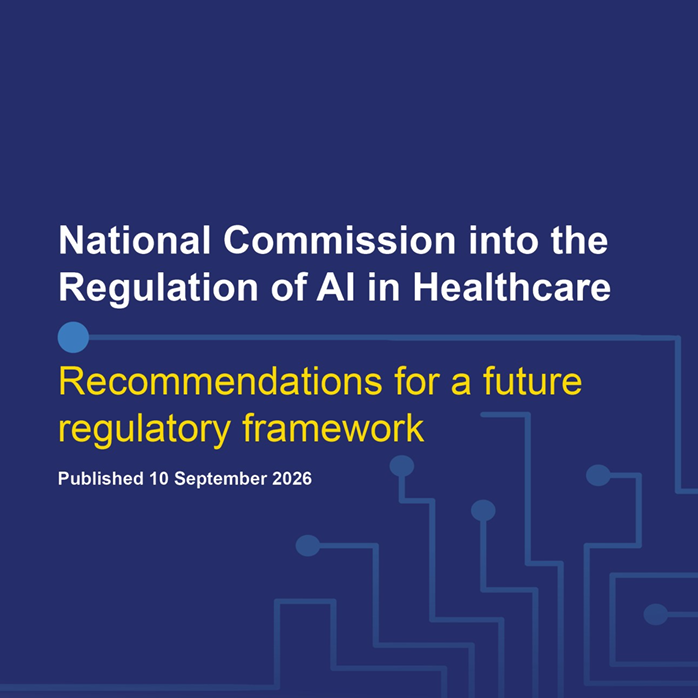 In September 2026, the National Commission into the Regulation of AI in Healthcare published its recommendations to the Medicines and Healthcare products Regulatory Agency (MHRA) for a future regulatory framework. The report contains around 44 recommendations, including staged authorisations, a rebalancing of evidence towards the post-market phase and financial penalties for manufacturers who put patients at risk. In this blog, Clive Flashman, Patient Safety Learning's Chief Digital Officer, shares his personal reflections on this. He sets out the five recommendations he most strongly supports, and five gaps that need addressing before the cross-government response is published. One of the key gaps is that the Learn from Patient Safety Events (LFPSE) service does not appear anywhere in the report's 119 pages.
 -
Content Article
 Patient safety is often discussed in terms of policies, protocols and clinical competence. While these are fundamental, they are only part of the equation. Safe nursing practice also depends on something less tangible but equally important: the confidence of the nursing workforce. Confidence enables nurses to question decisions, escalate concerns, seek support and advocate for patients. When confidence is undermined, safe practice is inevitably compromised.
 -
News article
 Hospitals and general practices across the country are asking patients to “describe their experience in their own words” amid a rise in overly complex AI written complaints. In new guidance, GPs have said that, although they understand AI tools such as ChatGPT can help patients organise their thoughts, they can also “make it harder for practices to understand what actually happened.” This is because AI tools can provide “incorrect information, add details that are not true, include laws, rules, or rights that do not apply, use language that is too formal or difficult to understand, or make your complaint longer than it needs to be.” Created by Gloucestershire Local Medical Committee (LMC) and shared across the country, the guidance reads: “You do not need to use legal words or quote laws or NHS rules for us to take your complaint seriously.” Similar advice has also been provided to hospital patients. Stockport NHS Trust told patients that “while there can be benefits to using AI, we encourage complainants to describe their experience in their own words wherever possible.” Although the trust “will not reject a complaint simply because it is complex or because AI has been used,” it has urged patients to keep their complaint “focused on the issues that matter most” to them. Read full story Source: BMH, 21 September 2026
 -
Content Article
 A new report shows how England’s NHS could be short of at least twice as many registered nurses as first thought, as testimony from nursing staff shows how workforce shortages have led to fractures, delays to life-saving medication and brain bleeds. It includes new analysis of hospital trust board papers which reveals that hundreds of patient safety incidents are taking place each month linked to having too few registered nurses on shift. The report from the Royal College of Nursing found that despite the clear evidence of harm caused by too few registered nurses, the number of doctors has grown nearly twice as fast. Had nurse numbers grown at the same rate as doctors since 2009, England's NHS would have more than 77,000 additional nurses today. Overall, the analysis found that based on the increase in NHS activity since 2009, including admissions, attendances and appointments, the health service is actually short by an estimated 55,000 registered nurses to deliver care safely, more than double the official number of NHS vacancies, which stands at 23,046 as of August. Included in the report is an audit of recent trust board papers which shows that some hospitals are reporting hundreds of “red flag” patient safety incidents a month. These are safety reports arising from staff shortages including delays to pain relief, essential medication and missed care.
 Yesterday
-
Event
until
Hosted by the Safer Healthcare and Biosafety Network (SHBN), this webinar will explore the pharmacy practice and implementation challenges shaping Hazardous Medicinal Products (HMP) handling today, as well as the evidence and policy consensus needed to drive safer practice for the future. It will feature presentations from: Louisa Knowles, Advanced Pharmacist for Technical Services, University Hospitals Birmingham NHS Foundation Trust Joseph Williams, Vice Chair of BOPA and Lead Cancer Pharmacist, The Christie NHS Foundation Trust Louisa will draw on her experience in pharmacy aseptic services to introduce hazardous medicinal products and the role of closed system transfer devices (CSTDs) in reducing occupational exposure. She will discuss the risks associated with HMP handling in pharmacy, the evidence behind CSTD use, and the barriers that have limited their wider implementation. Joseph will address the policy and evidence environment shaping the case for change. He will discuss the recently published first edition of a multidisciplinary consensus document on safe management of HMPs, evidence from the SHBN’s HMP Roundtable, and feedback submitted to the Health and Safety Executive (HSE). He will also share what these developments could mean for future pharmacy policy and practice. This session is intended for nurses, pharmacists, oncology healthcare professionals, safety leads, educators and policymakers with an interest in the safe handling of hazardous medicinal products and the systemic changes needed to better protect the healthcare workforce. Sign up here. Webinar Safer Handling of Hazardous Medicinal Products Pharmacy Practice and the Case for Change .pdf -
News article
 The NHS in England could prevent 20,000 deaths and save £33bn a year by cutting red tape and boosting productivity, a report says. Research by the Health Foundation found the health service has been held back for decades by excessive regulation, short-term planning and insufficient capability to deliver major change. But rewiring the NHS, the world’s largest single healthcare system, by harnessing new technology, empowering staff and increasing capital investment could save both lives and money, it found. There is “substantial scope to improve outcomes within the funding already available to the NHS”, which could result in up to four extra years of good health for people on average, the report said. In terms of where deaths could be prevented, focusing on diagnosing cancer earlier and finding people with high blood pressure or conditions such as diabetes quicker would be key, it added. The report called for a series of changes, such as releasing the NHS from unnecessary regulation, reporting and compliance tasks, as well as launching a “test-and-learn” approach to scaling up things that could improve productivity, such as use of artificial intelligence. “Our analysis suggests that if the NHS in England achieved outcomes closer to the best-performing comparable health systems, without spending more each year, it could potentially result in 18,500–20,600 fewer deaths each year from treatable causes and 2.5 to 4.5 additional years that people spend in good health on average,” the report said. Read full story Source: The Guardian, 22 September 2026
 -
News article
 Martha’s rule, which lets NHS patients, staff and relatives request a review of their care, is being expanded to every A&E in England, health officials have announced. The system gives patients, their loved ones and health workers the right to ask for a different medical team to examine the care being provided on inpatient wards and to recommend changes. It has already potentially saved hundreds of lives, official figures show. Now it will be rolled out to every emergency department in England, including waiting rooms, offering “a critical new lifeline” to improve care and save more lives, NHS England said. The system is named after Martha Mills, 13, who died in 2021 from sepsis after a bicycle accident. A coroner found she would probably have survived if she had been moved to the intensive care unit at King’s College hospital in London when she began deteriorating. In the first 16 months of the scheme after its introduction in England in 2024, helplines received more than 10,000 calls, potentially saving 446 lives, figures show. Thousands of patients were either moved to intensive care, received drugs they needed or benefited from other changes as a direct result of the calls. In June this year, the initiative was expanded to every maternity and neonatal unit in England, giving women and parents the right to a second opinion about the care of a mother or baby. From this month, it will be expanded to A&E units. It means patients, loved ones and staff in busy emergency departments will be able to call a dedicated phone number to trigger an urgent review if a patient’s condition is deteriorating and they think their concerns are not being listened to. Read full story Source: The Guardian, 22 September 2026
 -
News article
 A major acute trust has launched two reviews over care failures potentially affecting 130 children, HSJ has learned. Nottingham University Hospitals Trust wrote to everyone on the list for its scoliosis service to inform them that it had launched an internal investigation and commissioned a separate external review. It said, “some patients may not have received the level of medical monitoring that we would expect whilst they were waiting for surgery.” In the letter sent on Friday, seen by HSJ, NUH chief operating officer Andrew Hall said the trust was “truly sorry”. It said it was not aware of specific concerns about their care, but was “seeking additional external reassurance”. In 43 of the cases, however, the trust said “immediate concern has been identified” – such as longer waits for monitoring – and in these “we have [already] reached out to those patients and their parents/carers to consider next steps.” HSJ understands NUH discovered that missed appointments may have been discovered at the end of last year, and the internal review took place earlier this year. However, it did not contact most of the families until nine months later. It has not explained the delay. It said it does not yet know the level of any harm caused. However, children whose scoliosis goes unmonitored risk deteriorating to the point where intervention becomes more complex. Read full story (paywalled) Source: HSJ, 22 September 2026
 -
News article
 A hospital trust is providing a “pretty awful” standard of care, its interim chief executive has declared. The blunt statement was made by David Loughton – who joined University Hospitals of Liverpool Group in the summer – at a board meeting on Thursday. He said there had been “enormous progress” with partners to fix some of its clinical problems, which had to be addressed before financial gaps could be tackled. But he added: “I think you’ve got to take a cold, hard look at the quality we are providing at the present time, which is pretty awful.” Pressed for examples, he said six patients had spent a day in the discharge lounge before returning to a hospital bed on Tuesday night “because we cannot get non-emergency ambulances” to transport them elsewhere. He added: “I met in detail with the renal teams and some of the quality of what we’re providing to patients who are coming here three times a week for the foreseeable future [for dialysis] is really poor.” But he said: “The problem here is it is not down to this organisation. I’ve come into this, and I can freely say… the system leaves an awful lot to be desired at how it works together, or it doesn’t work together, and we’ve got to fix some of the problems in the community to impact in the hospitals.” Read full story (paywalled) Source: HSJ, 21 September 2026
 -
Content Article
 The Patient Safety Commissioner Scotland annual report provides: A review of issues identified by the Commissioner as relevant to the Commissioner's functions during the reporting period. A review of the Commissioner's activities, including steps taken in connection with each of the Commissioner's statutory functions. Recommendations arising from those activities.
 -
Content Article
 A woman in her third trimester of pregnancy was cared for in a surgical area of the hospital following a non-pregnancy related surgical procedure. During her recovery, she went into labour; there were delays in recognising her condition and in assessing the wellbeing of the baby, who died before birth. Nursing staff did not have clear guidance, support, or easy access to midwifery/obstetric teams or care plans to help them care for the woman safely.
 -
Content Article
 Sandra Igwe MBE is the Founder and CEO of The Motherhood Group and Mumbrite, author of My Black Motherhood, and a Topic leader for Patient Safety Learning’s online platform, the hub. In this blog Sandra draws on her own personal and professional experiences to illustrate why Black maternal mental health is a patient safety issue.
 -
Content Article
 AI is already being introduced into workflows in the NHS, and in the coming years it will undoubtedly become part of the day-to-day practice of most doctors. But what happens when AI contributes to patient harm? Unlike doctors, an AI system cannot be sued under English law. Legal responsibility may instead fall on the clinician, healthcare provider, developer, or manufacturer, depending on what exactly went wrong and why. NHS Resolution, which handles clinical negligence claims involving NHS trusts and general practices, has already received its first cases in which “the use of AI in delivering patient care is a potential factor.” The General Medical Council (GMC) has also revealed that it has received referrals about doctors misusing AI systems. These claims and complaints are likely to increase in number. The decision to use AI should be a considered one, looking at the pros and cons of the technology. This BMJ articles gives doctors practical tips to use AI safely and responsibly.
 -
Content Article
 Improving productivity will be critical if the NHS is to deliver better outcomes for patients and to reduce future spending pressures by almost 10% by 2040. This NHS Productivity Commission and Health Foundation report sets out the conditions needed to deliver change.
 Last week
-
Content Article
 Almost every hospital in the United States has run a patient safety initiative in the past five years. Most have run several. High reliability training, safety huddles, event reporting refreshes, zero-harm campaigns, culture surveys, action learning collaboratives. If you are a hospital executive, you have almost certainly authorised more than one. Now ask a harder question. How many of those initiatives are still producing measurable improvement today? Not the ones with a completion date on the project plan. The ones with durable, verifiable change in the outcomes they were designed to move. For most hospitals, honestly answered, the number is smaller than the number of initiatives launched. That gap is the real patient safety problem in American healthcare. And no new framework will close it. This article in Becker's Hospital Review looks at the the pattern that repeats across new initiative launches.
 -
Community PostAre you passionate about improving health and care services? We want you to join our friendly and inclusive team.About ASPiH The Association for Simulated Practice in Healthcare (ASPiH) is a UK-wide membership organisation that promotes excellence in simulation-based education and training to improve healthcare quality, safety, and outcomes. We bring together a diverse community of educators, clinicians, researchers, technologists, patients, and system leaders who share a commitment to advancing high-quality, ethical simulation across health and care. For more information please visit our website: https://aspih.org.uk/about/ We're Looking For Two enthusiastic individuals with lived experience of the UK Health and Care system to join ASPiH as a Lived Experience Advisor. No simulation knowledge or experience is required – your lived experience and perspective are what matter most. The role Time commitment- We anticipate that the time commitment for this role will be approximately 60 hours, spread evenly throughout the year. You will also be invited to join us for an additional four days at the ASPiH Conference in Harrogate, from 24 to 27 November 2026. If you are unable to attend these dates, we still encourage you to apply. As a Lived Experience Advisor, you will help: ✅ Inform the Association's strategy and future direction ✅ Contribute to Special Interest Groups (SIGs) ✅ Support conference planning and attendance ✅ Ensure the public voice is embedded throughout ASPiH's work ✅ Guide positive change and help shape a more inclusive association What we offer 💷 Remuneration for your time 🚆 Travel expenses covered 🏨 Accommodation provided where required How to apply Please email [email protected] by 12 October 2026 with: A short biography Your motivations for applying Please keep your application to no more than one side of A4.
-
News article
 Concerns have been raised about NHS England watering down a key target for its controversial “advice and guidance” scheme, just weeks ahead of the October deadline. The fears surround plans to create “single points of access” for all primary care requests, other than urgent suspected cancers, which trusts were set a target to introduce for 10 specialties by next month. Instead of GPs routing referrals and A&G requests (where they get advice from a specialist) separately, the SPoA model is meant to send all requests via a single route, which NHSE believes will help reduce avoidable referrals and outpatient appointments. However, upgrades to the e-Referral System have been delayed, and NHSE has been forced to allow trusts to go live with incomplete SPoA models. Under an interim arrangement, A&G requests and referrals can enter the same SPoA service, but will arrive through separate e-RS routes, and will have to be managed on separate worklists, which experts said “appear to introduce fairly significant compromises”. Interoperability problems with the e-RS, which make it harder to share clinical information and track patients through pathways, were also identified in a recent report by the Health Services Safety Investigations Body. Read full story (paywalled) Source: HSJ, 18 September 2026
 -
Content Article
 Despite having some of the highest death rates of any psychiatric condition, patients with eating disorders are being failed by a system that can’t cope with surging demand. In this BMJ feature, Emma Wilkinson looks at the state of services.
 -
News article
 About 20,000 disclosures of domestic abuse are estimated to be made to maternity services in England every year, analysis has found. The figures are likely to be an underestimate of the true scale of disclosures, according to experts, highlighting the role maternity professionals play in identifying abuse. About 3.3% of maternity bookings made within NHS trusts across England involved a disclosure of current or non-recent domestic abuse. Applying this proportion to national NHS maternity bookings activity suggests there are approximately 20,000 disclosures of domestic abuse made within maternity services in England every year. Gill Walton, the chief executive of the Royal College of Midwives, said the findings “lay bare” something that midwives already know from their day-to-day practice. “Midwives are often the only professional a pregnant woman sees regularly and alone, which makes them uniquely placed to spot the signs of domestic abuse and respond with care,” Walton said. “But recognising a disclosure is only the first step – staff need proper, specialist training to know how to respond and services need the time and resources to follow through with support, so that no disclosure is ever a missed opportunity to protect a parent and their baby. Experts have also called for midwives to receive adequate support and training on handling such domestic abuse disclosures, while also working long hours on busy maternity wards that can also face staff shortages. “Midwives and other maternity staff play such a crucial role when it comes to reporting disclosures of domestic violence which are made to them. However, maternity staff also need better support so they know what the next steps are regarding what to do with these disclosures,” Veronica Oakeshott, the interim head of external affairs at Women’s Aid, said. Read full story Source: The Guardian, 20 September 2026
 -
News article
 Adults with severe mental illness are nearly five times more likely than their peers to die from serious physical diseases before the age of 75, according to research. The analysis of NHS data by the Rethink Mental Illness charity reveals that people with severe mental health problems die 15-20 years earlier than the wider adult population, largely due to preventable physical conditions. Rethink’s calculations show that adults under 75 with serious mental ill health – defined as those referred to specialist secondary mental health services – are 6.3 times as likely to die from liver disease, 6 times more likely from respiratory illness, 3.8 times more likely from cardiovascular disease and 2.3 times as likely from cancer. They are also 14.6 times as likely to die due to suicide, compared with those who were not referred. Overall, they are 4.8 times more likely to die before the age of 75 than the general population. For some conditions, these health inequalities are the starkest to date. For working-age adults living with a mental illness, the number of deaths from cardiovascular disease and cancer are at their highest levels since records began, each with more than 24,000 deaths in the 2022-2024 reporting period, the charity calculated. Cancer, cardiovascular disease, liver disease and respiratory disease accounted for more than half (56.5%) of deaths for 18 to 74 year olds with severe mental health problems in England during this period. The report identifies a number of factors driving this excess mortality, including poverty, poor housing, higher rates of smoking, weight gain from medication, physical inactivity, and fragmented care. But the authors conclude that “diagnostic overshadowing” – where physical symptoms are wrongly attributed to mental illness – means potential illnesses are not always properly investigated and treated. Read full story Source: The Guardian, 20 September 2026
 -
News article
 Health economist Anita Charlesworth will independently co-chair a “reformed” National Cancer Board, seven months after the government’s cancer plan promised a body “accountable for delivery” of its commitments. The plan, published on 4 February, said the board would be chaired jointly by the Department of Health and Social Care and an independent figure from the cancer community, and would publish annual progress reports and an in-depth review after three years. Ms Charlesworth will co-chair with Mark Cubbon, Manchester University Foundation Trust chief executive and NHS England’s elective care, cancer, and diagnostics director. DHSC said the board would scrutinise progress against the plan’s more than 100 commitments, identify which areas were falling behind and advise ministers on further action. Its first task is a set of standards the NHS is missing. The 28-day faster diagnosis threshold rose to 80% at the start of 2026-27 and has not been met since; July’s 79.3% was the best of the four months so far. Read full story (paywalled) Source: HSJ, 21 September 2026
 -
Content Article
 The Maternity and Newborn Safety Investigations (MNSI) programme has published a new report setting out a number of areas in which care could be improved for women receiving intrapartum care at home. The report provides a series of safety observations and prompts for NHS trusts on topics such as staffing availability, training and guidance, and communications between different care professionals. The publication is based on learning and insights gained from the analysis of 59 maternity investigation reports (produced between 2018 and 2025) by both the Healthcare Safety Investigation Branch (HSIB) and MNSI. These investigations are carried out when they meet MNSI criteria and relate to early neonatal deaths, stillbirths and severe brain injury in babies born at term following labour and maternal deaths in England.


