


Summary
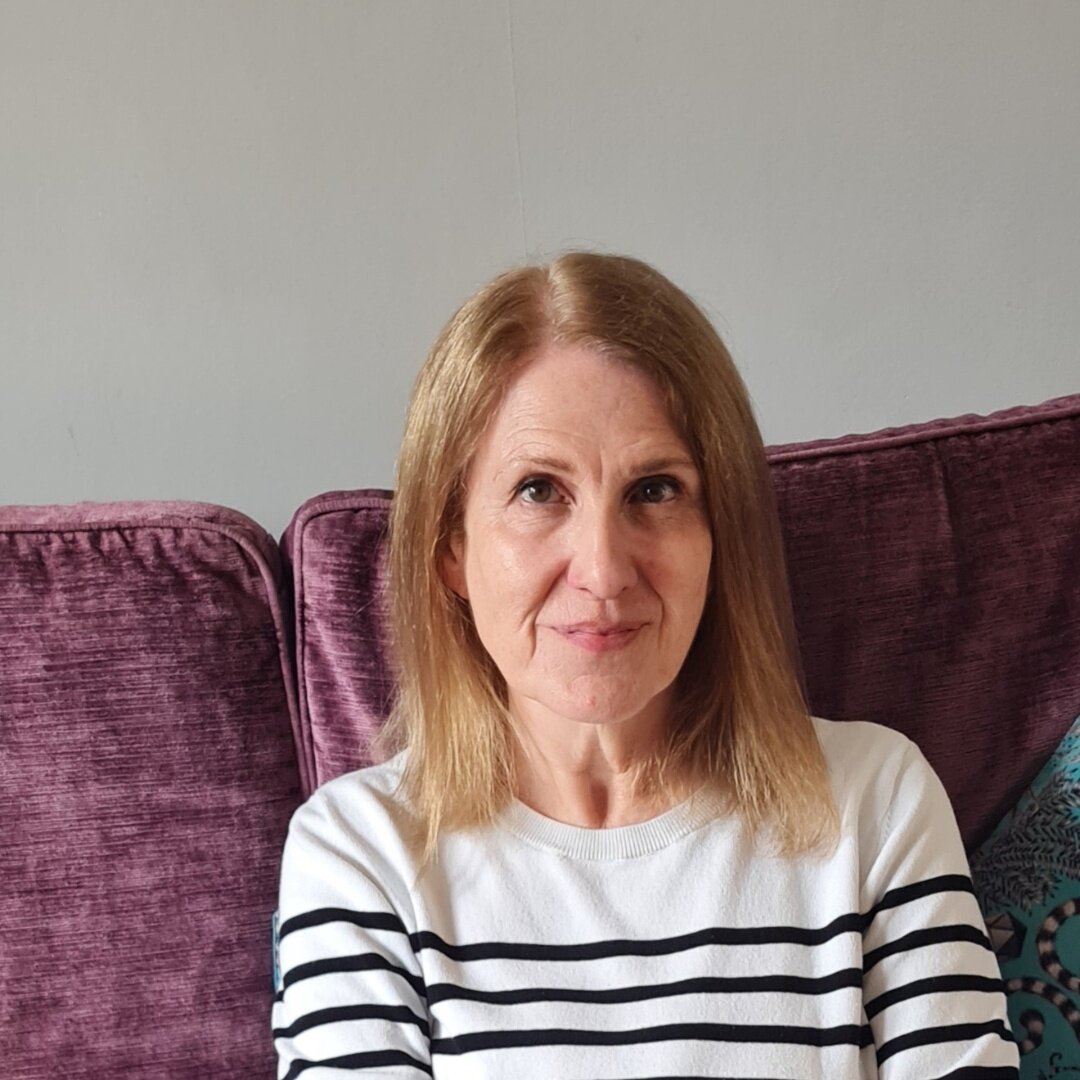
In this opinion piece, Julie Gould draws attention to the side effects of the dopamine agonists she was prescribed for restless legs syndrome. She says that GPs are failing to warn and monitor patients about the serious and often under-recognised behavioural and psychological side effects of dopamine agonists, including augmentation and impulsive control disorder.
Julie has set up the Dopamine Agonist Action Group with three fellow activists whose lives have been affected by dopamine agonists, calling for improved communication around the risks and better support for sufferers.
Content
Restless legs syndrome
Restless legs syndrome (RLS) is a chronic neurological disorder that causes unbearable, internal sensations that most people find difficult to describe. Some call it ‘jumpy legs’, others say it feels like ants crawling through their veins. I describe it as being wound up tighter and tighter, like a giant cog. When you are wound up as tightly as possible, you are desperate for the cog to be released so that all that unbearable tension, in every fibre of your being, can break free. But that doesn’t happen. Instead, every nerve cell in your body is screaming for relief.
I first experienced RLS during my second pregnancy. It never went away and my GP prescribed diazepam, which worked well for about 3 months. However, I also have multiple sclerosis (MS), so my neurologist recommended a new drug, ropinirole, a dopamine agonist, which has helped many RLS patients.
The side effects of dopamine agonists
Dopamine agonists are a family of drugs licensed for conditions such as Parkinson’s disease, RLS, certain endocrine disorders, Tourette’s syndrome and some mental health conditions. In addition, there has been a recent increase in the ‘off-label’ prescription of dopamine agonists to treat depression and other psychiatric and neurological conditions.
At first, ropinirole helped me. However, while dopamine agonists can provide important clinical benefits, they have also been associated with serious and often under-recognised behavioural and psychological side effects, including impulse control disorder (ICD) (gambling, spending, overeating, hypersexuality), dependency, withdrawal difficulties and, in RLS, the worsening of physical symptoms over time, known as augmentation.[1] Augmentation occurs in 42–70% of RLS patients treated with dopamine agonists during 8 to 10 years.[2]
Augmentation
I was lucky enough to not experience ICD, but I did experience augmentation. It crept up on me slowly and insidiously. I was in denial for over 5 years. I knew something was very wrong, but as ropinirole was still allowing me to sleep at night I kept ignoring the alarm bells. It got to the stage where I could not sit still during the day. A car journey became unbearable torture. I couldn’t sit still through a film at home or in the cinema. The unbearable sensations then moved from my legs to my hands, my arms, my back, my stomach and my face. You can walk about constantly to relieve the sensations in your legs, but it’s impossible to relieve the sensations in your arms and face.
I joined a help forum run by RLS-UK and was advised by the very knowledgeable members that I was experiencing a very common side effect of augmentation. The members told me that doctors in the UK were decades behind on knowledge and treatment and that I should buy an excellent textbook written by an RLS expert from the USA. I read the book, learned that the only solution was to get off the drug and went to my GP to ask for help to get off ropinirole.
It became apparent very quickly that my GP knew absolutely nothing about RLS, dopamine agonists or augmentation.
I contacted my new MS neurologist who admitted she knew absolutely nothing about RLS either and she suggested I make an appointment to the only RLS clinic in the UK. I managed to get an appointment for 6 months later.
The withdrawal process
I decided to start the withdrawal process, as I knew it would take some months to get off ropinirole.
The drop to 1 mg was bearable. Thereafter, the withdrawal was utter hell. When I dropped the last dose of ropinirole, my whole body felt like it was in spasms. My RLS ramped up so severely that it was 24/7 with absolutely no breaks from the severe, unbearable sensations. I couldn’t sit still. Moving was the only way to get minimal relief. Rest and sleep were impossible. I didn’t sleep or rest for 3 whole days and nights. I actually fell asleep while walking up and down the hall and fell over badly several times. My husband set up sofa cushions along the corridor and spent the third night massaging my legs for around four hours to stop the sensations. On the fourth day, I saw my GP and broke down sobbing. I have never cried in front of a doctor ever, not even when I was diagnosed with MS aged 33. I sobbed and begged her for opioids to help relieve the severe RLS. She showed zero empathy and actually said, ”drink some milk at night. We all get aches and pains as we get older.”
I came home and called my MS team at St George’s hospital. Within 10 minutes, the senior neurologist called me and said she would email my GP to tell her to prescribe tramadol or oxycontin to get me through the next 2 weeks of withdrawal and that she would recommend whatever medications I suggested, admitting that I now knew more than she did about refractory RLS treatment.
I can honestly say that the withdrawal process was the most difficult and brutal experience of my life.
Many doctors are completely clueless. They have no idea how serious, dangerous, difficult and traumatic the withdrawal process is.
I was lucky enough to have my MS neurologist to intervene and recommend opioids. Most UK patients are refused opioids by their GPs who have been taught that opioids are addictive and cause tolerance. That is true when opioids are used for pain relief, but not when prescribed for RLS.
My severe daytime RLS slowly settled over the next 3–4 weeks, but I still had RLS every evening for around 3 hours. My RLS was controlled by oxycontin and pregabalin, but it was still very severe on the IRLSS scale (a 10-item questionnaire used to measure the severity of RLS symptoms).
A lack of knowledge
In October, my appointment at the only RLS clinic in the UK arrived. I had now been off ropinirole for around 8 weeks. I had started to research RLS, dopamine agonists, augmentation and withdrawal in detail. It was clear that several top sleep experts in the USA were decades ahead of UK doctors. They advised against dopamine agonists and rotating between different types of dopamine agonists, saying that augmentation would happen again very quickly and the patient would end up in a vicious cycle of augmentation and withdrawal. They recommended iron infusions, gabapentinoids or opioids.[3]
I was appalled that the first thing that the senior registrar at the RLS clinic recommended was rotigitone—a long lasting patch form of dopamine agonists. I quoted the research and refused point blank to ever touch another dopamine agonist.
I spent the next 5 years reading and researching every study, paper and textbook on RLS. I corresponded with the top US experts. In 2021, I was one of the first RLS patients in the UK to get buprenorphine prescribed. I knew from anecdotal reports from American patients that buprenorphine worked when most other drugs had failed. I had to fight tooth and nail to get it. The RLS clinic initially refused, telling me that it was not licensed for RLS and that they were not familiar with it. They also refused to refer me for an iron infusion, saying it was too dangerous and I risked dying. From my research, I knew that this was outdated and totally incorrect advice.[2] My RLS was very severe by this stage, and I was getting 3–4 hours broken sleep every night. I dreaded going to bed. Torture, night after night, after night. I made one last push to get buprenorphine in the hope it might work. Finally, the exasperated head neurologist at the RLS clinic sent me an email in shouty capital letters. It said, ‘I HAVE NO OBJECTIONS TO BUPRENORPHINE – IF YOUR GP AGREES TO PRESCRIBE IT.’
My GP agreed to a 3-week trial. The first night I took buprenorphine, I slept for 8 hours with zero RLS for the first time in over a decade, although I did have severe nausea and vomiting but I managed to get this under control.
Since then, I have made it my mission to spread the word about buprenorphine and to help other patients with severe RLS to get a prescription and raise awareness of the lack of medical knowledge of RLS.
Awareness remains poor
To date, it is clear that knowledge of RLS remains very poor amongst UK GPs and neurologists. Most are still prescribing dopamine agonists. Most are failing to warn and monitor patients for the very common, very serious side effects of augmentation and ICD. I have spoken to many, many people who have lost vast sums of money to gambling and impulse spending. Yet doctors are still prescribing them without any warnings, because they haven’t been taught how common and devastating the side effects can be.
In 2026 I set up Dopamine Agonist Action Group with three fellow activists whose lives have been affected by dopamine agonists. We are determined to fight for justice for all those people whose lives have been affected by augmentation, ICD and criminal convictions leading from ICD. The Dopamine Agonist Action Group believes that the warnings about ICD in patient information leaflets are ineffective, confusing and contradictory. We are hoping to get a UK Government inquiry into dopamine agonists.
References
Silber MH, et al. An Updated Algorithm for the Management of Restless Legs Syndrome. Mayo Clinic Proceeding, 2026; 101 (9): 1561-88.
Further reading on the hub:
Do you have an experience or insights to share?
Have you ever experienced adverse and/or long-lasting side effects of a medication you were prescribed that you didn't feel you adequately warned about beforehand?
Perhaps you are a prescribing clinician who can share some of the challenges and complexities involved in medication safety?
What did you think of the points raised and calls to action in Julie's article?
Please comment below (sign up first for free) or get in touch with us at [email protected] to tell us more.

Recommended Comments
Create an account or sign in to comment