


Summary
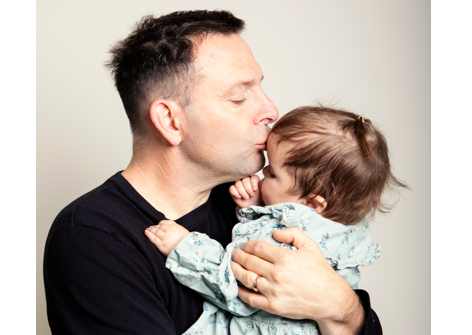
Professor Rob Galloway is an Emergency Medicine Consultant and Founder of the charity Rare People. In this article, Rob talks about his daughter’s recent diagnosis of a rare genetic condition. He describes the barriers to safe and equitable care for people with rare diseases, and his hopes for future treatment development, supported by AI.
Content
On 7th July 2025, we were told our daughter was one of around 200 people in the world with an ultra-rare genetic brain condition - DeSanto-Shinawi syndrome (DESSH). I remember the date with uncomfortable clarity.
For months before that conversation, I had reassured myself that everything would be fine. Frankie was slower than other children her age. She was late to crawl. Her words were few. There were subtle developmental differences, but nothing dramatic.
I anchored to what felt safer: she had had meningitis as a baby, and developmental delay could be explained by that. Temporary. Understandable. Reversible.
When bias tries to protect
Even when experienced clinicians gently suggested there might be something more going on, I reframed their concerns in my own mind. I did not dismiss them openly, but internally I diluted their signal.
Looking back, the cognitive biases are obvious. Anchoring bias fixed me to the meningitis explanation. Confirmation bias led me to search for reassuring signs and discount the rest. Optimism bias made the best-case scenario feel like the most probable one. Emotional bias did the rest.
When it is your own child, the mind protects you.
Individually rare, but collectively millions
When the diagnosis came, it felt like a bomb going off in slow motion. The genetics were explained clearly. A change in a single letter of the WAC gene. One functioning copy instead of two. Reduced WAC protein, crucial in early brain development. Lifelong neurodevelopmental consequences.
And then the hardest sentence - there is no medical treatment.
Therapy and support, yes. But no drug to alter the biology. No realistic gene therapy on the horizon. For a condition this rare, commercial drug development is not viable.
For families across the UK, the annual Rare Disease Day shines a light on this reality. Organised nationally by Genetic Alliance UK, it highlights the inequities faced by people with rare conditions: delayed diagnosis, fragmented care, limited research infrastructure and a system not designed for small numbers.
Each condition is individually rare. Collectively, they affect millions.
There are over 7,000 rare diseases. In that context, rarity is not marginal. It is structural.
Multiple barriers to safe care
Rare disease is a diagnostic safety issue, because children are often reassured repeatedly before referral. Developmental differences are attributed to variation. Early signals are softened by probability thinking.
It is an equity issue, because funding and infrastructure follow prevalence and commercial viability. And it is an innovation issue, because rare disease is now reshaping how medicine thinks about treatment.
After Frankie’s diagnosis, I immersed myself in the biology. I read the literature on WAC protein, studied animal models and tried to understand which pathways were disrupted and which might theoretically be adjusted. I connected with the DESSH Foundation and learned from the work of Professor Shinawi and others who had characterised the condition. The gene was known. The pathway was increasingly mapped. What was missing was treatment.
Hope found in AI and existing drugs
Then I came across the story of Matthew Might, a computer scientist whose son had an ultra-rare genetic condition. Rather than accepting that a genetic diagnosis was the end of the road, he treated it as the beginning. Using machine learning and large-scale biomedical data analysis, he interrogated genetic networks and drug databases. His work contributed to the development of the US National Institutes of Health Biomedical Data Translator, an open-source AI platform designed to connect genes, proteins, pathways and existing drugs.
The question shifts from “Can we fix the gene?”—often impossible—to “Can we adjust the biological pathway using a safe, already licensed drug?”
For rare diseases, this reframing is transformative. If a gene reduces the production of a protein, and that protein sits within a measurable pathway, then perhaps an existing medication could nudge that pathway in a favourable direction.
Trialling treatments safely
At Mayo Clinic, scientists including Laura Lambert and Dr Whitney Thompson began exploring whether this computational approach could be applied directly to children with specific rare conditions. In one child with DeSanto-Shinawi syndrome, AI-driven pathway analysis identified a licensed paediatric neurology drug that might plausibly increase WAC protein expression. Before prescribing anything, the team tested the drug in the cells taken from the child. WAC protein levels increased towards normal. It was not proof of cure. It was not certainty. But it was measurable biological change.
After careful discussion and risk–benefit analysis, treatment was started. The developmental progress that followed was described by the child’s family as striking.
It’s one person’s experience. Hope is not evidence. But hope grounded in measurable biology becomes hypothesis, and hypothesis becomes trial.
Raising funds to reduce inequity
The barrier is not plausibility. It is funding. Repurposed drugs are often off-patent.
There is little commercial incentive to fund small, rigorous trials for conditions affecting a few hundred children worldwide. That is why Rare People – The Research Charity I set up was established.
Our mission is to raise funds to support high-quality, properly designed clinical trials of AI-identified repurposed drugs for rare genetic neurodevelopmental conditions. The first funding priority is a formal clinical trial in DeSanto-Shinawi syndrome, with ethics approval in place in the United States and work underway to enable participation from children outside the US, including in the UK.
Rare diseases can shine a light on wider possibilities
Beyond one charity and one condition, something larger is emerging. Rare disease research is demonstrating the practical power of AI in medicine, not as hype but as structured, hypothesis-generating science.
AI can interrogate millions of data points across gene networks and pharmacology, surfacing plausible connections that no individual clinician or researcher could reasonably synthesise alone. Used responsibly, with transparent governance, peer review and rigorous trial methodology, these tools can strengthen rather than threaten patient safety.
Rare diseases are showing us that treatment may become more personalised, pathway-driven and responsive to measurable biological markers. They are challenging us to design systems that do not overlook small populations. They are exposing how cognitive bias operates quietly even in experienced clinicians. And they are demonstrating that when families, scientists and clinicians collaborate across borders, innovation can move faster than traditional commercial pathways allow.
Frankie
Frankie is a joyful, loving little girl. I would not change who she is. But I do want her to have the same opportunities, the same freedom to dream and the same access to scientific ambition as children with common conditions.
Equity in healthcare must include those with the rarest diagnoses.
If we build a system capable of recognising rare disease earlier, mitigating cognitive bias, and harnessing AI safely and ethically, we build a safer system for everyone.
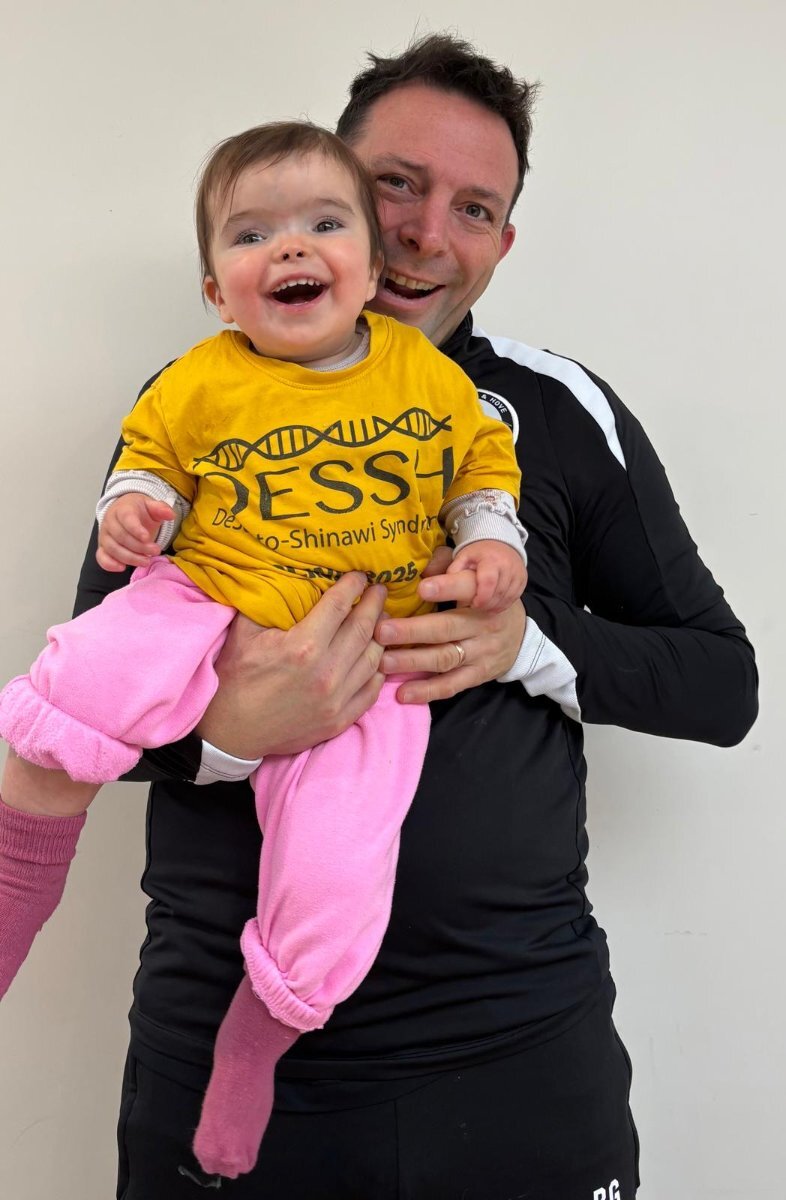
Photo shows Rob holding Frankie, both looking and smiling at the camera
Share your insights
Have you been affected by any of the issues raised in this blog? Do you or a loved one have a rare disease, or perhaps you work with people who do. If you have insights to share around rare diseases and patient safety, you can comment below (sign up first for free) or email the team at [email protected]

Recommended Comments
Create an account or sign in to comment