


Summary
The Patient Safety Partners Network (PSPN) includes Patient Safety Partners, in both paid and voluntary roles within NHS organisations, whose role is to improve patient safety. Patient Safety Learning provides a monthly drop-in session for the PSPN, sometimes with guests, to talk through topical and relevant issues. This facilitates information sharing, peer support and safe space for discussion.
The network met in October to discuss the topic of staff fatigue and its impact on patient safety, with an excellent presentation by Dr Laura Pickup.
In this blog Sue Strudwick, the Patient Safety Partner who chaired that meeting, reflects on the session and some of the key points raised by Laura and the members.
Content
Dangerously normalised
Fatigue in the NHS is a long-standing issue, one of the most persistent and often under-recognised. Many systems and rotas are built on the assumption that people will work long shifts, skip breaks, and pick up extra hours to make ends meet or fit around family life. For many staff, long shifts offer flexibility, but the cost can be impaired judgement leading to poorer care. Fatigue has become normalised, with staff continuing to work when exhausted, whereas in aviation and transport, strategies are in place to try to prevent fatigue impacting on safety.
There’s also a collective fatigue across the NHS — exhaustion from years of uncertainty and constant change. Culturally, rest is often frowned upon. Few proper rest spaces exist, and napping or having a ‘proper’ break is often felt to be unacceptable. Staff may even fear that admitting to fatigue will lead to questions about whether they are up to the job. Fatigue is not a human resource issue – it’s a patient safety issue.
Adding fatigue to risk registers
When exhausted staff are making complex decisions, the consequences and risk to patients can be serious. Fatigue isn’t just about the individual staff member; it’s a systemic problem. Every healthcare organisation should have fatigue on its risk register because of its undeniable impact on patient safety.
Part of the problem is that, unlike aviation or transport, healthcare still lacks a clear definition of fatigue. The Health and Safety Executive has one that could be used in the interim, so organisations do not need to wait before taking action. Regulation of fatigue risk management exists in other industries and should be part of regulation within the NHS.
The need for strong leadership
Addressing fatigue requires strong leadership and high-level backing. This isn’t about reminding individuals to ‘look after themselves’ — it needs a systems approach. Fatigue risk management should be treated like any other safety system, collecting and triangulating data from surveys, incident reports, and occupational health. Rostering and shift scheduling should support rest and recovery. High-risk groups, including mental health trusts, must be included.
The General Medical Council (GMC) and the Nursing and Midwifery Council (NMC) both acknowledge fatigue as a risk factor in adverse events, yet systemic solutions are still lagging behind the scale of the problem.
Co-designing rostering solutions
The NHS would struggle to function if every staff member worked strictly within fatigue limits. But that can’t justify accepting the status quo. Crucially, any solution must be co-designed with staff. Fatigue is a human issue, and change must balance patient safety, wellbeing, and service provision. Co-design helps ensure any policy works in practice — for patients and professionals alike.
Healthcare support workers — who often work the longest hours for the lowest pay, especially need support. There also needs to be open thinking about creative solutions: could volunteers help reduce pressure if better supported? Are occupational health and wellbeing services being fully used?
Final thoughts
Fatigue is often one factor, in many, contributing to avoidable harm. The challenge of addressing the impact on patient safety is huge, but fatigue can be managed, mitigated, and made visible. We can start by formally recognising it as a risk, embedding fatigue management in safety culture, and highlighting it in Patient Safety Incident Investigations. Staff need to be empowered to speak up when they’re too fatigued to work safely.
Patient Safety Partners can help shine a light on staff fatigue, its impact on patient safety and call for it to be added to risk registers throughout the NHS.
How to join the Patient Safety Partners Network
The Patient Safety Partners Network meets monthly in a virtual capacity and now includes nearly 200 Patient Safety Partners. These meetings provide a supportive and safe space for Patient Safety Partners to:
- discuss barriers and opportunities
- share successes
- discuss how they can use their collective voice to make a difference for patient safety.
Only Patient Safety Partners working within NHS organisations in England can join, although experts are often invited to present or discuss specific topics.
If you are a Patient Safety Partner, you can find out more about the Patient Safety Partner Network, and how to join here.
Related reading
- Why we need to manage fatigue in the NHS – a blog from Nancy Redfern and Emma Plunkett
- Managing fatigue as part of a safety culture – a blog from Nancy Redfern, Emma Plunkett and Roopa McCrossan
- HSSIB Investigation report: The impact of staff fatigue on patient safety (24 April 2025)
- Fighting Fatigue Together campaign
Share your insights
Have you seen the impact of fatigue on patient safety? Have you personally been affected as a member of staff or a patient? Share your thoughts by commenting below (sign up here for free first) or you can contact our editorial team at [email protected].
About the author
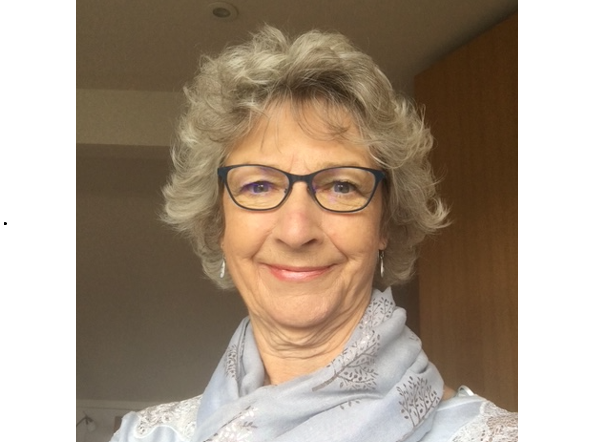
Sue Strudwick is a retired Allied Health Professional with over 40 years experience of working in the NHS and has been a member of a clinical ethics committee for 25 years. Sue is now involved in patient safety work through her role as a Patient Safety Partner at an acute Trust in South West London. She is also one of the rotating Chairs for the Patient Safety Partners Network and a member of the related Advisory Group.

Recommended Comments
Create an account or sign in to comment