

All Activity
Past hour
-
News article
 The United States could lose its measles elimination status this week, an event likely to cement health secretary Robert F. Kennedy Jr’s legacy of meddling in vaccine policies amid the worst outbreak of the virus in the US in 35 years. If the US loses its measles-free status, it would join Canada and several European and Asian nations that had eliminated the disease only for it to return. “That is a tremendous step backwards,” said Dr Paul Offit, director of the Vaccine Education Center, an attending physician in the division of infectious diseases at Children’s Hospital of Philadelphia, and a prominent critic of Kennedy. A panel of eight independent experts will consider the epidemiological evidence in Washington DC, part of a group called the Pan American Health Organization (PAHO), a regional branch of the World Health Organization (WHO). The PAHO director will make the final call. “Independent of what PAHO says, measles is now endemic in the US. Measles has a foothold in the US,” said Offit. “We’re going to see it this year, we’re going to see it next year,” because the US “critically decreased the percentage” of people vaccinated. Read full story Source: The Guardian, 11 November 2026
Today
-
News article
 An alternative to BMI for diagnosing obesity could prevent misdiagnosis in millions of people worldwide, according to doctors who found it more accurately distinguished healthy people from those with harmful excess body fat. Medical experts have long considered body mass index a blunt instrument for defining obesity, leading to concerns that substantial numbers of people with excess body fat are missed while others who are healthy are wrongly diagnosed. The new approach, which combines BMI with other body measurements and organ function tests, suggests BMI alone misses obesity in 5-9% of adults, while wrongly diagnosing the condition in as many as 3%. “This misclassification can account for tens of millions of people, so the inaccuracy of BMI is a big problem at scale and also for individuals,” said Francisco Rubino, a professor of metabolic and bariatric surgery at King’s College London. Under the new definition, someone with a BMI over 40 is considered obese, but doctors check people with a lower BMI for excess body fat by looking at their waist measurement. A BMI of 30-plus with a raised waist measurement or waist-to-height ratio counts as obese, as does a BMI from 25 to 29.9 if waist measurement and waist-to-height ratio are high. In most countries, a raised waist measurement means more than 102cm (40in) for men and 88cm for women, while thresholds for a high waist-to-height ratio are about 0.57. In a second step of the diagnosis, doctors distinguish between clinical obesity, meaning an active disease where excess body fat is already impairing organ function, and pre-clinical obesity, where the extra fat is a health risk but has yet to cause problems. Read full story Source: The Guardian, 11 November 2026
-
News article
 Patients were left with “advanced visual impairment” after waiting too long for treatment at a trust given the highest rating for access to services by NHS England, HSJ has discovered. Twenty-one patients in total were found to have suffered some level of harm while on a glaucoma waiting list at East Lancashire Hospitals Trust. ELHT’s waiting time performance is ranked in the top of four segments making up NHSE’s National Oversight Framework league table for acute trusts. ELHT paused new referrals to its glaucoma service in May this year due to capacity constraints. The trust said the service was “failing to provide timely care” for a condition where delays can cause permanent sight loss. A “comprehensive clinical harm review” of 43 patients who had experienced delays in a review or treatment was undertaken by the trust. This discovered “significant patient harm associated with delays in receiving definitive glaucoma surgery”, according to a report prepared by Lancashire and South Cumbria Integrated Care Board. The ICB report said: “For several patients, delayed intervention resulted in progression of glaucoma and irreversible visual field loss, with some patients left with advanced visual impairment despite subsequent treatment.” Read full story (paywalled) Source: HSJ, 12 November 2026
-
News article
 The NHS “potentially” lacks the beds to deal with increased emergency care demand over the winter because of cost constraints, NHS England has admitted to MPs. The Commons health and social care committee also heard that continuing confusion over the role of integrated care boards has undermined the service’s attempt to keep services safe and effective during winter. NHSE executive director for performance and delivery Emma Rowland told the MPs: “There’s no doubt we have less beds open this year versus last year. “However… we’ve got increased attendances in A&E with increased complexity and an increased frail population. So there is a risk that we potentially could and should have more beds.” Dr Rowland added that, “from a financial perspective”, increasing the beds to meet this extra demand would be “very difficult” because of the costs of staffing them. Royal College of Emergency Medicine president Ian Higginson had earlier told the committee the NHS was “still 1,000 beds down compared to last year, yet in a worsening situation”. Some hospitals “may still not have opened up spare capacity that they might be saving for winter… largely due to financial reasons”, he said. Read full story (paywalled) Source: HSJ, 11 November 2026
-
Oliver Street joined the community
-
News article
 Consultant doctors in England have called off their two-day strike this month to hold talks with the government. The walkout was due begin on 25 November at 06:59 GMT, with consultants staffing emergency care only. This is known as Christmas Day cover and was likely to have a major impact on most routine and elective or planned services. But the British Medical Association, the trade union for doctors, said it was pausing the action to discuss pay and working conditions with the government. Read full story Source: BBC News, 11 November 2026
-
Content Article
 Lou Pye, Deputy Director (Operations), has written a blog sharing what the Maternity & Newborn Safety Investigations (MNSI) have learned from supporting families after a patient safety event. Every family’s experience is different. However, families consistently tell us they want to feel listened to, respected and involved throughout an investigation. The blog sets out practical ways to support families well, including: listening without interruption and letting families tell their story in their own words giving clear, honest information and one consistent point of contact taking a trauma-informed approach sharing what was learned, so families know their involvement has helped make care safer.
-
Content Article
 Dr Ashley Reece, Dr Lynn Sinitsky and Kelly Quinn at West Hertfordshire Teaching Hospitals NHS Trust describe how they have been working to improve how young people with complex health needs experience transition from paediatric to adult healthcare services. They share the journey of Liam, a young boy approaching his sixteenth birthday and moving into adult healthcare services, and how the team recognised an opportunity not only to support his transition safely into adult services, but also to develop a model that could be replicated across the organisation. They also share an accompanying video, narrated by Liam's father, that describes the family's expectations and experience of navigating transition, highlighting the challenges the family faced and the difference that coordinated planning made to the outcome.
Yesterday
-
Sanos joined the community
-
Event
until
Join Digital Care Hub for a panel discussion exploring what digital inclusion – and exclusion – looks like across the social care sector, both for people receiving care and support and for the people working within care services. The panel will explore the realities of digital exclusion across different settings and experiences, including the barriers that prevent people from accessing and benefiting from digital technology. It will also shine a light on creative and innovative approaches that are helping to tackle these challenges, sharing examples of where digital inclusion is making a difference in practice. Alongside celebrating progress, the discussion will consider where gaps and challenges remain, and what more needs to be done to ensure that digital transformation in social care is inclusive by design. Register -
HelenaP joined the community
-
Georgie Whitfield joined the community
-
News article
 NHS England has outlined spending worth about £34m to make ambulance services better able to respond to terror attacks – but the settlement appears to fall well short of ambulance trusts’ asks. Ambulance leaders have been pressing NHSE for several years to confirm funding for recommendations of the Manchester Arena bombing, which took place nearly a decade ago. Last month HSJ revealed one chief executive’s warnings that services were not “sufficiently trained, equipped, or resourced” to respond to a terrorist attack. Now, in a 6 November letter to the Association of Ambulance Chief Executives, NHSE chief operating officer Sarah-Jane Marsh said it would fund three additional hazardous area response teams (HART) and three special operations response teams (SORT), together with training and backfill for staff. HART teams enter “hot zones” or “inner cordons” of incidents, including terrorist attacks, to provide care to improve survival rates. Trusts already have to be able to place six HART staff on scene at defined “strategic sites of interest” within 45 minutes. NHSE estimates each HART team will cost around £7m a year, plus £3m capital, and each SORT team around £6.5m a year, although it said detailed costing would follow, and costs might differ outside London. Two SORT teams would start in 2027/28, with a third potentially following in 2028/29, according to the letter, which has been shared with HSJ. Read full story (paywalled) Source: HSJ, 10 November 2026
-
Content Article
 Health consumer escalation of acute deterioration response systems are now widely available to help facilitate early recognition and response to acute deterioration in hospitals. Yet, a systematic synthesis of the literature on the signs and symptoms that health consumers consider representative of acute deterioration and the reasons for escalation has not been conducted. The aim of this study was to identify the signs and symptoms that health consumers recognise as indicative of acute deterioration, and to describe the reasons that health consumers activate acute deterioration response systems in hospitals. The study found that health consumers can identify a variety of physiological, cognitive, behavioural and functional changes indicative of acute deterioration. Health consumers activate acute deterioration response systems for four reasons: (1) reassurance, (2) reassessment, (3) re-establishing control and (4) recognition and respect. The authors concluded that health consumers’ ability to recognise acute deterioration varies, from clear, specific signs and symptoms to a non-specific sense that something is wrong. Health consumers activate acute deterioration response systems for multiple reasons.
-
News article
 A woman claims she “nearly died” after spending nine hours in agony on a hospital corridor waiting to be treated for her chronic condition. Joanna Oliver, who has Crohn's disease, recalls feeling like she was going to die when she experienced a blockage in her stoma – a potentially life-threatening complication if left untreated. The 51-year-old from Essex went to A&E at Basildon Hospital in Essex in July 2025 when she felt discomfort and cramps, but she was forced to wait all night to be treated. “I was in the corridor, waiting for a scan, surrounded by drunk people and families. Because of the pain and the morphine, I wet myself. They gave me a urinary catheter in the corridor,” she told The Independent. She added that her bed linen wasn’t changed and she wasn’t seen by a doctor until 6am, when her complication was treated. But Ms Oliver isn’t alone; hundreds of thousands patients across the country experience corridor care with long waits without beds, overcrowded spaces and a lack of privacy, every year. This year, cases skyrocketed during the heatwave. An average of 2,300 patients received corridor care in A&E departments in England each day in July, along with 728 patients elsewhere in hospital wards, totalling 3,028. Read full story Source: The Independent, 10 November 2026 Related reading on the hub: Corridor care: are the health and safety risks being addressed? How corridor care in the NHS is affecting safety culture: A blog by Claire Cox A silent safety scandal: A nurse’s first-hand account of a corridor nursing shift
-
Susie Douglas joined the community
-
Event
until
Join the Royal Society of Medicine’s (RSM) Patient Safety Section in partnership with the Resident Doctors Section Seen, Heard, Believed, a national conference exploring how listening to women can improve healthcare outcomes. The programme will examine how women's experiences, concerns and priorities can be better understood and incorporated into clinical decision-making. Evidence from national reviews, inquiries and the Women's Health Strategy for England highlights persistent concerns about women feeling unheard or dismissed in healthcare. This conference will explore how effective listening, empathy and shared decision-making can improve patient safety, diagnostic accuracy, trust and clinical outcomes. Through expert presentations, patient perspectives and interactive sessions, participants will explore practical ways to ensure women feel seen, heard and believed. Why attend? Hear from Dr Rosie Bennyworth, CEO of HSSIB, Emma Murphy, public and patient voice advocate, Amber Bennett Western, Research Lead, and Dr Rupa Joshi, Lead for Women's Health at the Health Innovation Network Examine findings from national reviews and the Women's Health Strategy for England and understand what the evidence tells us about the scale and impact of women feeling unheard in healthcare Understand how listening, trust and patient safety are connected, including the potential impact of missed or dismissed concerns on clinical outcomes Develop practical approaches to active listening, empathetic communication and shared decision-making Explore how lived experience, patient feedback and awareness of bias and cultural assumptions can inform clinical practice and support more equitable, person-centred care Aims of the event Develop understanding of listening as a core patient safety skill. Explore how women’s lived experiences and priorities can inform clinical decision-making, shared care and improvements in patient experience and outcomes. Provide practical approaches to active listening, empathetic engagement and meaningful patient involvement. Learning outcomes By attending this conference, participants will be able to: Describe the national context and evidence surrounding women's experiences of healthcare Explain how communication and listening practices can influence patient safety and healthcare outcomes Apply practical active listening and empathetic communication techniques in clinical encounters Identify strategies to improve shared decision-making and patient involvement Recognise personal and organisational barriers that can prevent effective listening Identify actions that can be implemented in their own clinical settings to improve patient experiences and outcomes Apply patient feedback and lived experience to identify and implement meaningful improvements in care. Register -
yoskrochi joined the community
-
News article
 Successive governments in England have been “asleep at the wheel” on social care, leaving the system to grow as a chaotic patchwork of local services with no clear vision, Louise Casey, the head of the social care commission, is to warn. Lady Casey, who is preparing proposals for a big review of adult social care, will say the result is that in effect “no one is in charge” of a system that provides vital services for millions of vulnerable people. People’s experiences of care have varied depending on where they live, with different standards, assessment processes and waiting times, while the private care sector has grown dominant and regulation of services has often been ineffectual, she will say. She will add that England has no clear “system stewardship” for social care, making it difficult for governments to target improvements to services or translate policy into practice, unlike in comparable countries such as France, Germany and Japan. Read full story Source: The Guardian, 11 November 2026
-
News article
 Disabled people are having to wait up to two years to get a wheelchair because of delays involving NHS bodies and private firms that make them. The situation is revealed in a report by the Public Service Ombudsman, Paula Sussex, who said hold-ups were having profound consequences and limiting wheelchair users’ ability to lead independent lives. In one case a three-year-old boy with cerebral palsy was unable to start nursery at the same time as his twin brother because he had to wait seven months for a wheelchair. He hurt himself several times when he fell from an adapted buggy his parents were using while they waited. Sussex launched an investigation into NHS wheelchair provision after a sharp rise in complaints – from eight in 2020-21 to 110 in 2025-26. Four out of five relate to the handful of private firms that provide wheelchairs to at least half of all children and adults who need one to help them lead independent lives. Most are about people who need a wheelchair having to wait longer than the supposed 18-week maximum to receive either the device or parts for it. “For people who rely on a wheelchair, delays, unsuitable equipment or poor repairs can affect every part of their life”, said Sussex. “There can be profound consequences, from physical pain and emotional distress to limiting their ability to lead full lives.” Read full story Source: The Guardian, 11 November 2026
-
Tahira joined the community
-
News article
 NHS bosses have warned of a “punitive” inspection culture at the Care Quality Commission (CQC), two years into the regulator’s recovery from a damning review. Just one in five trust leaders (21%) believe the CQC is making changes that will improve its long-term performance, with 27% disagreeing, 37% neutral and 16% unsure. The NHS Alliance, which represents most trusts and integrated care boards, surveyed 166 chief executives, chairs, company secretaries, and medical and nursing directors at 116 trusts in August. Its report says “numerous” leaders described the regulator’s approach as adversarial. One trust chair said inspection teams “arrive with conclusions in advance, and use evidence inappropriately to justify those conclusions”. A director at another trust said: “The way they run the inspection is aggressive.” Another leader said: “The CQC used to add value – it doesn’t any more, and has lost credibility.” Just 12% cent agree the CQC’s current approach supports innovation and the spread of good practice, while 60% disagree. Fewer than two in five (38%) say it is supporting their trust to improve the quality of care, with 31% disagreeing. Read full story (paywalled) Source: HSJ, 11 November 2026
-
Content Article
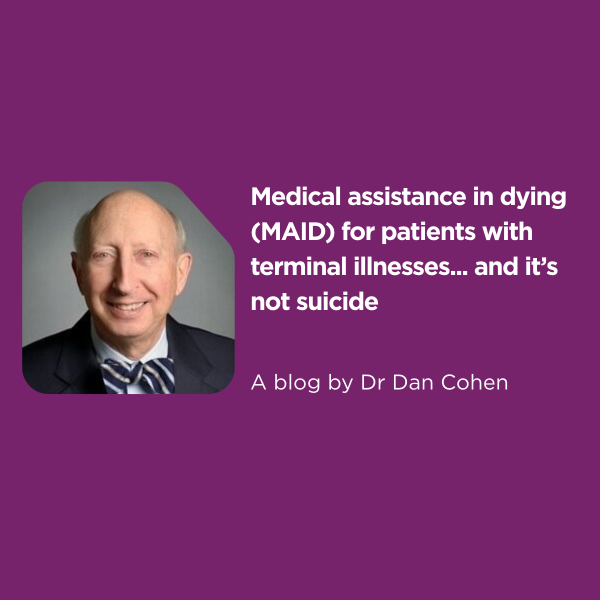 Medical assistance in dying (MAID) is a process where cognitively competent adults suffering from a terminal illness, yet alive in the final six months of life expectancy and capable of making their own healthcare decisions, may choose to end their lives with assistance from their doctors. They may request prescriptions for medications that they can ingest at a time and place of their choosing to end their life, on their own terms. In his previous commentary, Dan Cohen, an international consultant in patient safety and clinical risk management, and a Trustee for Patient Safety Learning, discussed how MAID aligns with the principles of biomedical ethics. In this commentary, he discusses why MAID is not 'suicide' in the traditional sense of how this word is used. *Content warning* Some of the themes included in this blog people might find upsetting.
-
News article
 Rosemary Nayler says she was repeatedly told that taking the epilepsy drug sodium valproate while pregnant would not affect her unborn child. But it is thought thousands of children in the UK have been left with disabilities caused by the medication since the 1970s. Her daughter, Nadia Williams, is now 37, registered blind and deaf, is autistic and has mobility issues. Nayler is among thousands of parents calling for the government to "admit where they've gone wrong". Over the last decade, instructions for doctors and patient leaflets have stated valproate should not be used during pregnancy unless there was no safer alternative and only after a careful discussion of the risks. Rosemary, from Evesham in Worcestershire, had her first epilepsy attack when she was about 30. "I'd already got three young children by this stage who were all born perfectly normal and quite happy and have developed no problems throughout their lives. They're all way into their 50s now." But by the time she became pregnant with Nadia, aged 34, in the late 1980s, she was already taking sodium valproate on the advice of doctors. "Every time I had an epileptic attack I was told that it was 'far better for me to... keep on taking the tablets' and they just kept increasing the dosage. "We queried... if it was going to affect the foetus in any way and we were clearly told that 'no, there was no effect on the children'." Rosemary said she wants "the government to admit where they've gone wrong, the fact that we should have been told about these things and these possibilities way back then". Her daughter added she was "terrified of the future". Read full story Source: BBC News, 9 November 2026 Further reading on the hub: First Do No Harm. The report of the Independent Medicines and Medical Devices Safety Review (8 July 2020) Mums v Big Pharma (BBC iPlayer, 9 November 2026) Sodium Valproate: The Fetal Valproate Syndrome Tragedy
-
Content Article
 The way that wheelchair services are designed, funded and organised across the NHS is affecting the safety, dignity and independence of people who rely on them. This Public Services Ombudsman report shows that complaints about wheelchair services have significantly increased over the last five years. It make recommendations in three areas for a more consistent, national approach to improve the lives of wheelchair users: strengthen national oversight, data and quality assurance build ICB capability to commission sustainable, person-centred services measure services by people’s experiences and outcomes.
-
Content Article
 This report presents results from the NHS Alliance’s first governance and regulation survey, building on similar publications by NHS Providers. It is the first in a three-part series, focusing on trust leaders’ experiences of the Care Quality Commission (CQC) over the past year. The second report will focus on ICB and trust leaders’ experiences of NHS England’s (NHSE) oversight and regulatory approach. Conducted in August 2026, the findings and recommendations in this report are based on the 166 responses from 116 trusts (57% of all trusts). All regions and trust types are represented. Respondents included chief executives, chairs, company secretaries, medical directors and nursing directors. Our analyses and interpretation are supplemented by free-text responses and insights gathered via a series of in-depth interviews and wider engagement with NHS leaders.
-
Content Article
 Two mums from north west England tell the story, based on their experience, of taking on a drugs company, doctors and the government, fighting a scandal that led to at least 20,000 babies being born disabled - the truly shocking scandal of sodium valproate. The film reveals, for the first time, the ‘David v Goliath’ battle as they search for answers and fight for justice for their children. Further reading on the hub: First Do No Harm. The report of the Independent Medicines and Medical Devices Safety Review (8 July 2020) Sodium Valproate: The Fetal Valproate Syndrome Tragedy
Last week
-
Community PostDigital healthcare systems have made it easier for healthcare professionals to access patient information, manage appointments, and coordinate care. However, introducing new technology does not automatically make healthcare safer. Poorly designed interfaces, disconnected systems, incomplete patient records, and confusing workflows can create risks for both patients and healthcare professionals. Here are five areas worth considering when developing or implementing digital healthcare systems. 1. Make patient information easy to accessHealthcare professionals often need information from different systems to make informed decisions. When patient records are fragmented or difficult to access, important details may be overlooked. Improving interoperability between electronic patient record systems can help ensure that relevant information is available when needed. 2. Prioritise usabilityA system might have advanced features but still create problems if healthcare professionals find it difficult to use. Developers should involve doctors, nurses, administrative staff, and patients during design and testing. Real-world usability testing can identify confusing workflows before they affect everyday care. 3. Avoid information overloadToo many notifications and alerts can make it difficult for staff to identify genuinely important information. Digital systems should prioritise meaningful alerts and make critical information easy to recognise. 4. Include security and access controlsPatient information must be protected through appropriate access permissions, authentication, encryption, and audit trails. Healthcare organisations should also establish clear procedures for responding to security incidents and system failures. 5. Monitor systems after implementationLaunching a digital healthcare platform should not be considered the end of the project. Organisations should regularly review user feedback, technical problems, near misses, and incidents associated with digital workflows. This helps identify risks that may not have been apparent during initial testing. Further readingPatient Safety Learning has shared useful insights in its report on Electronic patient record systems: Putting patient safety at the heart of implementation. For additional context on healthcare technology development, HealthTech discusses digital healthcare platforms and related technology considerations. Final thoughtsTechnology should support healthcare professionals rather than create additional complexity. The most effective digital healthcare systems are those designed around real clinical needs, tested with the people who use them, and continuously improved to reduce risks. Discussion question: What do you think is the most overlooked patient safety risk when healthcare organisations introduce new digital systems: poor usability, incomplete patient information, lack of interoperability, or insufficient staff training?
-
Content Article
 The Health and Social Care Committee commissioned an independent expert panel (IEP) to carry out an evaluation of the transition from child to adult health and social care services. The report highlights how young people, especially those with complex physical and mental health needs, are failed by services that abruptly change or cancel the support they need when they turn 16 or 18. It points towards redesigning systems to remove abrupt switches from children’s to adults’ services based on age. Evidence the IEP received suggested instead basing transitions, pace of change and assumptions about independence, on careful assessment of the individual child’s needs and wishes.
-
Content Article
 If your organisation operates in a high risk, or high threat location, or in the course of day-to-day work staff are likely to face traumatic or potentially traumatic situations, then you should consider TRiM. What is TRiM? TRiM is a trauma-focused peer support system designed to help people who have experienced a traumatic, or potentially traumatic, event. TRiM Practitioners are non-medical personnel who have undergone specific training allowing them to understand the effects that traumatic events can have upon people. They are not counsellors or therapists, but understand confidentiality and are able to listen and offer practical advice and assistance. TRiM originated in the UK Armed Forces and the model is based on ‘active monitoring’, that means keeping a watchful eye on individuals who have been exposed to a traumatic event, whether that person has been directly involved or involved from afar.
-
Event
until
The WHO Quality of Care and Patient Safety Education and Training (QPSET) Network, in collaboration with Imperial College London, is pleased to invite you to the upcoming webinar: ‘Integrating Quality of Care and Patient Safety into Pre-service Education’ The webinar will focus on the importance and key principles of integrating quality of care and patient safety into pre-service education, share practical experiences, and identify feasible actions and resources. Download flyer: QPSET Network - Integrating Quality of Care and Patient Safety into Pre-Service Education.pdf -
EventThe Royal College of Surgeons of Edinburgh's inaugural Surgical Safety Summit (SSS) will unite colleagues from across the surgical patient pathway and those with lived experience to learn, collaborate and drive improvement in surgical safety. This summit will provide a unique opportunity to learn about patient safety in surgery in a collaborative space. You will be able to connect with colleagues and forge new friendships with fellow patient safety champions, surgical teams and members of the wider surgical patient safety community. Our discussions will strengthen professional relationships and inspire future collaborations. There will be ample valuable opportunity to interact with and question renowned leaders in the patient safety field. Set against the stunning backdrop of historic Edinburgh – a city renowned for its rich history, cultural landmarks, and vibrant friendly atmosphere, attendees will have the chance to explore the RCSEd iconic campus and its acclaimed Surgeons Hall museums. Delegates will be able to immerse themselves in centuries of surgical history while gaining fresh perspectives on modern innovations in surgical patient safety. See flyer attached for programme: RCSEd Surgical Safety Summit Programme V10 (1).pdf Register


