

All learn
Showing articles.
Past hour
-
Content Article
 People living with non-communicable diseases (NCDs) often require continuous, long-term care. However, in humanitarian contexts, conflict, displacement and other obstacles can disrupt access to healthcare. This complicates chronic disease management and compromises patient safety. In 2025, Doctors Without Borders/Médecins Sans Frontières (MSF) conducted 264,711 medical consultations for people with hypertension and 219,982 consultations for people with diabetes. In this blog we hear more about this work.
 -
Content Article
 Is integrated patient experience intelligence finally possible in the NHS? Or will infrastructure without design leave us with expensive technology and limited value? The jigsaw pieces needed for integrated patient experience intelligence are finally starting to come together across the NHS, but the question is whether anyone is going to bother assembling them. In this three-part series, Ben Kenyon has examined the fragmentation of the current system and explored how the infrastructure pieces are now forming. In the final blog of the series, Ben shows what becomes possible if the systems and infrastructure are designed properly.
 -
Content Article
 Is integrated patient experience intelligence finally possible in the NHS? Or will infrastructure without design leave us with expensive technology and limited value? The jigsaw pieces needed for integrated patient experience intelligence are finally starting to come together across the NHS, but the question is whether anyone is going to bother assembling them. In part one of a three-part series, Ben Kenyon examined the fragmentation of the current system. In this blog, Ben explores the infrastructure pieces now forming. But forming isn't the same as working. Here's what's actually available, what it could enable and what still needs to be designed.
 Today
-
Content Article
 A Pre-Inquest Review Hearing took place on the 21 July 2026 which heard that Mr Budd died on the 24 February 2026 aged 65 years. He was admitted to the Royal Derby Hospital on the 24 February 2026 at 12:26. He presented with sudden onset left sided jaw pain which radiated to the occipital region and thoracic spine. Suspecting aortic dissection or subarachnoid haemorrhage a CT scan was requested along with a D Dimer at 15:55. He was diagnosed with an aortic dissection following CT scan at 17:45 (reported at 18:03). There was discussion between the Year Two Foundation doctor and the on call cardiac surgeon in Derby. University of Hospital Nottingham cardiac team were contacted who confirmed that they were unable to deal with this type of surgery and Derby was advised to contact Glenfield who agreed to have Mr B admitted for surgery. Adult Critical Care Co-Ordination and Transfer Service (ACCOTS) was contacted and transferred Mr B to Glenfield Hospital, Leicester, arriving at 20:26 in ventricular fibrillation from which he could not be recovered and died at 20:45 despite resuscitation attempts.
 -
Content Article
 This report explores the experiences of Black women who experienced mental health difficulties during pregnancy and after birth, and what happened when they needed support. These findings come from the mental health questions included in the 2025 Five X More Black Maternity Experiences Survey. It looked specifically at the experiences of 527 Black women who reported experiencing mental health difficulties, to better understand their experiences of accessing support and receiving care. Free registration required to access this report.
 -
Content Article
 Angela Hayes is a Nurse Fellow and Project lead at the Centre for Sustainable Healthcare, she is also a hub Topic leader. In this 2-minute video Angela explains what climate change has to do with patient safety and how it is putting pressure on healthcare systems around the world. Read the transcript
 -
Content Article
 The General Optical Council (GOC) commissioned Shift Insight to carry out research to explore how commercial practices in primary eye care may affect patient safety, patient experience and the working lives of individual registrants. This work forms part of the GOC’s wider thematic review of commercial practices and patient safety. The research focused on four areas identified by earlier GOC work: booking practices (including overbooking, rolling clinics and ‘ghost clinics’) short sight test times sales targets and incentives price transparency. Fieldwork involved in-depth interviews with four stakeholder groups: Individual registrants – optometrists and dispensing opticians Business registrants – owners, directors and practice managers of GOC-registered optical businesses Non-registered eye care staff – for example, optical assistants Patient representative organisations – Healthwatch, Royal National Institute of Blind People (RNIB), Thomas Pocklington Trust, SeeAbility and Glaucoma UK.
 Last week
-
Content Article
 This HSJ article argues that the key lesson from the Thirlwall Inquiry is not simply about accountability for individuals, but about the NHS's repeated failure to properly investigate patient harm when warning signs emerge. The Thirlwall Inquiry exposes a fatal failure to investigate harm. Rebuilding patient safety requires truth, not scapegoating.
 -
Content Article
 Advanced Practitioners (APs) are healthcare professionals deployed in a variety of heterogeneous roles around the NHS; they bring skills and knowledge from their various background professions to their work, and patients can benefit from that experience in the right role. The healthcare team benefits from different perspectives and skill sets being present. However, around the NHS there is wide variation in how AP roles are designed and deployed, what the staff in those roles are expected to do, and who regulates them. The medical profession is increasingly concerned that some APs are being asked to do things that only doctors should be doing. This blurring of roles is often driven by understaffing of medical rotas or misunderstanding of what different professions are for. It leads to risks to patients where critical decisions and interventions that should be made by a doctor are made by others. In response to growing concerns within the medical profession about how NHS employers are utilising and deploying advanced practitioners, the BMA launched a new reporting system in January 2026 to understand its depth and breadth. In April a series of Freedom of Information requests by the BMA revealed that half of hospitals in the UK deployed advanced practitioners to cover doctor rota gaps and included these staff on medical rotas. Those who admitted to directly replacing doctors with differently qualified staff told the BMA, in a series of admissions, that this practice should no
 -
Content Article
 A report commissioned by the Royal College of Nursing warns that England is at risk of repeating a damaging cycle of nursing workforce shortages because of poor long-term planning, stagnant domestic training numbers and a sharp fall in international recruitment. While NHS nurse numbers grew strongly between 2015 and 2025, much of that increase was driven by overseas recruitment, which has now dropped significantly, raising concerns about future staffing levels. Nick Kituno argues that achieving the government's ambition to reduce reliance on international recruits will require sustained investment in nurse education, improved retention, better career progression and a realistic approach to workforce supply.
 -
Content Article
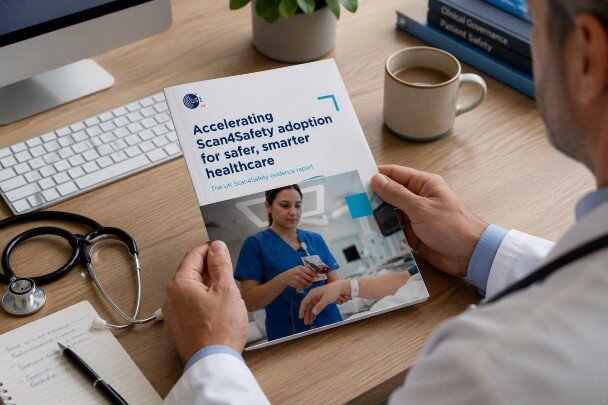 Ten years after Scan4Safety was launched, a new independent report brings together evidence of how barcode scanning and GS1 standards are supporting patient safety across healthcare. The findings show how scanning can provide an additional check before medicines or medical devices are used. They also demonstrate how better information and inventory management can reduce manual work and return valuable time to clinical care. In this blog, Georgina Lawton, head of healthcare at GS1 UK, reflects on what she has learned from working with healthcare organisations on Scan4Safety. She explains why successful implementation starts with a patient safety problem, rather than the technology, and why clinical involvement, senior leadership, reliable data and dedicated capacity all matter.
 -
Content Article
 In this Guardian article, George Monbiot argues that people with ME/CFS (myalgic encephalomyelitis/chronic fatigue syndrome) have been systematically neglected, disbelieved and harmed by healthcare systems despite the severe, life-limiting nature of the condition. In the UK, an estimated 400,000 people live with the condition. It affects women far more than men, by a ratio of about 4:1, according to a study in England. The number of people with long Covid, some of whom meet the diagnostic criteria for ME/CFS, was estimated in 2024 at 2 million in England and Scotland. Drawing on hundreds of patient testimonies, he describes experiences of being dismissed and denied support: “I’ve just been completely abandoned”; “a 10-year waiting list for treatment”; “we’ve given up seeking medical support”; “stuck in limbo”; “I just felt utterly unheard, invalidated”. Further reading on the hub: Exploring the barriers that impact access to NHS care for people with ME and Long Covid Improving healthcare services for people with ME and Long Covid: Patients share their challenges, and the actions needed
 -
Content Article
 Each year, World Patient Safety Day focuses on a critical area of healthcare safety. This year's theme is ‘Safe care for non-communicable diseases'. In this context, pathology plays a central role in timely, accurate diagnoses and appropriate interventions across the 17 specialties. Pathologists and laboratory staff play a critical, often behind-the-scenes role in managing non-communicable diseases (NCDs), such as cancer, diabetes and cardiovascular diseases, which are responsible for the majority of deaths in the UK. This September, the Royal College of Pathologists hosted a series of webinars.
 -
Content Article
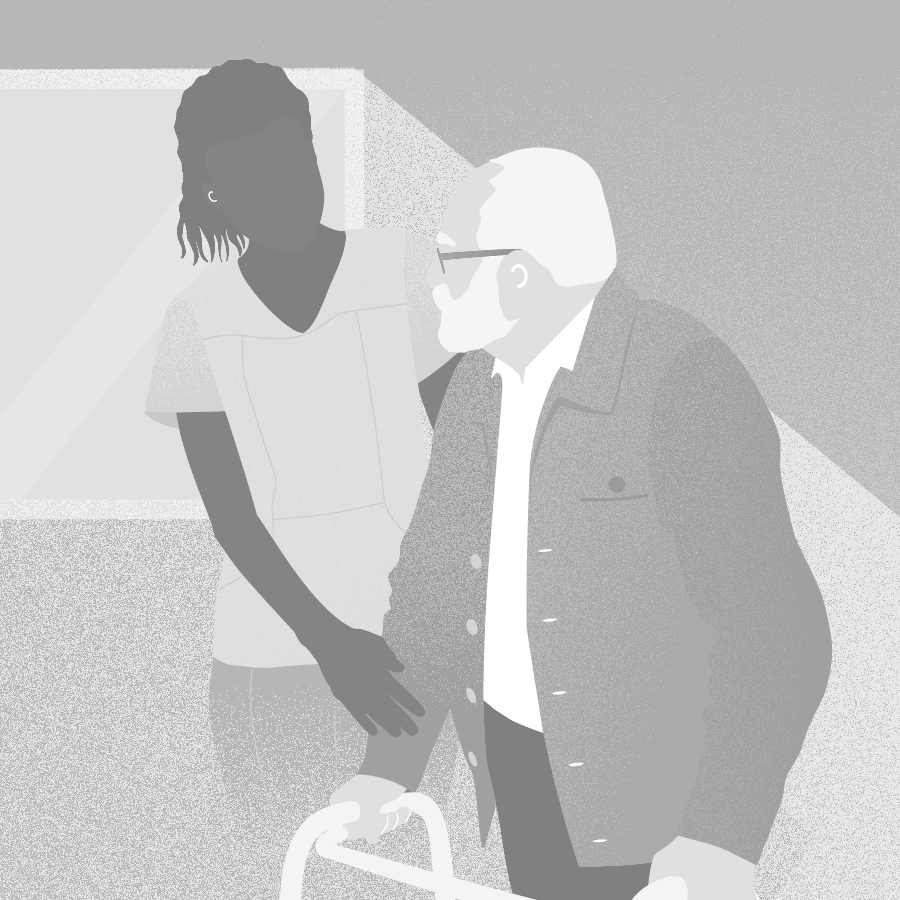 Falls contribute significantly to injury and mortality among community-dwelling older adults, with societal costs expected to rise. In the Netherlands, a nationwide falls prevention pathway, aligned with World Falls Guidelines was introduced. This includes case finding, multifactorial falls risk assessments, evidence-based interventions and sustained exercise programs. This study explores its implementation, focusing on barriers and facilitators.
 -
Content Article
 The National Patient Safety Improvement Programmes 2025-2026 impact report highlights the NHS's commitment to continuous improvement in patient safety. The report details the progress made in implementing various safety initiatives, such as Martha's Rule, which allows patients and families to request rapid reviews of deteriorating conditions. It also discusses the implementation of a new early warning system for staff treating children and the rollout of tools for early identification of deterioration in maternity and neonatal care.
 -
Content Article
 In this blog, Kath Sansom, founder of Sling the Mesh, argues that Sunshine legislation, which requires pharmaceutical and medical device companies to publicly disclose payments to healthcare professionals and organisations, is essential for improving transparency and patient safety. She highlights concerns that undisclosed financial relationships can influence research, prescribing and treatment recommendations, potentially leading to patient harm.
 -
Content Article
 The Patient Safety Commissioner for England's strategy for 2026-2028 sets out an ambitious programme of work to make medicines and medical devices safer and ensure patients’ voices shape decisions across the healthcare system. It outlines practical action to address some of the most pressing patient safety challenges facing healthcare today, including strengthening safeguards around remote prescribing, improving medicines information, enhancing monitoring of medical devices and ensuring artificial intelligence is introduced safely and transparently.
 -
Content Article
 Global health days endorsed by the World Health Assembly (WHA) play a distinctive role in elevating priority issues, mobilizing political commitment, and catalysing collective action. Among them, World Blood Donor Day (WBDD) and World Patient Safety Day (WPSD) stand out as landmark initiatives that emerged not only from technical necessity but also through sustained collaboration among Member States, WHO, and key partners including international organisations, professional bodies, civil society, and advocates. WBDD and WPSD have become influential global platforms for advancing safety, solidarity, and health system action. Yet the processes behind their establishment, including the consultations, negotiations, consensus building, and collaborative efforts that culminated in their adoption through WHA resolutions, remain largely undocumented. In this article, Neelam Dhingra offers a first-hand account of how these two global health days were conceived, negotiated, and established, drawing on more than two decades of leadership and programme coordination in blood safety (2000–2014) and patient safety (2014–2024) at WHO headquarters in Geneva, Switzerland. The article examines collaboration as the critical enabler of success and distils lessons for global health governance. While both initiatives involved extensive contributions from Member States, WHO, international organizations, professional bodies, civil society, and advocates, this article covers their development trajecto
 -
Content Article
 TIGER UK is a not-for-profit community interest company (CIC) set up to help improve experiences of gynaecological care and procedures. It stands for Together Improving Gynaecology Experiences and Research. This report shares the first findings from TIGER UK’s community survey on experiences of vaginal access procedures. More than 700 people responded, providing valuable lived experience insight. Key findings Pain and support 59% of respondents had experienced severe pain (7/10 or above) during a vaginal access procedure. Experiences of severe pain were reported for all but one of the 21 procedures listed. Prevalence of severe pain was highest in hysteroscopy, endometrial biopsy and IUD insertion. Nearly half (47%) of those who experienced severe pain said they did not feel appropriately supported by healthcare staff. Preparation and consent 44% of respondents who had experienced severe pain said staff had explained beforehand that they might experience pain, while more than a third (35%) said they had not been prewarned. Among those who had experienced severe pain and had been warned about the possibility of pain, 62% said the description they received did not reflect the intensity of the pain they actually experienced. Half of the respondents (50%) said that something unexpected had happened during a vaginal access procedure. 44% said they had always felt able to stop a procedure at any point, while more than a third (36%) said they had not. Emotional impact, adjust
 -
Content Article
 In September 2026, the National Commission into the Regulation of AI in Healthcare published its recommendations to the Medicines and Healthcare products Regulatory Agency (MHRA) for a future regulatory framework. The report contains around 44 recommendations, including staged authorisations, a rebalancing of evidence towards the post-market phase and financial penalties for manufacturers who put patients at risk. In this blog, Clive Flashman, Patient Safety Learning's Chief Digital Officer, shares his personal reflections on this. He sets out the five recommendations he most strongly supports, and five gaps that need addressing before the cross-government response is published. One of the key gaps is that the Learn from Patient Safety Events (LFPSE) service does not appear anywhere in the report's 119 pages.
 -
Content Article
 Patient safety is often discussed in terms of policies, protocols and clinical competence. While these are fundamental, they are only part of the equation. Safe nursing practice also depends on something less tangible but equally important: the confidence of the nursing workforce. Confidence enables nurses to question decisions, escalate concerns, seek support and advocate for patients. When confidence is undermined, safe practice is inevitably compromised.
 -
Content Article
 A new report shows how England’s NHS could be short of at least twice as many registered nurses as first thought, as testimony from nursing staff shows how workforce shortages have led to fractures, delays to life-saving medication and brain bleeds. It includes new analysis of hospital trust board papers which reveals that hundreds of patient safety incidents are taking place each month linked to having too few registered nurses on shift. The report from the Royal College of Nursing found that despite the clear evidence of harm caused by too few registered nurses, the number of doctors has grown nearly twice as fast. Had nurse numbers grown at the same rate as doctors since 2009, England's NHS would have more than 77,000 additional nurses today. Overall, the analysis found that based on the increase in NHS activity since 2009, including admissions, attendances and appointments, the health service is actually short by an estimated 55,000 registered nurses to deliver care safely, more than double the official number of NHS vacancies, which stands at 23,046 as of August. Included in the report is an audit of recent trust board papers which shows that some hospitals are reporting hundreds of “red flag” patient safety incidents a month. These are safety reports arising from staff shortages including delays to pain relief, essential medication and missed care.
 -
Content Article
 The Patient Safety Commissioner Scotland annual report provides: A review of issues identified by the Commissioner as relevant to the Commissioner's functions during the reporting period. A review of the Commissioner's activities, including steps taken in connection with each of the Commissioner's statutory functions. Recommendations arising from those activities.
 -
Content Article
 A woman in her third trimester of pregnancy was cared for in a surgical area of the hospital following a non-pregnancy related surgical procedure. During her recovery, she went into labour; there were delays in recognising her condition and in assessing the wellbeing of the baby, who died before birth. Nursing staff did not have clear guidance, support, or easy access to midwifery/obstetric teams or care plans to help them care for the woman safely.
 -
Content Article
 Sandra Igwe MBE is the Founder and CEO of The Motherhood Group and Mumbrite, author of My Black Motherhood, and a Topic leader for Patient Safety Learning’s online platform, the hub. In this blog Sandra draws on her own personal and professional experiences to illustrate why Black maternal mental health is a patient safety issue.


