

All news
Showing .
Today
-
News article
 Families whose children have metachromatic leukodystrophy (MLD) have warned it will be too late for many to receive treatment unless a review into newborn screening is brought forward. MLD is a genetic condition which affects the brain and nervous system, causing a progressive loss of physical and mental abilities - it affects roughly one in 40,000 children. A treatment called Libmeldy on the NHS can save children's lives if it is caught early enough. The UK National Screening Committee's review opted against newborn screening over uncertainties about test accuracy, cost, and the effectiveness of treating the condition before symptoms start. The next review is due between 2029 to 2030. Testing for MLD is already widespread in Europe and two families across the North East and Cumbria are campaigning for the UK to follow suit. Campaigners want screening to be included in the newborn blood spot test - formerly called the heel prick test - which checks for rare but life-threatening conditions, usually taken at about five days old. Read full story Source: BBC News, 10 November 2026
-
News article
 Former prime minister Lord David Cameron is leading calls for drugs that have previously been rejected for use on the NHS to be approved for treating Alzheimer’s. Lord Cameron has joined dozens of dementia specialists in the plea, and has also called for a maximum 18-week wait for a diagnosis of the disease, the Telegraph reported. While treatments such as lecanemab and donanemab have advanced the field of drug treatments, other medicines are far cheaper and experts know already about the risk of side-effects for some of them. They were licensed in 2024, but are not available on the NHS outside clinical trials. Lord Cameron, president of charity Alzheimer’s Research UK, lost his mother to the disease in 2025. He said drugs that are effective but not currently approved should be unlocked. “As prime minister, I was proud to launch the National Dementia Challenge, doubling the amount of investment into research for dementia treatments and kick-starting the fightback against this terrible disease that destroys so many lives,” he told the Telegraph. “More than a decade on, huge progress has been made, meaning we now have treatments available that can slow the progression of Alzheimer’s disease. “However, we urgently need to find ways to unlock access to these dementia drugs, and others on the way, so people can benefit from the amazing progress that is being made and from new innovations on the horizon.” Read full story Source: The Independent, 9 November 2026
-
News article
 Stopping weight loss injections could double the risk of heart attack, stroke or death for people with type 2 diabetes, a study has suggested. The research focused on people with type 2 diabetes who had no established heart disease when the study began. It found that heart health was better among those who remained on GLP-1 drugs than among those who came off them. GLP-1 drugs are already thought to benefit the heart, with research indicating they may reduce inflammation and improve how blood vessels function. Weight loss itself also tends to bring improvements in blood pressure, inflammation and cholesterol, all of which are good for the heart. For the research, experts examined electronic medical records from more than 300 diabetes clinics across Italy. Overall, the results suggested that the risk of a non-fatal heart attack, non-fatal stroke or death from any cause was about twice as high in people who stopped treatment as in those who continued. The researchers said this worked out at about four strokes or heart attacks per 100 people per year among those who stopped, against two per 100 among those who carried on. Read full story Source: The Independent, 10 November 2026
-
Content Article
 In this blog, Patient Safety Learning’s Chief Executive Helen Hughes introduces the new Patient Safety and AI Networks hosted on the hub.
Yesterday
-
Content Article
 A new handbook supporting clinicians to have more effective conversations with patients living with chronic pain is now available on the GIRFT website. The GIRFT chronic pain team brought together people with lived experience and expert clinicians to voice what they want healthcare providers to understand and communicate about the condition. Their insights have shaped the new handbook, which offers practical guidance to help all healthcare professionals explain pain in a way that is understandable, validating and empowering for patients. The handbook features checklists of what clinicians need to know on the themes that matter most in chronic pain, and includes examples of phrasing and terminology which can help to explain points clearly and compassionately. Co-badged by the British Pain Society, Faculty of Pain Medicine, Arthritis UK, the Chartered Society of Physiotherapy, Royal College of Occupational Therapists and the Physiotherapy Pain Association, the resource also contains an extensive list of, and links to, a range of further resources – books, booklets, videos, podcasts and websites – which may be useful to adult patients and children and young people. The term chronic pain refers to persistent pain lasting longer than three months, including both chronic primary and chronic secondary pain. One in three people over the age of 16 have chronic pain and one in five children and young people are affected, leading to significant absenteeism from work and school and ma
-
Content Article
 Over 2026, hopes that AI can help tackle some of the thorniest problems facing the NHS have continued to grow. The dominant policy questions no longer focus so much on whether AI can or should be used to improve health services, but on how best to deploy AI and assess performance. In October the Health Foundation hosted its third AI in the NHS Summit. This year’s summit brought together speakers from the UK, US, Singapore and South Korea to look at what we can learn about AI implementation from leading systems, and how the UK can conduct faster, rigorous evaluation. Key takeaways included the uneven distribution of the benefits of AI, the difficulty of generating sufficient evidence on AI tools and how the UK can make the most of its assets.
-
News article
 NHS officials are shutting growing numbers of birth centres in a “shocking” denial of a woman’s right to have a midwife rather than a doctor oversee their baby’s birth, say campaigners. Twelve birth centres – midwife-led maternity units – have closed in England since 2019. Birth centres play a key role in ensuring that women can choose whether to have their baby at a unit in a hospital run by doctors, at one where midwives are in charge, or at home. Six units have shut permanently since Labour came to power in July 2024. Four others have been closed “temporarily” for so long, up to six years, that childbirth groups fear they will never reopen. Two other birth centres closed because the hospitals where they were based have begun to fall apart and will remain out of action for several years until new facilities are built. The wave of closures and suspensions is occurring because of the NHS-wide shortage of midwives, a falling birthrate, the growing complexity of childbirth and a rise in caesarean sections. Campaigners say the loss of local childbirth services is denying women their right to choose and forcing them to travel from their home area to give birth. Read full story Source: The Guardian, 7 November 2026
-
Content Article
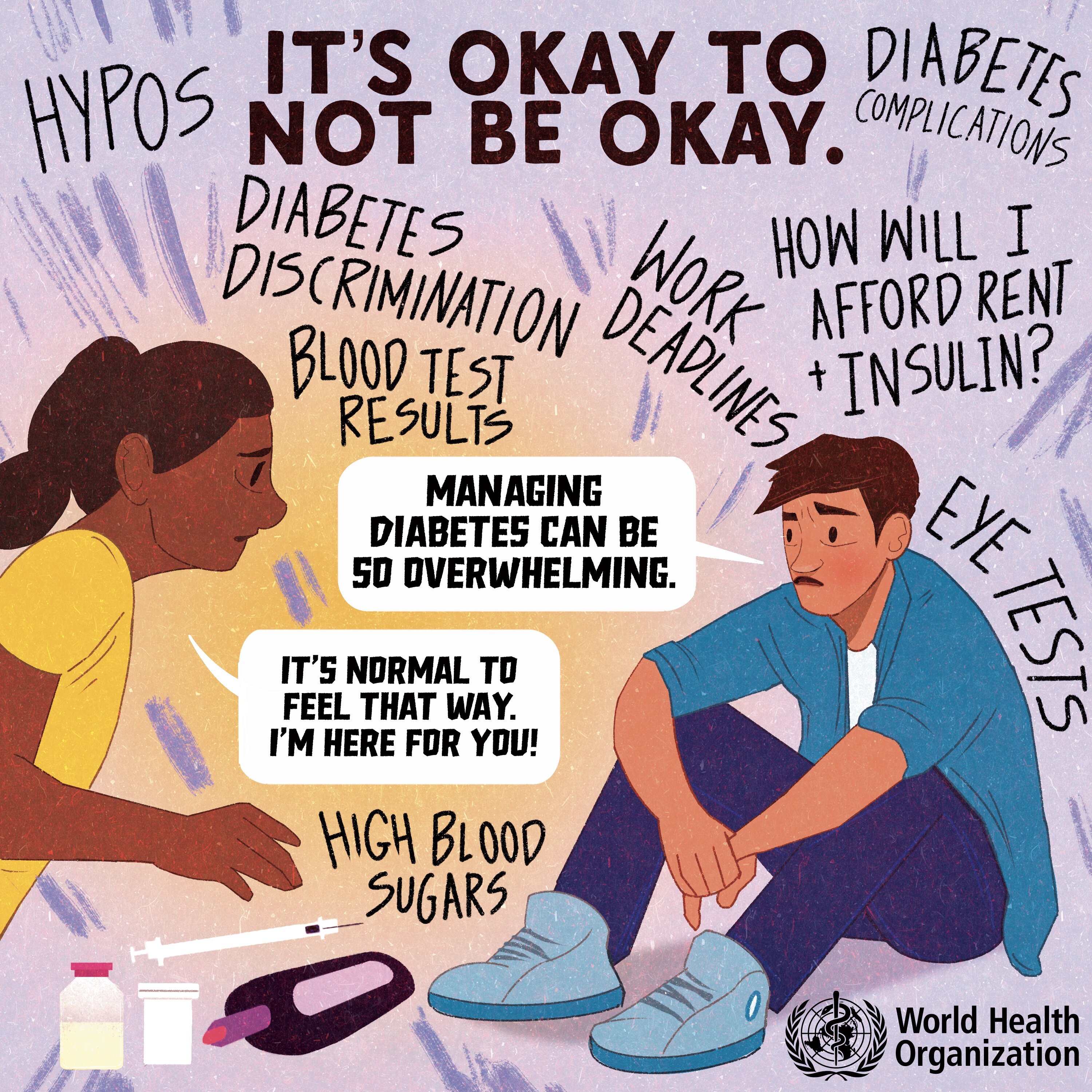 Since 1991, people across the world have come together on 14 November to acknowledge World Diabetes Day. World Diabetes Day is the world’s largest global diabetes awareness initiative, bringing people together to raise awareness about diabetes, inspire action and promote accountability. This year's World Diabetes Day theme is 'Early action on diabetes' and highlights the importance of early diagnosis, access to quality diabetes care and reducing diabetes stigma. The World Health Organization (WHO) has produced a toolkit to raise awareness, start conversations and encourage early action on diabetes. Make it yours. Adapt, share and explore the resources to support action on diabetes in your setting.
-
News article
 When Jo Menneer was diagnosed with breast cancer, she knew undergoing treatment would be a difficult process. What she did not anticipate was the challenge of navigating the menopause afterwards. Before her diagnosis in 2022, Jo, now 55, from East Yorkshire, had been taking hormonal replacement therapy (HRT) to manage the menopause. Part of her treatment included surgery, which meant she had to stop taking HRT, and is still unable to use it. "For me personally, my menopause symptoms came back with a vengeance almost immediately," she says. "As well as recovering from surgery, which is quite gruelling, to then be mixed with hot flushes, aching limbs, brain fog, up and down emotions - I felt like I'd gone back about 10 years." According to the NHS, menopause is when your periods stop due to lower hormone levels, and symptoms usually begin between the ages of 45 and 55. However, people can experience menopause earlier or at an increased rate. This can be brought on by a number of factors, including certain hormone medicines, ovarian surgery or treatment for some types of cancer. Chemotherapy, pelvic radiotherapy, stem cell transplantation and surgery can all trigger menopause, on a temporary or permanent basis. "You're battling at the time with the diagnosis and the treatment and the surgery and how that's going to impact you," Jo explains. "I never in my life thought that it would impact my menopause and it was never discussed. So it was a bit of a shock." The Department of Health and Social Care (DHSC) said its National Cancer Plan would ensure patients had a personalised plan "so the long-term effects of treatment, including menopause, are recognised and built into their ongoing care". Read full story Source: BBC News, 8 November 2026 Further reading on the hub: Top picks: 10 key resources to support menopause Raising awareness of surgical menopause
-
News article
 Hundreds of thousands of vulnerable patients in England are to receive extra support from their GP as part of a £40m drive aimed at keeping them out of hospital this winter. As the NHS gears up for the pressures of the coming months, family doctors will offer 300,000 people with frailty and long-term conditions health checks, medication reviews and respiratory tests designed to prevent avoidable hospital admissions. Funded by cash reallocated from existing GP budgets for 2026-27, the scheme will allow surgeries to identify and provide extra care to the patients they believe are most at risk of becoming seriously unwell in the winter. Groups of GP practices can use £126 for every eligible patient supported. The prime minister said the scheme would be targeted at patients with heart disease, frailty and lung conditions such as emphysema and other types of chronic obstructive pulmonary disease (COPD). Andy Burnham said he was “not going to pretend this winter will be easy” but the programme would help keep people well at home and avoid unnecessary trips to hospital. “If we want to take the pressure off our hospitals this winter, we’ve got to keep people well at home. So we’re backing GPs to reach the most vulnerable people early, before a small problem turns into a trip to A&E,” he said. “People deserve the right care in the right place. And our NHS staff, who work so hard, deserve the right tools to provide it. I’m not going to pretend this winter will be easy. But with new technology, upgrades for hospitals and more care available closer to home, we’ll make sure the NHS is there for everyone when they need it.” Read full story Source: The Guardian, 8 November 2026
-
News article
 Fewer than 1 in 15 stroke survivors are getting the amount of therapy the NHS should provide to maximise their chances of recovery, a report has revealed. The figure was a “damning” indictment of the widespread lack of rehabilitation for patients, which was hindering their chances of regaining physical and mental function, the Stroke Association said. The finding is disclosed in the latest annual report of the Sentinel Stroke National Audit Programme (SSNAP), which is based on stroke care data from hospitals in the three countries. Almost 100,000 people a year in the UK have a stroke. It is the single largest cause of complex disability and can leave survivors struggling to walk, talk or swallow. The ageing population, and an increased number of people with high blood pressure or diabetes, could cause the annual figure to rise to 115,483 by 2030. All stroke patients should get three hours of physiotherapy, speech and language therapy, and occupational therapy to help them recover from the brain injury they have suffered, whether they are still in hospital or have returned home to continue their rehabilitation. That is set out in National Institute for Health and Care Excellence guidelines intended to guide NHS practice in England and Wales. They are also followed in Northern Ireland. However, during January to March this year – the latest figures available – only 6.4% of patients received that amount, down from the 7.5% who did so in October to December 2024. Read full story Source: The Guardian, 9 November 2026
-
News article
 Records of child, neonatal, and maternal deaths held by a trust’s medical examiner service were “methodically and selectively” deleted, an external investigation has found. Nottingham University Hospitals Trust discovered the files were missing in July 2024, and they were recovered within the next month. At the time, the trust was the subject of an independent review of its maternity services led by senior midwife Donna Ockenden, the largest such inquiry in NHS history. Families involved in the review were not told about the deletion until February 2025, more than six months after it happened. Nottinghamshire Police launched their own investigation shortly after it was made public and concluded it was most likely done “intentionally/maliciously”. NUH commissioned the independent review, done by a barrister, in the summer of 2025, and the findings were set out in board papers today (6 November), first obtained by Sky News. The review concluded the files – which contained bereavement and medical examiner’s records relating to child deaths between 2019 and October 2022 – had been “methodically and selectively deleted and that the deletion was intentional rather than accidental”. It could not establish who was responsible for this due to the lack of “auditing functionality” at the time. It also found the shared drive with the files was “widely available and was not consistently removed when individuals no longer required it”. Read full story (paywalled) Source: HSJ, 6 November 2026
Last week
-
Event
until
The WHO Quality of Care and Patient Safety Education and Training (QPSET) Network, in collaboration with Imperial College London, is pleased to launch a four-part webinar series on education and training in clinical risk management (CRM). The series will explore the role of education and training in strengthening CRM practice, from establishing a common understanding of CRM and identifying competencies and training needs to examining educational approaches and the institutionalization of CRM education and training within health-care organizations and academic institutions. You are invited to join the first webinar, ‘Education and training in clinical risk management: Laying the foundation’, which will introduce foundational concepts of CRM, explore the role of education and training in supporting its practice and examine how different health system contexts influence approaches to education and training. The session will bring together experts and stakeholders from different countries and health system settings to share their perspectives and experiences. See attached flyer for more information. Webinar flyer_CRM education and training_Laying the foundation.pdf Register -
News article
 Cosmetic tourism is often sold as a package of sun, sea and surgery, but experts have said travelling overseas for procedures can end in infections, disfigurement and death. Nora Nugent, a consultant plastic surgeon and former president of the British Association of Aesthetic Plastic Surgeons, said travelling to countries such as Turkey for surgery came with myriad risks – and not just on the operating table. “Actually, the risks start from the moment you step on the plane to after you return home, and until you’re fully healed and you’re out of the clotting risk time,” she said, noting that travel itself could increase the risks of clots. A lack of in-person aftercare is also a concern. The British College of Aesthetic Medicine has launched a checklist as part of its “vet it before you get it” campaign, intended to help potential patients make better and safer choices about overseas cosmetic surgery. As well as setting out red flags to look out for, the campaign suggests those seeking cosmetic surgery independently verify a surgeon’s qualifications, determine what emergency facilities are available near the chosen clinic and find out what insurance the practitioner has in place. Read full story Source: The Guardian, 5 November 2026
-
News article
 Cancer diagnoses in England have hit record highs, with more than 1,000 people a day diagnosed, NHS figures show. But experts warned that although the health service was identifying more cases, it was still failing to meet timescale targets on diagnosis and treatment. According to the latest cancer registration statistics, more than 373,000 people were diagnosed with cancer in England in 2024, the highest figure on record. On average, NHS England diagnosed 1,021 people a day with cancer in 2024, up from 972 a day in 2023. Prostate, breast, lung and bowel cancers accounted for half of all new diagnoses. The figures showed improvements in stage at diagnosis: 56.7% of first new cancers were diagnosed at stage 1 and 2 in 2024 compared with 55.8% in 2023. Prof Peter Johnson, the NHS national clinical director for cancer, said the figures showed the health service was “moving in the right direction” and were testimony to NHS staff’s hard work. He said: “NHS teams across the country are taking tests and checks closer to the people who need them, and with new treatments being developed all the time, we will continue to do all we can to get people seen and treated for cancer as early as possible.” Experts urged caution, however, given the NHS is failing to meet its timescale targets. The latest monthly NHS figures show that 78.6% of patients in England urgently referred for suspected cancer were diagnosed or had cancer ruled out within 28 days in August – below the target of 80%. Read full story Source: The Guardian, 5 November 2026
-
News article
 NHS England has been accused of continuing to “bury” evidence of the very long waits for dental treatment endured by people with complex needs, the British Dental Association has said. Children and adults with special care needs, such as significant learning disabilities, can often only have teeth extracted under general anaesthetic in hospital, and some wait years for treatment. NHSE vowed to publish waiting list data for community dental services (CDS), which treat these groups, for the first time from October 2025, but now does not expect to do so until early 2027. Refusing a freedom of information request from HSJ for the data, it blamed “data quality concerns”, adding: “As we need to allow time to assess the impact of ICB and provider actions on data quality and return rates, it is likely that the data will be published in early 2027.” BDA chair Eddie Crouch told HSJ the “waiting times these patients face have been buried”, adding that “Parliamentary questions have gone unanswered, freedom of information requests deftly dodged”. In July, ministers answered a written question asking how many patients were waiting longer than 18, 26 and 52 weeks, but refused to give figures. Read full story (paywalled) Source: HSJ, 5 November 2026
-
News article
 The rate of women readmitted to hospital within six weeks of giving birth has risen by more than a third in less than three years, HSJ analysis of unpublished data suggests. New figures from the Care Quality Commission show maternal readmissions rose from 85 per 1,000 women (equivalent to one in 12) between October and December 2022 to 117 per 1,000 (more than one in nine) between July and September 2025, the latest data available. The data, derived from hospital episode statistics and used to inform its State of Care report, shows the rate rose in 10 of the 11 quarters after October to December 2022, and is the highest since the series began. The Royal College of Midwives and the Royal College of Obstetricians and Gynaecologists said the recent surge in caesarean sections may play a role, as they can carry a higher risk of postnatal complications. They also pointed to staffing gaps in postnatal services, alongside capacity pressures in community and primary care services. Read full story (paywalled) Source: HSJ, 5 November 2026
-
Content Article
 Lynne and Stephen's mother, Joan, aged 87, was admitted to hospital as an inpatient on the 22 August 2025. On the 28 August Joan fell and, following a complex, multi-ward admission and progressive deterioration over several weeks which went unrecognised, Joan died on 28 September 2025. A formal complaint process was completed at Trust level in June 2026. The Trust's own investigation response, signed by the Chief Executive, contained a set of findings that Lynne and Stephen believe are of broader patient safety interest. They share their mother's story here, not as a complaint, but as intelligence that may connect to concerns others have encountered.
-
Content Article
 In the October edition of the newsletter, Judy Walker argues that effective After Action Reviews (AAR) conductors should do only minimal preparation before a review, focusing on understanding the broad context rather than conducting detailed pre-investigation research. Drawing on ideas from Rod Naquin, Vygotsky and Mikhail Bakhtin, she suggests that meaningful learning happens through open dialogue with participants, allowing collective understanding of events to emerge rather than being shaped by preconceived assumptions.
-
Content Article
 With the growing popularity of injectables, skin rejuvenation, and longevity treatments such as IV drips and energy-based devices, the British College of Aesthetic Medicine (BCAM) urges the public to pause and ask key safety questions before booking their first appointment. At the core of the campaign is the BCAM Pre-Consultation Safety Questionnaire — a free, downloadable checklist designed to help patients verify essential safety standards. The questionnaire focuses on six critical areas: professional credentials, clinical supervision, insurance, product safety, emergency protocols, and clinic governance. Before you book, ask: Is the practitioner medically qualified and registered (GMC, GDC, NMC, or GPhC)? Is the clinic/practioner fully insured? Are the injectable products CE- or UKCA-marked? What is the clinic’s protocol for managing complications and out-of-hours emergencies? If a practitioner cannot clearly answer or provide evidence for these questions, BCAM strongly advises against proceeding.
-
-
Community PostCommunity PostContent Article
 This plan sets out the Medicines and Healthcare products Regulatory Agency (MHRA) approach to patient and public involvement and engagement from 2026 to 2030. It explains how they will involve patients, carers and the wider public in regulatory decisions. This includes medicines safety, medical devices and emerging technologies. It outlines their principles for inclusive engagement, transparency and collaboration, and how they will seek to ensure a broader range of voices and experiences inform their work.News article
 France’s national blood service has said hackers accessed control systems and boosted temperatures at three cold stores stocking vital blood products, in an apparent escalation of recent cyber-attacks on fridges and freezers across Europe. The French blood service (EFS) said temperature and defrosting thresholds had been raised to “very high levels” in the attack, adding that its alarm systems had allowed technicians to intervene before the products were compromised. The EFS is France’s public blood transfusion operator, collecting, testing, preparing and distributing products such as blood, plasma and platelets to more than 1,900 hospitals around the country. It supports more than a million patients a year. Read full story Source: The Guardian, 4 November 2026


Important Information
We have placed cookies on your device to help make this website better. You can adjust your cookie settings, otherwise we'll assume you're okay to continue.