

All learn
Showing articles.
Today
-
Content Article
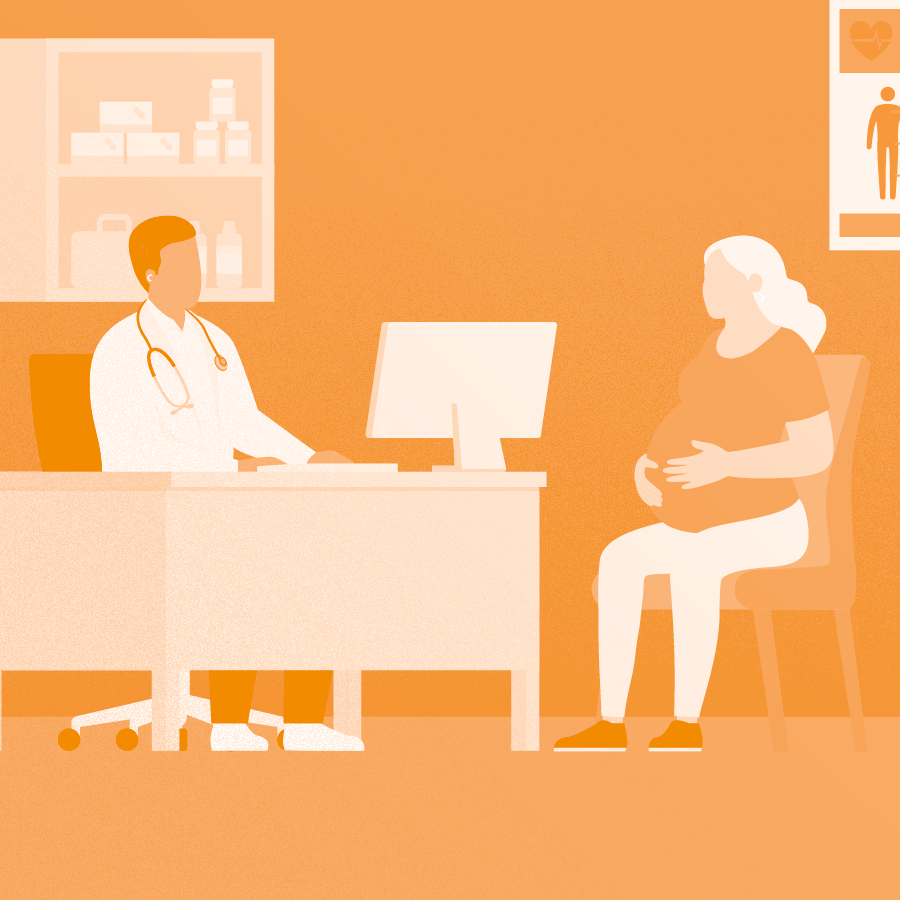 The Patients Association hear often from patients and their loved ones that the care they receive is not what they had hoped for, that something has gone wrong, or that they are now unsure where to go from there. In this blog the Patients Association reflects on the slogan ‘Safe care for life’ for this year's World Patient Safety Day.
 -
Content Article
 Doug Woodcock and Marieke Emonts share Newcastle upon Tyne Hospitals' Family Health Board governance improvement journey.
 -
Content Article
 Organisations across health and care are using and experimenting with AI to solve problems in clinical and non-clinical settings. This includes redesigning workflows, reducing pressure on staff and existing NHS services, and improving patient experience. Some organisations are also using larger-scale AI technologies from the likes of Microsoft and Anthropic to develop agentic AI solutions for more complex problems. Agentic AI refers to systems that can carry out tasks or workflows with a degree of autonomy while operating within defined rules and human oversight. The King's Fund brought health and care leaders together to reflect on the opportunities, risks and practical realities of adopting agentic AI across services.
 -
Content Article
 Coroners have warned public bodies six times in three years about the threat medicine shortages pose to patients. The Pharmaceutical Journal looks at the deaths behind those warnings and what pharmacists and patient groups say must change. Further reading on the hub: Creon shortages: “It’s just another thing patients with cystic fibrosis could do without” Medication supply issues: A pharmacist’s perspective Medicines shortages: minimising the impact on patients (a blog by Catherine Picton)
 Yesterday
-
Content Article
 In this blog, Naomi Fulop, board member of Covid-19 Bereaved Families for Justice and Professor of Health Care Organisation and Management UCL, argues that although the UK Covid-19 Inquiry has exposed serious systemic failures around the procurement of personal protective equipment (PPE), meaningful accountability remains largely absent. She says that the Covid-19 Inquiry’s findings on the Government’s High Priority Lane, or 'VIP Lane', reveal a procurement system that was biased, poor value for money and harmful to the pandemic response.
 -
Content Article
 In this blog for World Patient Safety Day 2026, Kim Ball, Jane Ball and Rose Gallagher share what this year's theme means to nursing from their perspective, through the lens of prevention, safe staffing, and sustainability.
 -
Content ArticlePatient Safety Learning posted an article in Medicines and Healthcare products Regulatory Agency (MHRA)
 The Medicines and Healthcare products Regulatory Agency (MHRA) regulates medicines, medical devices and blood components for transfusion in the UK. This roundup provides a summary of their latest safety advice for medicines and medical device users. It includes details of medicine recalls, medical device field safety notices and details of how to report drug reactions and device incidents.
 -
Content Article
 The Covid-19 Bereaved Families for Justice has created a tracker to monitor the UK Government’s progress in implementing the recommendations of the Covid-19 Inquiry. Experience of previous public inquiries into healthcare scandals over the past 30 years shows that shockingly few recommendations are ever fully implemented, in part because there is too little pressure on ministers to follow through. This tracker is designed to change that by scrutinising the Government’s response, exposing delays and failures, and ensuring ministers are held to account. It provides an assessment of actions taken in response to each recommendation and will be used to apply maximum pressure on the Government to deliver the changes needed to prevent the mistakes of the pandemic from being repeated. You can click on each module to see a detailed assessment of each recommendation. Separate assessments of actions taken by the devolved administrations will be published in late 2026.
 Last week
-
Content Article
 In an era of patient-centred care and growing concern over misconduct in medical settings, why do women still lack the right to choose women consultants for examination and treatment? Equality legislation has resulted in significant improvements in the workplace for women, both in terms of pay and career paths albeit with some way still to go. It is startling, however, just how primitive our society remains in respect of the treatment of women in other areas of their lives. This article from Charles Davey addresses one of these areas – medical care, specifically the right for women to elect examinations and care by women medical practitioners.
 -
Content Article
 To mark World Patient Safety Day and the 2026 theme of ‘Safe care for noncommunicable diseases’, the Royal College of Surgeons of Edinburgh (RCSEd) has produced a series of blogs. Operating as One to Deliver Safe Care for Life Focus on Rare Congenital Conditions Transforming Transition & Lifelong Outcomes Safety Hurdles of the Head and Neck Cancer Pathway - Safe Care Strategy Safe Surveillance is a Systems Issue Patient Safety in Cardiac Surgery is a Team Game Patient Safety in Major Joint Replacement Surgery How Could You Have Forgotten My Catheter Doctor, I Haven't How Metabolic Bariatric Surgery is Changing How We Can Prevent, Repair and Learn
 -
Content Article
 The concepts and arguments in this article use multiple sclerosis (MS) as an example (I have had it for 35 years), but they can be applied across many diseases. MS patients are handed detailed, formalised information about the risks of taking a drug and vague, inconsistent, information about the risks of leaving the disease untreated or undertreated. This opinion piece argues that the imbalance distorts decision-making, often in the direction of delay, and that the usual justification (not wanting to frighten people) makes the problem worse. It asks who is actually placed to assemble long-term comparative data on delayed and low-efficacy treatment, names registries and industry as the candidates, and sets out what a patient-facing 'disease risk sheet' would need to contain. Speculation is labelled as such. It ends with a direct challenge to anyone working in MS research, registries, charities or industry to say whether such a dataset already exists. Read it if you work on treatment decision support, risk communication or registry outputs, or if you want the case for why the current comparison is not a fair one. This article was first published on LinkedIn on 14 January 2026.
 -
 Content ArticleAnonymous posted an article in Florence in the Machine
 Martha’s Rule gives patients and families a vital way to escalate concerns when they believe a patient’s condition is deteriorating and they are not being heard. However, increased awareness of Martha’s Rule has also led to more calls about complaints, waiting times and other issues outside its intended scope. In an anonymous blog, a critical care outreach nurse in an acute NHS Trust explains why, as the scheme expands, the NHS must preserve its patient-safety focus by setting clear expectations, providing suitable routes for other concerns and supporting staff who handle difficult calls.
 -
Eb1b14226bfb56891ebb10fff83a752aAn important perspective on the future of patient experience intelligence. From a quality and patient-safety perspective, technology alone is not enough—its value comes from integrating data, patient voice, clinical workflows, and continuous quality improvement. The real opportunity is to move from fragmented feedback to actionable intelligence that helps healthcare teams identify gaps, prioritize improvement, and measure whether changes are actually improving patient experience and outcomes. Good infrastructure enables the journey; good design and strong quality governance create the value.
-
Content Article
 Healthcare professionals frequently collect patient safety data, but many lack the knowledge and structured processes needed to interpret these data and translate findings into meaningful improvement actions. This gap results in underutilised opportunities to identify risks, apply evidence-based interventions, engage interdisciplinary teams, and measure impact. Addressing this gap helps the healthcare team more effectively use data to guide patient safety and quality improvement efforts. In this recorded webinar from the Patient Safety Authority, Andrea Atkinson, BSHCA, RRT, director of quality management; Christy Kitta, BSN, RN, quality and patient safety officer; and Ziad Dimachkie, MD, chief medical officer, all from Uniontown Hospital: Describe how patient safety data could be transformed into actionable insights to improve patient safety outcomes. Identify key sources of patient safety data and explained how each contributed to understanding safety gaps. Recognize strategies for engaging interdisciplinary teams and leadership in data‑informed patient safety improvement efforts.
 -
Content Article
 The Sick List is a range of practical guides, made by patients, to help hospital stays, treatment days and recovery at home more comfortable and less stressful. The guides covers things from what eye masks help to actually block out hospital lights, to toiletries that will protect your dignity, to the random things no one tells you to pack in your bag but make a huge difference. If you're a patient about to go into hospital, or you know someone who is and would like to support them practically, this resource can really help.
 -
Content Article
 Dominic Shadbolt, founder of PatientSignal and an multiple sclerosis (MS) patient of 35 years, has published a number of blogs on his Substack on AI in healthcare.
 -
Content Article
 In this blog for the Parliamentary and Health Service Ombudsman, Paula Sussex writes about World Patient Safety Day. She says it is an opportunity to reflect on how we can make healthcare safer for everyone, and the importance of meaningful engagement with patients and families throughout their healthcare journey.
 -
Content Article
 Is integrated patient experience intelligence finally possible in the NHS? Or will infrastructure without design leave us with expensive technology and limited value? For years, patient feedback has existed in frustrating fragmentation. Complaints sit in one system, surveys in another, Friends and Family Test (FFT) scores somewhere else entirely. All sit in a different system. None connected. No one recognises the patterns until harm has occurred. The infrastructure pieces needed to solve this are forming. The NHS Federated Data Platform (FDP) is operational. The NHS App is expanding. Patient Reported Experience Measures (PROMS) are being designed and validated. Large language models (LLMs) are proving capable of analysing unstructured feedback at scale. However, having these pieces available does not deliver integrated patient experience intelligence. That requires deliberate strategic design: decisions about what capabilities to build, data architecture purpose-fit for those outcomes, governance frameworks enabling appropriate uses, sophisticated analytical infrastructure, organisational change and sustained commitment. Ben Kenyon examines it all in this three-part series: Part 1 examines where we are today: the fragmentation challenge, why feedback sources don't connect and the safety signals we're losing as a result. Part 2 explores the infrastructure pieces now coming together: the FDP, NHS App and LLMs, and why deployment alone won't deliver integration. Part 3 shows
 -
Content Article
 This guide from Taluvu looks at how to prepare for a GP appointment when there is a lot to explain. It covers: choosing the three things you would hate to forget gathering what you already know writing it down before you go rather than in the waiting room what to say in the first minute what to do if the words go and what to ask before you leave the room.
 -
Content Article
 People living with non-communicable diseases (NCDs) often require continuous, long-term care. However, in humanitarian contexts, conflict, displacement and other obstacles can disrupt access to healthcare. This complicates chronic disease management and compromises patient safety. In 2025, Doctors Without Borders/Médecins Sans Frontières (MSF) conducted 264,711 medical consultations for people with hypertension and 219,982 consultations for people with diabetes. In this blog we hear more about this work.
 -
Content Article
 Is integrated patient experience intelligence finally possible in the NHS? Or will infrastructure without design leave us with expensive technology and limited value? The jigsaw pieces needed for integrated patient experience intelligence are finally starting to come together across the NHS, but the question is whether anyone is going to bother assembling them. In part one of a three-part series, Ben Kenyon examined the fragmentation of the current system. In this blog, Ben explores the infrastructure pieces now forming. But forming isn't the same as working. Here's what's actually available, what it could enable and what still needs to be designed.
 -
Content Article
 A Pre-Inquest Review Hearing took place on the 21 July 2026 which heard that Mr Budd died on the 24 February 2026 aged 65 years. He was admitted to the Royal Derby Hospital on the 24 February 2026 at 12:26. He presented with sudden onset left sided jaw pain which radiated to the occipital region and thoracic spine. Suspecting aortic dissection or subarachnoid haemorrhage a CT scan was requested along with a D Dimer at 15:55. He was diagnosed with an aortic dissection following CT scan at 17:45 (reported at 18:03). There was discussion between the Year Two Foundation doctor and the on call cardiac surgeon in Derby. University of Hospital Nottingham cardiac team were contacted who confirmed that they were unable to deal with this type of surgery and Derby was advised to contact Glenfield who agreed to have Mr B admitted for surgery. Adult Critical Care Co-Ordination and Transfer Service (ACCOTS) was contacted and transferred Mr B to Glenfield Hospital, Leicester, arriving at 20:26 in ventricular fibrillation from which he could not be recovered and died at 20:45 despite resuscitation attempts.
 -
Content Article
 This report explores the experiences of Black women who experienced mental health difficulties during pregnancy and after birth, and what happened when they needed support. These findings come from the mental health questions included in the 2025 Five X More Black Maternity Experiences Survey. It looked specifically at the experiences of 527 Black women who reported experiencing mental health difficulties, to better understand their experiences of accessing support and receiving care. Free registration required to access this report.
 -
Content Article
 Angela Hayes is a Nurse Fellow and Project lead at the Centre for Sustainable Healthcare, she is also a hub Topic leader. In this 2-minute video Angela explains what climate change has to do with patient safety and how it is putting pressure on healthcare systems around the world. Read the transcript
 -
Content Article
 The General Optical Council (GOC) commissioned Shift Insight to carry out research to explore how commercial practices in primary eye care may affect patient safety, patient experience and the working lives of individual registrants. This work forms part of the GOC’s wider thematic review of commercial practices and patient safety. The research focused on four areas identified by earlier GOC work: booking practices (including overbooking, rolling clinics and ‘ghost clinics’) short sight test times sales targets and incentives price transparency. Fieldwork involved in-depth interviews with four stakeholder groups: Individual registrants – optometrists and dispensing opticians Business registrants – owners, directors and practice managers of GOC-registered optical businesses Non-registered eye care staff – for example, optical assistants Patient representative organisations – Healthwatch, Royal National Institute of Blind People (RNIB), Thomas Pocklington Trust, SeeAbility and Glaucoma UK.


